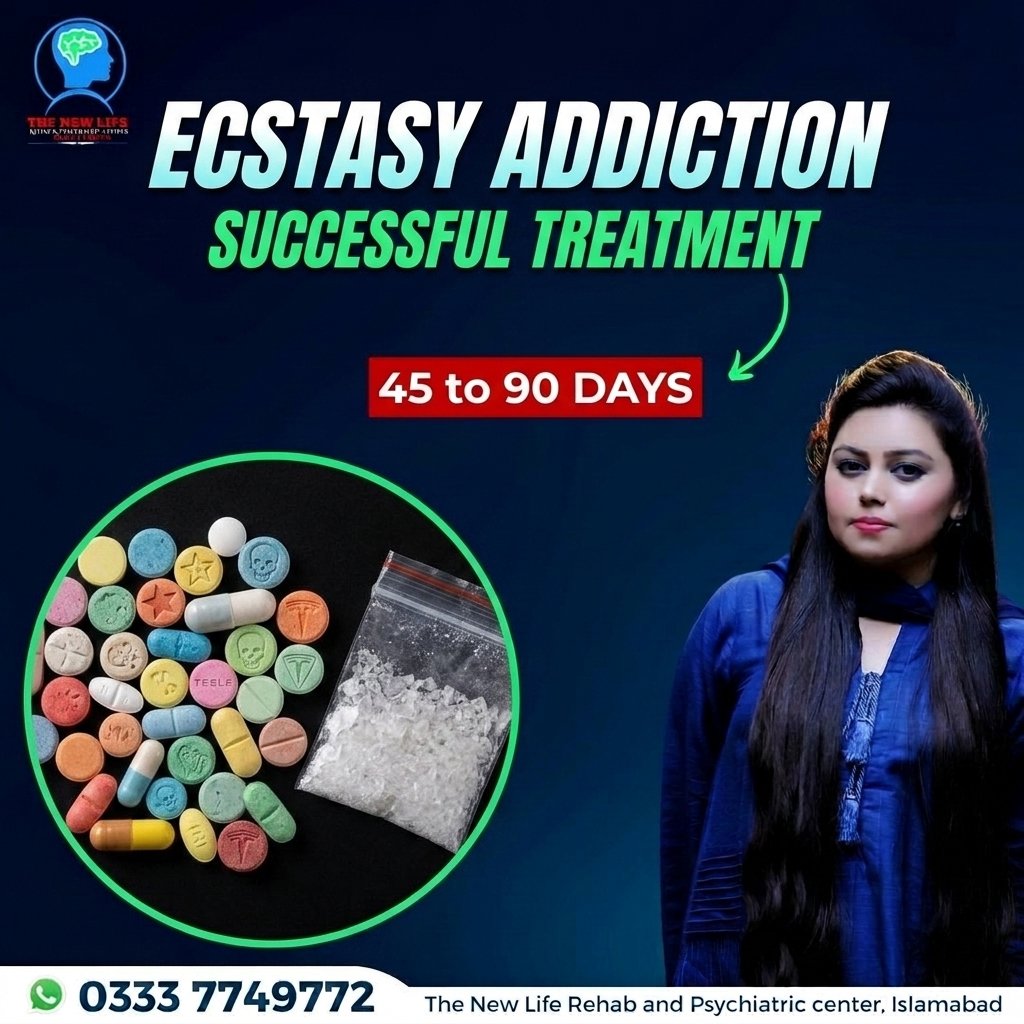
Ecstasy Addiction in Islamabad, Pakistan has become an increasing concern as the recreational use of synthetic drugs continues to affect young adults, students, and individuals from diverse backgrounds. Ecstasy, also known as MDMA or “Molly,” is a psychoactive substance that alters mood, energy levels, and perception. Although some people use it for its short-term euphoric effects, repeated or excessive use can lead to psychological dependence, mental health complications, and serious physical risks.
Understanding the dangers of ecstasy addiction and seeking timely professional support are important steps toward recovery. At The New Life Rehab & Psychiatric Center Islamabad, Pakistan, comprehensive treatment approaches focus on helping individuals address both substance dependence and the underlying emotional or psychological factors contributing to addiction.
Understanding Ecstasy Addiction in Islamabad, Pakistan
Ecstasy (MDMA) is a synthetic stimulant and hallucinogenic drug that affects the brain by increasing the release of neurotransmitters such as serotonin, dopamine, and norepinephrine. These chemical changes may temporarily produce feelings of happiness, emotional closeness, and increased energy. However, repeated use can disrupt normal brain function and increase the risk of dependency.
While ecstasy is often associated with parties and social events, long-term misuse can negatively affect mental health, judgment, memory, and emotional stability. Because the composition of illegally manufactured ecstasy tablets can vary, users may also be exposed to unknown or dangerous substances.
Signs and Symptoms of Ecstasy Addiction
Recognizing the signs of ecstasy addiction can help individuals and families seek professional assistance early.
Physical Symptoms
- Increased heart rate
- Excessive sweating
- Jaw clenching or teeth grinding
- Dilated pupils
- Dehydration
- Sleep disturbances
- Fatigue after drug use
- Reduced appetite
Psychological Symptoms
- Anxiety
- Depression
- Irritability
- Mood swings
- Memory difficulties
- Difficulty concentrating
- Emotional instability
Behavioral Symptoms
- Repeated use despite negative consequences
- Loss of interest in daily responsibilities
- Social withdrawal
- Risk-taking behavior
- Financial problems related to substance use
- Difficulty controlling drug use
These symptoms may vary depending on the frequency and duration of ecstasy use.
Causes and Risk Factors
Ecstasy addiction usually develops through a combination of psychological, environmental, and biological factors.
Peer Pressure
Social environments where recreational drug use is common can increase the likelihood of experimentation and continued use.
Mental Health Conditions
Individuals experiencing anxiety, depression, trauma, or chronic stress may misuse ecstasy in an attempt to cope with emotional difficulties.
Curiosity and Recreational Use
Some people begin using ecstasy out of curiosity or during social gatherings, unaware of the potential risks associated with repeated use.
Family and Genetic Factors
A family history of addiction or substance use disorders may increase vulnerability to developing dependency.
Effects of Ecstasy Addiction on Health
Long-term ecstasy use can affect multiple aspects of physical and mental health.
Mental Health Effects
Repeated ecstasy use may contribute to:
- Anxiety disorders
- Depression
- Panic attacks
- Emotional instability
- Cognitive impairment
- Sleep problems
Physical Health Effects
Possible physical complications include:
- High blood pressure
- Heart strain
- Dehydration
- Increased body temperature
- Kidney complications
- Liver damage in severe cases
Because ecstasy affects brain chemistry, some individuals may continue experiencing mood changes even after stopping the drug.
Professional Treatment for Ecstasy Addiction
Effective treatment addresses both substance dependence and any co-occurring mental health concerns.
Comprehensive Assessment
Treatment begins with a detailed evaluation of substance use history, physical health, and psychological well-being to develop an individualized care plan.
Medical Support
Although ecstasy withdrawal is generally less physically severe than withdrawal from some other substances, medical supervision may be beneficial for managing symptoms such as anxiety, sleep disturbances, and emotional distress.
Individual Counseling
Professional counseling helps individuals understand the reasons behind substance use, identify personal triggers, and develop healthier coping strategies.
Cognitive Behavioral Therapy (CBT)
CBT is an evidence-based therapy that helps individuals recognize unhelpful thought patterns and behaviors while learning practical skills to prevent relapse.
Family Counseling
Family participation can improve communication, strengthen emotional support, and help loved ones better understand the recovery process.
At The New Life Rehab & Psychiatric Center Islamabad, Pakistan, treatment plans are developed according to each individual’s specific needs, ensuring a personalized and comprehensive approach to recovery.
Relapse Prevention and Long-Term Recovery
Recovery from ecstasy addiction is an ongoing process that requires commitment and continued support.
Important relapse prevention strategies include:
- Identifying personal triggers
- Managing stress in healthy ways
- Maintaining regular counseling sessions
- Building positive social support
- Developing healthy daily routines
- Avoiding environments associated with substance use
Long-term recovery is strengthened through consistent self-care and professional guidance.
Frequently Asked Questions (FAQs)
1. What is ecstasy (MDMA)?
Ecstasy, also known as MDMA or Molly, is a synthetic psychoactive drug that affects mood, energy, and perception by altering brain chemistry.
2. Can ecstasy become addictive?
Yes. Although not everyone who uses ecstasy develops dependence, repeated use can lead to psychological addiction and increased difficulty stopping.
3. What are common symptoms of ecstasy addiction?
Common symptoms include mood changes, anxiety, sleep disturbances, memory problems, strong cravings, and continued use despite harmful consequences.
4. Can ecstasy affect mental health?
Yes. Long-term ecstasy use may contribute to anxiety, depression, emotional instability, and cognitive difficulties.
5. Is recovery from ecstasy addiction possible?
Yes. With professional assessment, counseling, behavioral therapy, family support, and ongoing recovery planning, many individuals successfully overcome ecstasy addiction.
Conclusion
Ecstasy Addiction in Islamabad, Pakistan is a growing health concern that requires greater awareness, early intervention, and access to professional treatment. Although ecstasy may be perceived as a recreational drug, repeated use can have lasting effects on mental health, physical well-being, and daily functioning. Comprehensive treatment that includes assessment, counseling, behavioral therapy, family involvement, and relapse prevention can support meaningful recovery. The New Life Rehab & Psychiatric Center Islamabad, Pakistan is committed to providing compassionate, evidence-based care that helps individuals address ecstasy addiction while supporting long-term mental health and overall well-being.