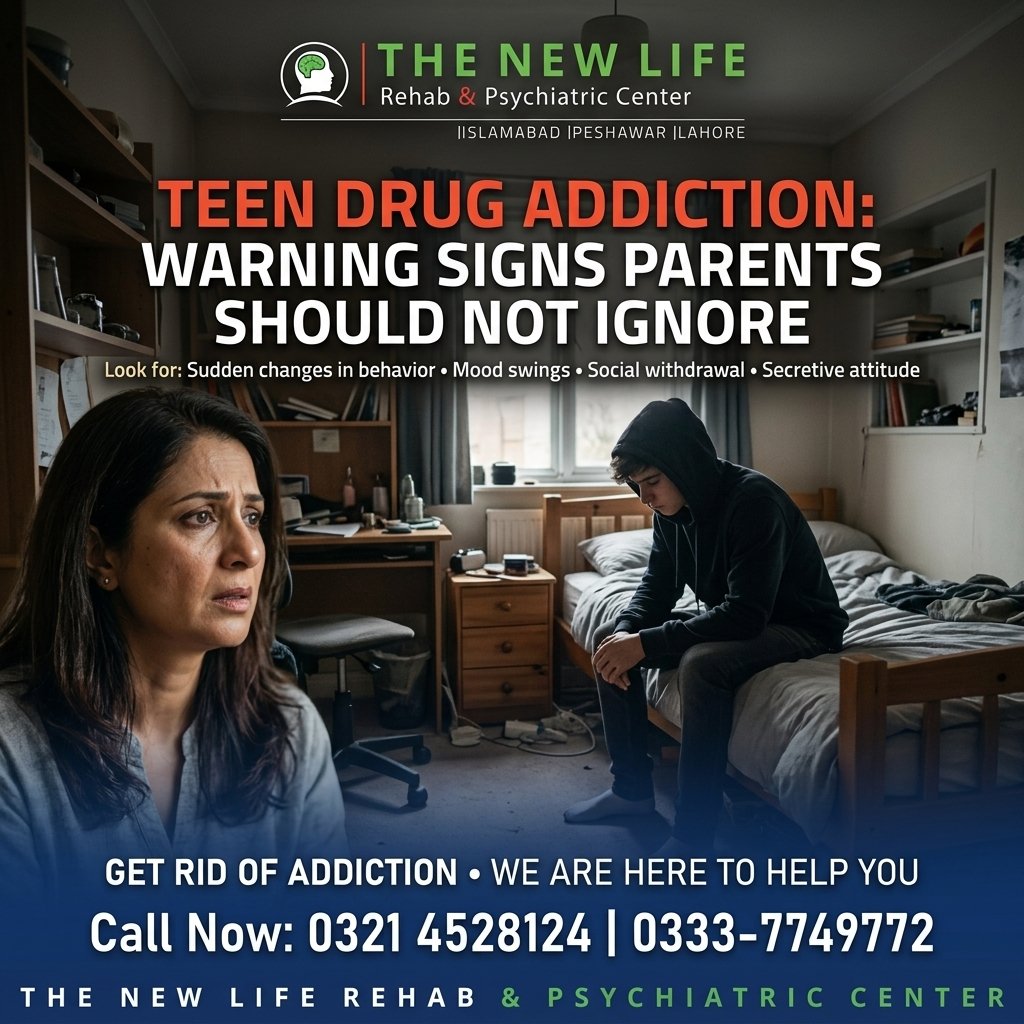
Teenage years involve significant emotional, social, and physical changes. Experimentation, changing friendships, mood fluctuations, and a growing desire for independence can sometimes be part of normal development. However, persistent changes in behavior, school performance, relationships, or physical well-being may indicate that a teenager is struggling with a more serious problem.
Teen Drug Addiction can affect a young person’s health, education, relationships, emotional development, and future well-being. Parents and caregivers who notice concerning patterns should avoid immediately responding with blame or punishment. Early, calm, and professional support can make it easier to understand what is happening and identify appropriate help.
Understanding Teen Drug Addiction
Teen drug addiction refers to problematic substance use in adolescents that becomes difficult to control despite negative consequences. Young people may be exposed to substances through peers, social environments, experimentation, emotional distress, or other circumstances.
Adolescents are still developing important emotional and decision-making skills. Substance use during this period can interfere with healthy development and may be associated with academic, behavioral, social, and psychological difficulties.
Not every teenager who experiments with a substance develops an addiction. However, repeated use, increasing secrecy, loss of control, cravings, or continuing use despite harmful consequences deserve attention.
Sudden Changes in Behavior
One of the most noticeable warning signs may be a significant change from a teenager’s usual behavior.
Parents may notice:
- Increased secrecy or unexplained defensiveness
- Sudden changes in friends or social groups
- Withdrawal from family activities
- Loss of interest in previously enjoyed activities
- Unusual irritability or agitation
- Changes in sleeping patterns
- Unexpected changes in personal habits
A single behavioral change does not prove drug use. However, several persistent changes occurring together may justify a supportive conversation and professional assessment.
Declining School Performance
Substance use can interfere with concentration, motivation, memory, attendance, and academic responsibilities.
Warning signs may include:
- Falling grades
- Frequent absences or lateness
- Loss of interest in school
- Missing assignments
- Difficulty concentrating
- Disciplinary problems
- Leaving school activities or hobbies unexpectedly
Academic problems can have many causes, including stress, bullying, learning difficulties, depression, anxiety, or family problems. Parents should therefore avoid assuming that drugs are automatically responsible.
Physical and Health-Related Changes

Some substances can produce noticeable physical or health-related changes. Depending on the substance and pattern of use, parents may observe unusual tiredness, changes in appetite, altered sleep, poor coordination, unexplained health complaints, or changes in general appearance.
Other warning signs may include unexplained injuries, frequent headaches, or repeated requests for medication.
These symptoms are not specific to drug use. A medical or psychological assessment may be necessary to understand the underlying cause.
Changes in Friendships and Social Life
Teenagers naturally change friendship groups as they grow. However, sudden withdrawal from longtime friends, association with unfamiliar groups, or increased secrecy about social activities may deserve attention when combined with other warning signs.
Parents should focus on patterns rather than treating a new friendship as evidence of substance use.
Maintaining open communication can make it easier for teenagers to talk about peer pressure, social situations, and difficult experiences.
Unexplained Money or Missing Belongings
Another possible warning sign is unusual financial behavior. A teenager may suddenly ask for more money, become unable to explain where money has gone, or take money or belongings without permission.
Again, these behaviors do not automatically indicate drug addiction. They should be considered alongside other changes in behavior, school performance, relationships, and health.
Emotional and Mental Health Changes
Teen drug addiction may occur alongside mental health difficulties. Depression, anxiety, trauma, loneliness, stress, or other emotional concerns can influence substance use, while substance use can also worsen psychological symptoms.
Parents should pay attention to persistent:
- Sadness or hopelessness
- Anxiety or fear
- Extreme irritability
- Social withdrawal
- Sudden emotional changes
- Loss of interest in normal activities
If a teenager talks about self-harm or suicide, immediate professional or emergency assistance should be sought rather than waiting for the situation to improve on its own.
How Parents Should Respond
Discovering or suspecting substance use can be frightening. A parent’s response can influence whether a teenager feels able to seek help.
Instead of immediately using threats, humiliation, or harsh judgment, parents can:
- Choose a calm and private time to talk.
- Explain the specific changes they have noticed.
- Listen without immediately interrupting or accusing.
- Ask open-ended questions.
- Communicate concern rather than shame.
- Set appropriate and consistent boundaries.
- Consider professional assessment when concerns persist.
The objective is to understand the situation and protect the teenager’s well-being.
Professional Support for Teen Drug Addiction
Professional assessment can help determine whether a teenager is experiencing substance experimentation, problematic use, dependence, or another underlying concern.
Treatment should be appropriate for the teenager’s age, development, mental health, family environment, and substance-use pattern. Depending on individual needs, support may involve counseling, family therapy, behavioral interventions, psychiatric assessment, addiction treatment, or continuing care.
At The New Life Rehab & Psychiatric Center Islamabad, Pakistan, families can seek professional guidance when addiction-related or psychological concerns affect a young person’s well-being.
Frequently Asked Questions
1. What are the most common warning signs of Teen Drug Addiction?
Possible signs include sudden behavioral changes, declining school performance, secrecy, changes in friendships, unusual financial behavior, withdrawal from family, changes in sleep or appetite, and persistent emotional difficulties. No single sign confirms addiction.
2. Does experimenting with drugs mean a teenager is addicted?
Not necessarily. Experimentation and addiction are different. However, repeated use, loss of control, cravings, increasing tolerance, or continued use despite negative consequences can indicate a more serious substance-use problem.
3. How should parents talk to a teenager about suspected drug use?
Parents should choose a calm setting, explain their concerns without immediate accusations, listen carefully, and ask open questions. A supportive conversation can make it easier for the teenager to discuss peer pressure, emotional difficulties, or substance use.
4. Can mental health problems contribute to teen substance use?
Yes. Emotional difficulties such as anxiety, depression, trauma, stress, and loneliness may influence substance use in some teenagers. Professional assessment can help identify underlying concerns and determine appropriate support.
5. When should parents seek professional help?
Parents should consider professional help when substance use is repeated, difficult to control, affecting school or relationships, causing health problems, or associated with significant behavioral or emotional changes. Urgent help is needed if there is an immediate risk of overdose, severe intoxication, self-harm, or other medical danger.
Conclusion
Teen Drug Addiction is a serious concern that can affect a young person’s physical health, emotional development, education, relationships, and future well-being. Parents do not need to wait until every warning sign is present before seeking guidance.
The most helpful response is often a combination of awareness, calm communication, appropriate boundaries, and professional assessment. The New Life Rehab & Psychiatric Center Islamabad, Pakistan can provide families with guidance and individualized support when addiction or related mental health concerns require professional attention.
Early recognition does not guarantee a particular treatment outcome, but seeking appropriate help can provide an opportunity to understand the problem and identify suitable next steps.