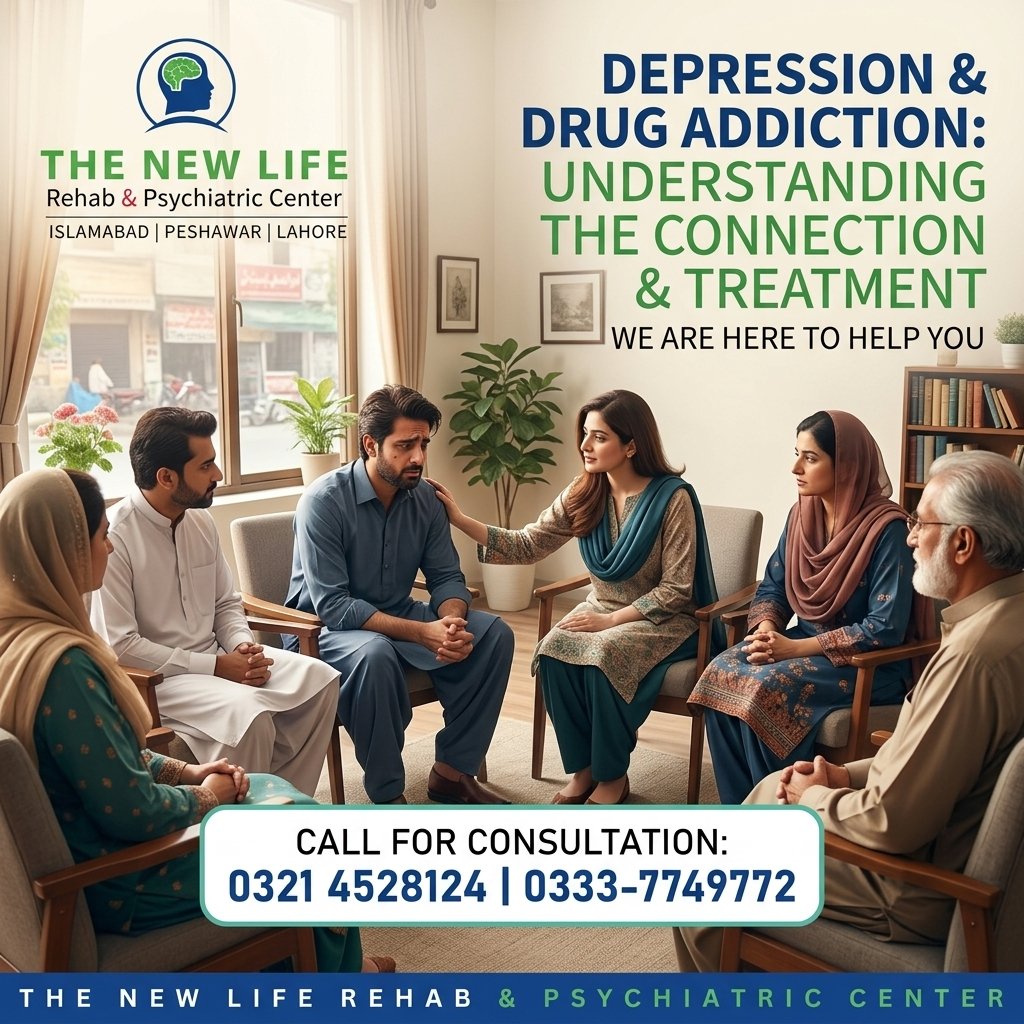
Co-occurrence of depression and drug addiction is challenging and can affect individuals physically, socially, and emotionally. While some turn to drugs during depression in an effort to escape or numb from sadness, anxiety, stressor trauma and emotional pain. In some instances, continued use of drugs may also play a role in the development or worsening of depressive symptoms.
If both conditions are present treating either condition alone may fail to address important recovery needs. An integrated assessment can evaluate cooccurring substance use and mental health problems and create a personalized treatment plan.
The New Life Rehab & Psychiatric Center Islamabad, Pakistan is a private, professional rehabilitation center that specializes in providing organized substance-use and other mental health services for individuals with such behavioral disorders and their families.
How Are Depression and Drug Addiction Related?
Depression can include a range of mental health problems involved in low mood, loss of interest and changes in sleep or appetite, fatigue, trouble concentrating, thoughts of death or suicide.
Substance use disorder (SUD), also known as drug addiction, is a disease characterized by compulsive drug seeking, continued use despite harmful consequences.
The correlation between both could be a cocktail of complexities. Depression can precede drug use, emerge along with ongoing substance abuse or develop during withdrawal from drug use and recovery.
Many factors which can drive both possibly include:
- Genetics and family history
- Trauma or prolonged stress
- Social isolation
- Environmental factors
- Chronic health problems
- Previous mental health difficulties
- Effects of repeated substance use
A professional assessment can assist in identifying how the conditions might be interacting.
How drug use can impact on depression
Other substances might affect neurotransmitter activity, alter mood (adjusted within hours) or provide a short-term sense of relief. These effects may be accompanied by changes in mood, sleep, motivation and emotional stability.
Substance use can progress to:
- Increased isolation
- Sleep disruption
- Financial and relationship problems
- Reduced motivation
- Emotional instability
- Increased anxiety
- Worsening depressive symptoms
- Greater dependence on the substance
It depends upon the substance will you use, the amount used and how often it’s used as well as your health at the time.
Is Drug Addiction a Result of Depression?
Depression boarders on earliest part and not all addicts have addiction to it but some of them, who want go away from this feeling are definitely using substances.
Someone who suffers from continued sad moods, for example, may be using drugs as a distraction from pain. Repeated use can become a pattern that is not easy to stop over time.
This can create a cycle:
Depression → use of drugs/alcohol → some short-term relief → bad consequences (big or small) → more depression ⇒ uses drug more
It often takes treatment for both the mental health condition and substance-use disorder to break this cycle.
Symptoms of Co-Occurring Depression and Drug Addiction
Due to overlap in symptoms, identifying co-occurring conditions can be challenging.
Possible warning signs include:
- Persistent sadness or hopelessness
- losing interest in usual activities
- Major changes in sleep
- Changes in appetite
- Social withdrawal
- Difficulty concentrating
- Strong drug cravings
- Increasing drug use
- Neglecting responsibilities
- Continued use despite negative consequences
- Irritability or mood changes
- Feelings of guilt or worthlessness
These symptoms alone do not constitute a diagnosis. An appropriate evaluation can be performed by a qualified individual.
Dual Diagnosis Treatment
If a person has a depression and substance-use disorder at the same time, professionals may say that she or he has a dual diagnosis or co-occurring disorder.
Management needs to address both conditions, and one should not assume that treatment of one will lead to the other resolving.
A comprehensive treatment plan can entail:
- Psychiatric assessment
- Addiction assessment
- Counseling
- Behavioral therapy
- Medication when clinically appropriate
- Withdrawal management
- Family support
- Relapse prevention
- Continuing care
The specific combination is tailored to the individualized symptoms and clinical picture of each patient.
Depression Assessment During Addiction Treatment
Screening for mental health should be conducted when patients are not experiencing intoxication or withdrawal, as depression may present during these phases.
Professionals may assess:
- When depressive symptoms began
- Whether there had been symptoms prior to using drugs
- Fluctuations in mood during the abstinent window
- Pattern and type of substance use
- Previous mental health treatment
- Family mental health history
- Suicidal thoughts or self-harm risk
- Current medications
- Physical health
This information may help the clinicians subsequently devise a more suitable treatment plan(s).
Counseling and Behavioral Therapy
Psychological treatment may simplify the explaining not only of substance use also vacantia symptoms.
Therapy may focus on:
- Identifying triggers
- Managing difficult emotions
- Challenging unhelpful thought patterns
- Developing healthier coping skills
- Improving motivation
- Managing cravings
- Building daily routines
- Improving communication

- Preventing relapse
Studies of cognitive behavioral therapies and other evidence-based therapies may be adapted to individual needs.
Medication for Depression and Addiction
Medication may help certain individuals dealing with depression. These treatment decisions should be made by a qualified medical professional after thorough evaluation of your symptoms, substance use, physical health and other medications.
This medication can be an element of a wider treatment which includes counseling and/or addiction treatment.
People do not start, stop or change psychiatric medication or addiction-related medication without guidance from a professional.
Detox and Depression
Withdrawal management may be a critical first step for someone who is physically dependent on drugs. But detoxification does not, by itself, treat depression or the roots of addiction.
Withdrawal may also cause mood, anxiety, sleep or other psychological symptoms to worsen temporarily. Mood disorders could be treated a little better if detected early, and professional monitoring can help with this.
Medically dangerous withdrawal occurs in particular with alcohol and some sedative medications. It is necessary to get a professional decision in advance of discontinuing substances when dependence is suspected.
Family Support
The family is not just the person with depression and addiction. Family members might not understand behavioral changes or how to help.
Family-focused treatment can help relatives:
- Understand addiction and depression
- Communicate more effectively
- Establish healthy boundaries
- Recognize warning signs
- Avoid enabling harmful substance use
- Encourage appropriate professional care
- Support healthy recovery routines
So, family members should also get support as and when required for their emotional support.
Relapse Prevention for Co-Occurring Conditions
For some people in recovery from addiction, depression can trigger a relapse. Likewise, relapse to substance use may aggravate depressive symptoms.
A relapse-prevention plan can include:
- Identifying emotional and environmental triggers
- Continuing mental health treatment
- Attending addiction counseling
- Managing stress
- Maintaining healthy sleep routines
- Building supportive relationships
- Avoiding high-risk situations
- Monitoring changes in mood
- Getting professional help soon when symptoms get worse
Recovery models quickly adapt as conditions evolve
When Depression Requires Immediate Help
The worst-case scenario is that the mixture of depression and addiction could lead to serious psychological distress.
If someone:
- Has thoughts of suicide
- Has a plan or intention for self-harm
- Has seriously harmed themselves
- is an imminent threat to him — or herself, or to others
- Experiences severe confusion or psychosis
- Becoming increasingly activated or dissociated
You should NEVER leave anyone in immediate and imminent danger alone while arranging emergency help.
Selecting Treatment Between Depression Versus Drug Addiction
Consider if how you approach treatment can be able to treat both mental health and substance use.
Useful questions include:
- Do they conduct a thorough mental health assessment?
- Is substance use assessed separately?
- Is this in the presence of a licensed mental health professional?
- Is withdrawal risk evaluated?
- Is counseling available?
- Is psychiatric treatment, if indicated and needed, available?
- Is family support available?
- Is relapse prevention included?
- Is continuing care available?
It can make it easier to get the support needed to help identify and treat both depression and addiction as part of an integrated treatment plan.
THE NEW LIFE REHAB & PSYCHIATRIC CENTER ISLAMABAD, PAKISTAN; Depression, Drug addiction Treatment
At The New Life Rehab & Psychiatric Center Islamabad, Pakistan, you are offered the therapy that is both organized as well as directed for keeping substance abuse and other mental difficulties in balance.
Therapy or treatment planning, depending on your need’s withdrawal management addiction and mental health assessment counseling psychological support family involvement relapse prevention care for continuing recovery
A specialist review can pick which sort and how much treatment will be required for people who have sadness alongside their substance abuse.
Frequently Asked Questions
1. Can depression and drug addiction happen together?
Yes. Read more: It is common for someone with depression to use drugs or alcohol One condition might onset earlier than the other, or both may be influenced by common biological, psychological and environmental factors.
2. Can drugs make depression worse?
Certain drugs and ways of taking a substance repeatedly can lead to shifts in mood, sleep disturbances, social withdrawal and so forth that may amplify the indicators of despair. The consequences vary with the type of drug and personal situation.
3. Should you treat depression or addiction first?
In the case of both conditions, the answer lies in an integrated approach. The specific care settings, intensity of services, which level of care an individual should be admitted to will depend on the individual’s characteristics such as symptomatology, substance(s) utilized, severity of withdrawal symptoms (if applicable), and presence or absence of co-occurring mental health needs.
4. What if It Is Just Depression and Drug Addiction — Is Detox Enough?
No. Detox primarily addresses withdrawal. Counseling, psychiatric care, behavioral therapy, relapse preventionwww.consumerhealthdigest.com/addiction-prevention-resource/prevent-addiction-from-relapsing.html and continuing addiction treatment may also be required for an individual who has co-occurring depression.
5. The impact of addiction on families — but how can you support someone with depression and addiction?
An indication of the positive role families can take is that this study outlines several guidelines for families including encouraging professional treatment; gaining appreciation of both disorders — including their overlap; maintaining appropriate boundaries; using supportive communication, and knowing warning signs. Ask for help urgently if there is an imminent risk of suicide or serious harm.
Conclusion
In other words, emotional instability and drug use can reinforce each other in a cycle of depression and substance addiction. An effective treatment should not only focus on substance use in isolation, but rather the degeneration of one or more following: – mental health: self-harm, risk of suicide- physical health: breathing problem (e.g. asthma), liver damage (in case of excess alcohol consumption)- relationships: professional contacts (work), family and friends- recovery environment and social networks: home and neighborhood.
Comprehensive Treatment Usually Includes: Withdrawal Management Counseling Behavioral Therapy Psychiatric Care Family Support Relapse Prevention Continuing Treatment However, professional assessment is a key first step in assessing what mix of services may be best.
If you or a loved one is facing drug addiction along with depressive symptoms, talking to a qualified health care or addiction professional can refer you to the right support. The New Life Rehab & Psychiatric Center Islamabad, Pakistan offer a systematic approach to addiction and mental health treatment for individuals and families who need clinical care.