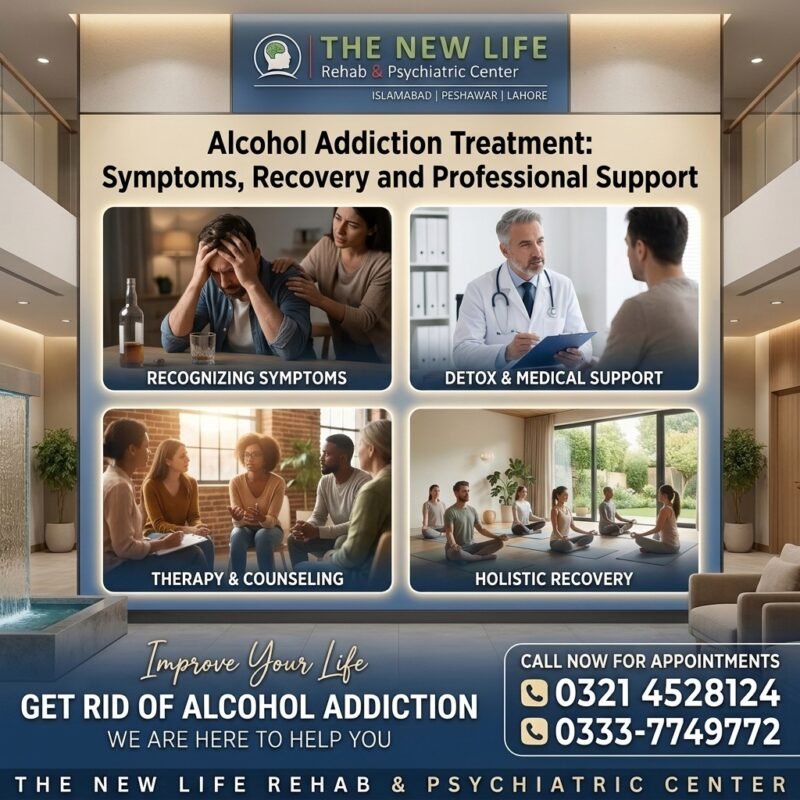
Alcohol addiction can affect a person’s physical health, emotional well-being, family relationships, work, and daily responsibilities. What may begin as occasional drinking can develop into a pattern that becomes difficult to control, even when negative consequences appear. Recognizing the signs early and understanding available treatment options can help individuals and families take informed steps toward recovery.
Alcohol Addiction Treatment focuses on helping individuals address problematic drinking, manage withdrawal risks, understand the factors contributing to alcohol use, and develop strategies for maintaining long-term recovery. With appropriate professional support, treatment can be tailored to individual needs and circumstances.
Understanding Alcohol Addiction
Alcohol addiction, also known as alcohol use disorder (AUD), is a medical condition involving difficulty controlling alcohol consumption despite harmful consequences. It can affect people from different backgrounds and does not simply reflect a lack of willpower.
Factors contributing to alcohol-related problems may include stress, family history, emotional difficulties, social influences, trauma, and other health concerns. Each person’s experience is different, which is why assessment and individualized treatment are important.
Common Symptoms of Alcohol Addiction
Recognizing the warning signs of alcohol addiction can help individuals seek assistance before the problem becomes more severe. Possible symptoms include:
- Drinking more alcohol or for longer than intended
- Repeatedly trying to reduce drinking without success
- Experiencing strong cravings for alcohol
- Spending substantial time drinking or recovering afterward
- Neglecting work, education, or family responsibilities
- Continuing to drink despite relationship or health problems
- Giving up important activities because of alcohol use
- Developing tolerance or needing more alcohol to experience similar effects
- Experiencing withdrawal symptoms when alcohol use decreases
Not everyone experiences every symptom. A qualified healthcare professional can assess the pattern of drinking and determine whether alcohol use disorder may be present.
The Importance of Professional Alcohol Addiction Treatment
Professional treatment can help individuals understand their drinking patterns, assess their health, and identify appropriate recovery options. The level of care depends on the severity of alcohol use, previous withdrawal experiences, physical health, mental health, and available support.
A treatment plan may involve medical assessment, supervised withdrawal management, counseling, behavioral therapy, medication when appropriate, family support, and continuing care.
At The New Life Rehab & Psychiatric Center Islamabad, Pakistan, alcohol-related concerns can be considered as part of an individualized addiction treatment approach that takes account of the person’s needs and circumstances.
Alcohol Withdrawal and Medical Safety
People who have been drinking heavily or regularly for a prolonged period may develop withdrawal symptoms when they stop or significantly reduce alcohol use. Symptoms can include anxiety, sweating, nausea, tremors, headaches, sleep difficulties, and agitation.
In serious cases, alcohol withdrawal can cause seizures, hallucinations, or delirium tremens, a potentially life-threatening condition.
Anyone who may be physically dependent on alcohol should seek medical advice before stopping abruptly. Withdrawal can require medical monitoring and treatment. Severe confusion, seizures, hallucinations, or other signs of a medical emergency require immediate emergency assistance.
Detoxification should be treated as a medical process when necessary, not as a substitute for comprehensive addiction treatment.
Counseling and Behavioral Therapy
Counseling can help individuals understand the emotional, behavioral, and environmental factors associated with alcohol use. Sessions may explore stress, relationship difficulties, cravings, social pressure, and situations that make drinking more likely.
Cognitive Behavioral Therapy (CBT) is one approach that may help individuals identify unhelpful thought patterns and develop healthier coping strategies. Other evidence-based approaches may also be suitable depending on individual needs.
The purpose of therapy is to help people make informed decisions, strengthen coping skills, and build a recovery plan that is realistic for their circumstances.
Medication and Medical Support
For some individuals, medication may be considered as part of alcohol addiction treatment. Depending on clinical circumstances, certain medicines can help reduce cravings or support changes in drinking behavior.
Medication choices should be made by a qualified healthcare professional after reviewing medical history, current medications, and other relevant factors. No medication is suitable for everyone, and medicines should be used according to professional guidance.
The Role of Family Support
Alcohol addiction can affect the entire family. Relatives may experience stress, uncertainty, communication difficulties, or concerns about safety and responsibilities.
Family education and counseling can help loved ones understand alcohol use disorder and learn constructive ways to offer support. Healthy boundaries are also important; family members should not have to manage the entire recovery process alone.
With the individual’s consent and when appropriate, family participation can form part of a broader treatment plan.
Relapse Prevention and Long-Term Recovery
Recovery often continues well beyond the initial treatment period. Some individuals experience cravings or difficult emotions after reducing or stopping alcohol use, particularly in situations associated with previous drinking.
A relapse prevention plan may include identifying triggers, practicing coping strategies, attending follow-up appointments, maintaining supportive relationships, and developing healthy daily routines.
If a return to drinking occurs, it is important to seek support and review the treatment plan rather than assuming recovery is impossible. Ongoing care can be adjusted as needs change.
Frequently Asked Questions
1. What are the common signs of alcohol addiction?
Common signs include difficulty controlling drinking, strong cravings, neglecting responsibilities, continued alcohol use despite harmful consequences, increased tolerance, and possible withdrawal symptoms.
2. Can alcohol addiction be treated?
Yes. Treatment options may include medical assessment, withdrawal management, counseling, behavioral therapy, medication when appropriate, and continuing recovery support. Treatment needs differ between individuals.
3. Is it safe to stop drinking alcohol suddenly?
Not always. For people with physical dependence, abruptly stopping alcohol can cause dangerous withdrawal symptoms. Medical advice is important before stopping, and severe symptoms require emergency care.
4. How long does alcohol addiction treatment take?
There is no fixed duration. Treatment depends on the severity of alcohol use, medical and psychological needs, response to care, and the type of support required. Some individuals benefit from continuing care over an extended period.
5. How can families support someone recovering from alcohol addiction?
Families can listen without judgment, encourage professional care, learn about addiction, support healthy routines, and maintain appropriate boundaries. Professional guidance may also help families manage their own concerns.
Conclusion
Alcohol Addiction Treatment can help individuals address problematic drinking, understand withdrawal risks, develop healthier coping strategies, and work toward sustained recovery. Early assessment, medically appropriate withdrawal management, counseling, and continuing support can all play important roles.
The New Life Rehab & Psychiatric Center Islamabad, Pakistan recognizes that addiction recovery requires an individualized approach that considers physical health, psychological well-being, family circumstances, and long-term support needs. Seeking professional guidance can be an important step toward understanding alcohol-related difficulties and identifying appropriate care.