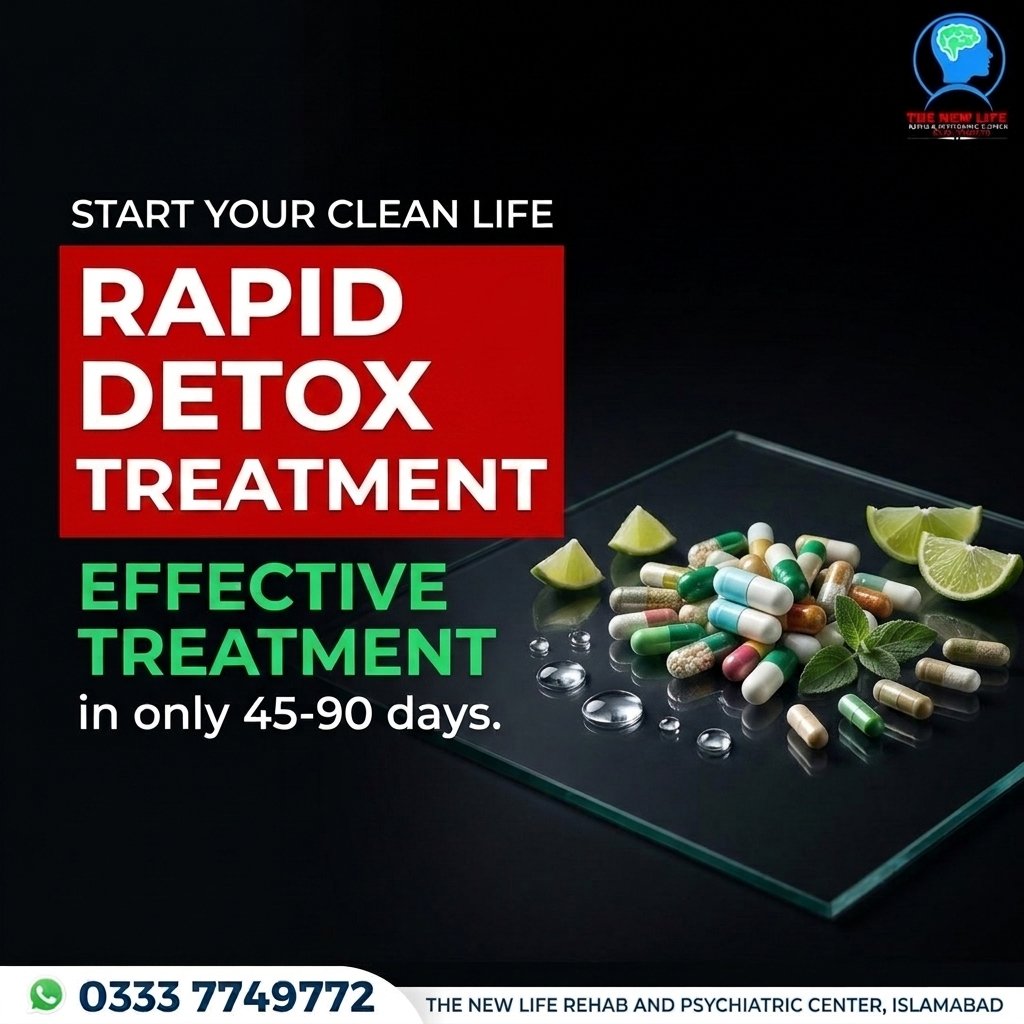
Rapid Detox Treatment in Islamabad, Pakistan is a topic of growing interest among individuals seeking treatment for opioid dependence, including heroin and prescription opioid addiction. Detoxification is an important first step in the recovery process, helping the body eliminate addictive substances while managing withdrawal symptoms. Because opioid withdrawal can be physically and emotionally challenging, many people explore different detox approaches, including rapid detox.
It is important to understand that rapid detox is a specialized medical procedure that is not appropriate for everyone and requires careful clinical evaluation. Decisions about detoxification should always be made by qualified healthcare professionals based on the individual’s medical history, substance use pattern, and overall health. At The New Life Rehab & Psychiatric Center Islamabad, Pakistan, detoxification is considered one component of a comprehensive treatment plan that also includes counseling, behavioral therapy, psychiatric support, and long-term relapse prevention.
Understanding Rapid Detox Treatment in Islamabad, Pakistan
Rapid detox is a medically supervised approach designed to accelerate the withdrawal process for individuals who are dependent on opioids. During this procedure, medications may be used to help manage withdrawal while the patient is closely monitored by experienced healthcare professionals.
Because rapid detox involves medical risks and requires specialized supervision, it is generally reserved for carefully selected patients after a thorough medical assessment. It should never be attempted without professional medical care.
Detoxification alone is not considered a complete treatment for addiction. Long-term recovery usually requires continued psychological support, counseling, and rehabilitation.
Who May Require Detoxification?
Detoxification may be recommended for individuals experiencing dependence on substances such as:
- Heroin
- Prescription opioids
- Morphine
- Fentanyl
- Oxycodone
- Other opioid medications
The choice of detox method depends on several factors, including the severity of dependence, overall health, and the presence of co-occurring mental health conditions.
Understanding Opioid Withdrawal
Withdrawal symptoms occur when a person who has developed physical dependence significantly reduces or stops opioid use.
Common withdrawal symptoms include:
- Muscle and joint pain
- Sweating
- Nausea and vomiting
- Diarrhea
- Runny nose
- Anxiety
- Restlessness
- Insomnia
- Strong drug cravings
- Irritability
Although opioid withdrawal is often not life-threatening, it can be physically uncomfortable and emotionally distressing, making professional supervision valuable.
Benefits of Medically Supervised Detoxification

Regardless of the detox method used, medically supervised care offers several important advantages.
Continuous Medical Monitoring
Healthcare professionals monitor vital signs, withdrawal symptoms, hydration, and overall physical health throughout the detox process.
Symptom Management
Appropriate medications and supportive care may be used to reduce discomfort and improve patient safety.
Clinical Assessment
Medical teams can identify underlying physical or mental health conditions that may require additional treatment.
Transition to Rehabilitation
Detoxification provides the opportunity to begin comprehensive addiction treatment immediately after withdrawal management.
Comprehensive Treatment Beyond Detox
Detoxification addresses physical dependence but does not resolve the psychological, behavioral, and emotional aspects of addiction.
Long-term recovery often includes:
Individual Counseling
Professional counseling helps individuals understand the underlying causes of addiction while developing healthier coping strategies.
Cognitive Behavioral Therapy (CBT)
CBT supports recovery by helping individuals recognize harmful thought patterns, manage cravings, and reduce the risk of relapse.
Psychiatric Assessment
Many individuals with opioid addiction also experience depression, anxiety, trauma, or other mental health conditions that benefit from professional evaluation and treatment.
Family Support Programs
Family education and counseling can strengthen communication, rebuild trust, and provide meaningful support throughout recovery.
At The New Life Rehab & Psychiatric Center Islamabad, Pakistan, treatment plans are individualized to address both addiction and overall mental well-being.
Is Rapid Detox Suitable for Everyone?
Rapid detox is not recommended for every individual with opioid dependence. Factors such as age, medical history, cardiovascular health, psychiatric conditions, pregnancy, and the severity of addiction influence whether this approach is appropriate.
Healthcare professionals typically perform a comprehensive assessment before recommending any detoxification method.
In many situations, standard medically supervised detoxification may be the safer and more appropriate option.
Recovery After Detoxification
Completing detox is only the beginning of recovery. Maintaining long-term progress requires continued treatment and ongoing support.
Recovery planning often includes:
- Individual therapy
- Relapse prevention strategies
- Healthy daily routines
- Stress management techniques
- Ongoing psychiatric care when appropriate
- Family involvement
- Follow-up counseling
A structured recovery plan can help individuals build healthier lifestyles while reducing the risk of returning to substance use.
Frequently Asked Questions (FAQs)
1. What is rapid detox treatment?
Rapid detox is a medically supervised procedure intended to accelerate opioid withdrawal in carefully selected patients. It should only be performed under professional medical care.
2. Is rapid detox suitable for everyone?
No. Rapid detox is not appropriate for every individual. A comprehensive medical evaluation is necessary to determine the safest treatment approach.
3. Does detoxification cure addiction?
No. Detoxification manages physical withdrawal but does not treat the psychological and behavioral aspects of addiction. Ongoing rehabilitation and counseling remain essential.
4. Why is medical supervision important during detox?
Medical supervision helps monitor withdrawal symptoms, manage complications, and provide supportive care throughout the detoxification process.
5. What happens after detox treatment?
Following detox, individuals are often encouraged to continue with counseling, behavioral therapy, relapse prevention planning, family support, and other rehabilitation services to support long-term recovery.
Conclusion
Rapid Detox Treatment in Islamabad, Pakistan can be an important option for selected individuals with opioid dependence when recommended after careful medical evaluation. Because detoxification addresses only the physical aspects of addiction, it is most effective when combined with comprehensive rehabilitation, psychological counseling, psychiatric care, and long-term recovery planning. Every individual’s treatment needs are different, making personalized assessment essential for determining the most appropriate approach. The New Life Rehab & Psychiatric Center Islamabad, Pakistan is committed to providing ethical, evidence-informed care that supports safe detoxification, ongoing recovery, and improved mental and physical well-being while recognizing that lasting recovery extends far beyond the detox process.