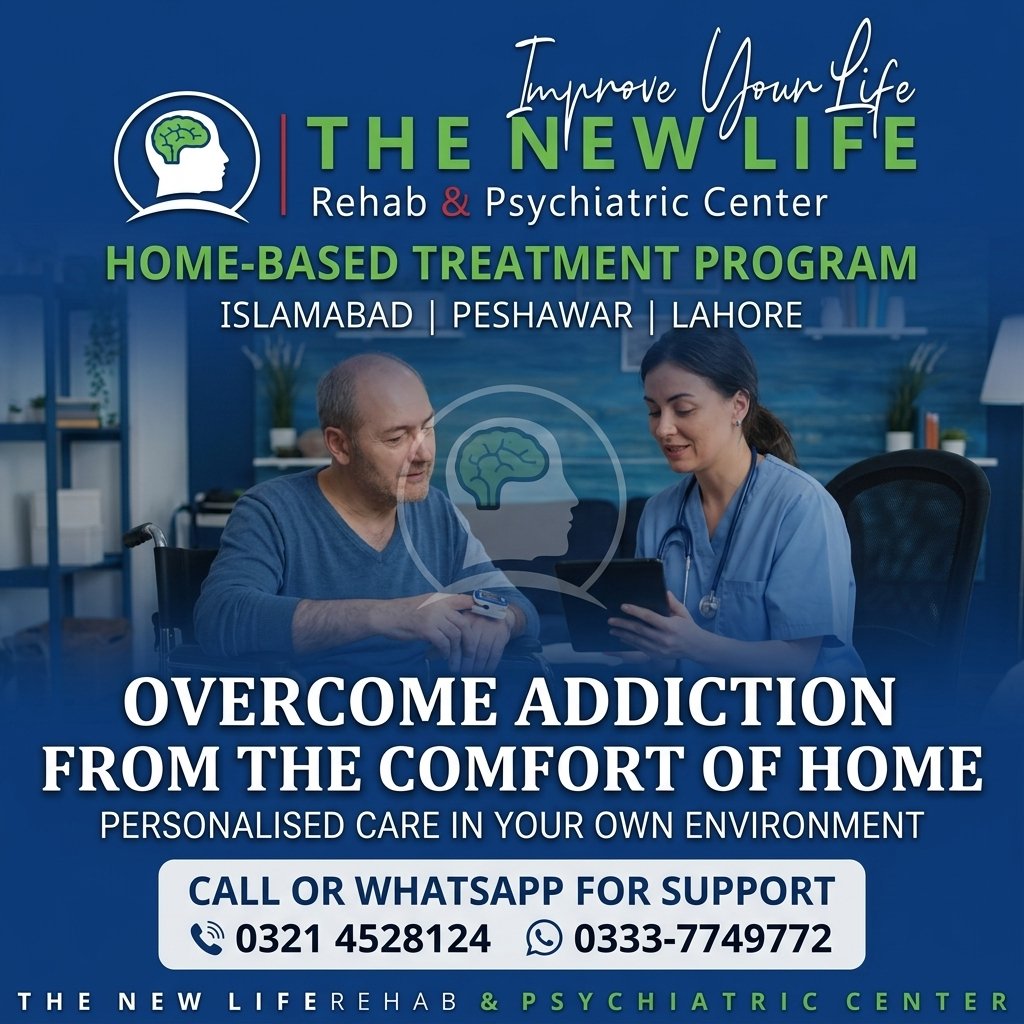
A Home-Based Treatment Program in Islamabad, Pakistan can provide professional addiction and mental health support to individuals who may benefit from receiving appropriate care within the comfort of their own home. For some patients, traveling regularly to a rehabilitation center can be difficult because of family responsibilities, mobility concerns, work commitments, privacy preferences, or other personal circumstances. Home-based treatment can offer a flexible approach while maintaining professional guidance and structured recovery support.
Addiction and mental health conditions require individualized care. A home-based program should therefore be recommended only after an appropriate clinical assessment to determine whether treatment can be safely provided outside a residential or hospital setting. At The New Life Rehab & Psychiatric Center Islamabad, Pakistan, home-based services can be incorporated into a broader treatment plan according to the individual’s condition, treatment needs, and recovery goals.
Understanding Home-Based Treatment Program in Islamabad, Pakistan
A Home-Based Treatment Program involves delivering selected healthcare, counseling, psychiatric, or rehabilitation services at the patient’s residence rather than requiring continuous attendance at a treatment facility.
Depending on clinical needs, home-based care may support individuals experiencing:
- Drug addiction
- Alcohol addiction
- Heroin addiction
- Cannabis or marijuana addiction
- Smoking and nicotine dependence
- Prescription medication dependence
- Depression
- Anxiety disorders
- Stress-related concerns
- Dual diagnosis and co-occurring conditions
The exact services provided depend on the individual’s assessment and the type and severity of the condition.
Who May Benefit from Home-Based Treatment?
Home-based treatment may be suitable for selected individuals who are medically and psychologically stable and do not require intensive residential supervision.
It may be considered for people who:
- Have a supportive and stable home environment
- Can participate in scheduled treatment sessions
- Prefer receiving certain services at home
- Have difficulty traveling regularly
- Are continuing treatment after residential rehabilitation
- Require follow-up counseling or psychiatric support
However, individuals experiencing severe withdrawal, significant medical complications, acute psychiatric symptoms, or immediate safety concerns may require a higher level of professional care.
Benefits of a Home-Based Treatment Program
A structured home-based approach can offer several practical advantages when clinically appropriate.
Greater Convenience
Receiving selected treatment services at home can reduce the need for frequent travel and make it easier to maintain treatment appointments.
Family Involvement
When appropriate, family members can participate in parts of the recovery process and learn how to provide constructive support.
Familiar Environment
Some individuals may feel more comfortable discussing personal concerns in a familiar environment, which can encourage open communication during counseling.
Continuity of Care
Home-based support can be useful as part of ongoing treatment or aftercare, helping individuals remain connected with professional guidance.
At The New Life Rehab & Psychiatric Center Islamabad, Pakistan, treatment decisions are based on individual needs rather than applying the same approach to every patient.
Components of Home-Based Treatment
A comprehensive Home-Based Treatment Program in Islamabad, Pakistan may include different services depending on the individual’s clinical assessment.
Professional Assessment
Treatment begins with an evaluation of the individual’s physical health, mental health, substance use history, home environment, and recovery needs.
Counseling Sessions
Individual counseling can help patients explore emotional challenges, identify triggers, develop coping strategies, and work toward realistic recovery goals.
Psychiatric Support
For individuals with mental health concerns, psychiatric assessment and follow-up may be incorporated when clinically appropriate.
Family Education
Family members can receive guidance about addiction, mental health conditions, communication, boundaries, and ways to support recovery without enabling harmful behaviors.
Relapse Prevention
Patients can work with professionals to identify personal triggers and create practical strategies for managing cravings, stress, and high-risk situations.
Home-Based Addiction Treatment
Addiction recovery often requires continued support after detoxification or residential rehabilitation. Home-based services may provide counseling and follow-up care for individuals who are appropriate candidates for treatment outside a residential setting.
Treatment may focus on:
- Understanding addiction triggers
- Managing cravings
- Developing healthier routines
- Improving emotional regulation
- Strengthening family relationships
- Preventing relapse
- Maintaining treatment participation
Home-based treatment should not be viewed as a replacement for emergency or intensive medical care when such services are clinically necessary.
Mental Health Support at Home
Mental health concerns can affect relationships, employment, education, sleep, and everyday functioning. Home-based psychiatric or counseling support may help selected individuals remain engaged with treatment while continuing their daily responsibilities.
Conditions that may require professional evaluation include depression, anxiety, mood disorders, trauma-related conditions, and co-occurring substance use disorders.
Early professional support can help individuals understand their symptoms and identify appropriate treatment options.
Family Support in Home-Based Recovery
The home environment can have a significant influence on recovery. Family members can contribute by encouraging treatment participation, maintaining respectful communication, and supporting healthy routines.
Helpful family practices include:
- Avoiding judgment and unnecessary criticism
- Encouraging professional treatment
- Maintaining healthy boundaries
- Supporting medication or therapy plans when applicable
- Reducing unnecessary conflict
- Recognizing warning signs that require professional attention
Family involvement should complement professional treatment rather than replace it.
Frequently Asked Questions (FAQs)
1. What is a Home-Based Treatment Program?
A Home-Based Treatment Program provides selected addiction, mental health, counseling, or follow-up services at a patient’s residence when this level of care is clinically appropriate.
2. Who is suitable for home-based treatment?
Suitability depends on the individual’s medical condition, mental health, substance use history, home environment, safety needs, and ability to participate consistently in treatment.
3. Can home-based treatment help with addiction?
Yes. For appropriately selected individuals, home-based counseling and follow-up services can support addiction recovery, relapse prevention, and continued treatment participation.
4. Can family members participate in home-based treatment?
When appropriate and with consideration for the patient’s privacy and consent, family members may participate in education, counseling, and recovery planning.
5. Is home-based treatment suitable for severe withdrawal?
Not necessarily. Severe or potentially dangerous withdrawal may require medically supervised detoxification or a higher level of care. A qualified healthcare professional should determine the appropriate treatment setting.
Conclusion
A Home-Based Treatment Program in Islamabad, Pakistan can provide a flexible option for selected individuals seeking professional support for addiction or mental health concerns while remaining at home. Through appropriate assessment, counseling, psychiatric support, family education, and relapse prevention planning, home-based care can become a valuable part of a broader recovery plan. The suitability of this approach depends on each individual’s medical, psychological, and environmental circumstances. The New Life Rehab & Psychiatric Center Islamabad, Pakistan promotes individualized, compassionate, and clinically appropriate care designed to support recovery while recognizing when a patient may require a more intensive level of treatment.