Stopping regular drug use can be difficult, particularly when the body has developed physical or psychological dependence. Withdrawal symptoms may range from mild discomfort to serious medical complications, depending on the substance, duration of use, amount used, and the individual’s overall health. Drug Detox is often the first stage of a structured addiction treatment process, helping individuals stop using substances while receiving appropriate monitoring and support.
Detoxification alone does not address every aspect of addiction. Long-term recovery generally requires continued treatment that may include counseling, behavioral therapy, family support, relapse prevention, and ongoing care.
What Is Drug Detox?
Drug detox refers to the process through which the body eliminates a substance while the individual receives support for withdrawal symptoms and related concerns. Detox may occur in different settings depending on the substance involved, the severity of dependence, and the person’s medical and psychological needs.
Professional assessment is important before detox begins. Healthcare professionals can consider substance-use history, previous withdrawal experiences, existing health concerns, medications, and other factors when determining an appropriate level of care.
At The New Life Rehab & Psychiatric Center Islamabad, Pakistan, detoxification can be considered as part of an individualized addiction treatment plan rather than as an isolated intervention.
What Happens During Drug Detox?
The detox process can differ significantly between individuals. Generally, the first step involves an assessment of the person’s substance-use history and current condition.
During detox, professionals may monitor withdrawal symptoms and provide appropriate supportive or medical care. The purpose is to help the person remain as safe and comfortable as possible while the body adjusts to the absence of the substance.
Depending on the circumstances, detox may involve:
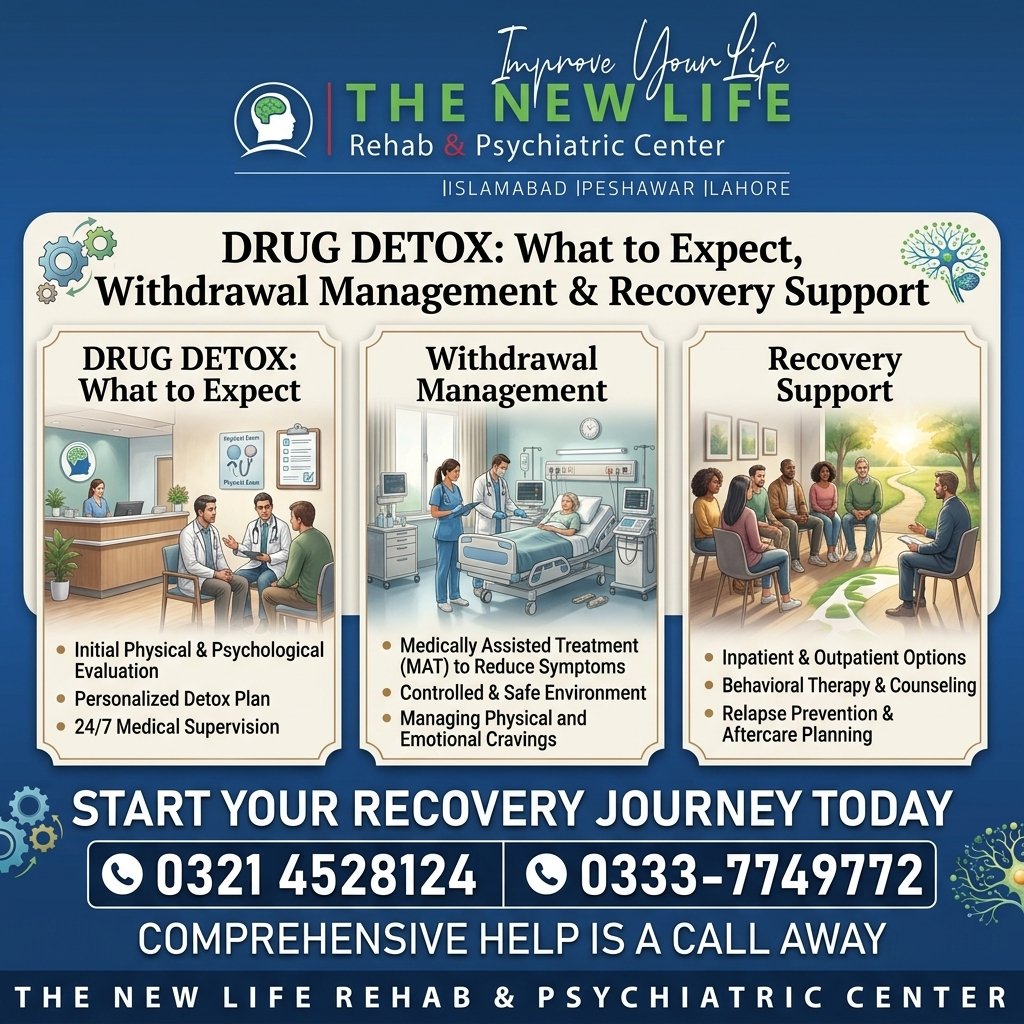
- Initial physical and psychological assessment
- Monitoring for withdrawal symptoms
- Supportive care and observation
- Medical management when clinically indicated
- Attention to hydration, nutrition, and rest
- Psychological reassurance and emotional support
- Planning for continued addiction treatment
The specific approach should be determined by qualified healthcare professionals rather than following a standard procedure for every individual.
Understanding Drug Withdrawal
Withdrawal occurs when a person who has developed dependence reduces or stops using a substance. Symptoms depend heavily on the substance involved.
Possible symptoms may include anxiety, irritability, restlessness, sweating, nausea, sleep difficulties, changes in appetite, headaches, tremors, and strong cravings. Some substances can produce more serious withdrawal complications.
Alcohol and certain sedative medications, for example, can produce potentially dangerous withdrawal syndromes. Opioid withdrawal can also be severe and distressing, although its medical risks differ from those associated with alcohol or sedative withdrawal.
Because withdrawal can vary considerably, people with significant substance dependence should seek professional medical guidance rather than attempting an unsupervised detox.
Why Professional Withdrawal Management Matters
Withdrawal management is not simply about stopping substance use. It involves understanding potential risks and responding appropriately if symptoms become severe.
A professional treatment environment allows individuals to be assessed and monitored according to their circumstances. If complications arise, healthcare professionals can determine whether additional medical intervention or a higher level of care is necessary.
People should also disclose all substances they are using, including prescription medications, non-prescription drugs, and alcohol. Accurate information helps health
care professionals make safer treatment decisions.
Detox Is Only the Beginning
Completing detox does not necessarily mean that addiction has been treated. Detox primarily addresses the physical process of withdrawal and stabilization. It may not resolve the psychological, behavioral, social, or environmental factors that contribute to continued substance use.
Following detox, individuals may benefit from a broader treatment plan involving counseling, psychotherapy, behavioral support, family participation, and relapse prevention.
At The New Life Rehab & Psychiatric Center Islamabad, Pakistan, addiction treatment can include approaches such as counseling, Cognitive Behavioral Therapy (CBT), community-based recovery support, and relapse prevention according to individual needs.
Psychological Support During Recovery
Addiction can affect emotions, relationships, decision-making, and daily functioning. After detox, individuals may need support in understanding the circumstances that contributed to substance use.
Counseling can provide an opportunity to explore triggers, coping strategies, emotional difficulties, and behavioral patterns. Developing healthier responses to stress and cravings can become an important part of maintaining recovery.
Where mental health concerns occur alongside addiction, they should also be considered during treatment planning.
Family and Social Support
Recovery can be challenging without a supportive environment. Family members may play an important role by encouraging healthy routines, maintaining appropriate boundaries, and supporting continued professional care.
Education can help families understand addiction and withdrawal more accurately. It can also reduce misconceptions and encourage constructive communication between individuals and their loved ones.
Recovery Support After Detox
Long-term recovery often involves continuing support rather than ending care immediately after detox. Depending on individual circumstances, ongoing treatment may include:
- Individual counseling
- Behavioral therapy
- Relapse prevention planning
- Family support
- Peer or community support
- Healthy daily routines
- Follow-up appointments
- Mental health support when needed
The appropriate combination and duration of these services can vary from one person to another.
Frequently Asked Questions
1. What is Drug Detox?
Drug detox is the process of stopping substance use while managing the physical and psychological effects of withdrawal. Professional assessment and monitoring may be necessary, particularly when dependence is significant or the substance carries serious withdrawal risks.
2. How long does drug detox take?
There is no universal detox timeline. Duration depends on the substance involved, level of dependence, pattern of use, withdrawal symptoms, and individual health factors. A healthcare professional can provide more appropriate guidance after assessment.
3. Is drug detox enough to overcome addiction?
No. Detox can be an important first step, but it does not necessarily address the behavioral and psychological factors associated with addiction. Continued treatment and recovery support may be needed.
4. Can withdrawal be dangerous?
Yes. Withdrawal risks vary by substance. Some forms of withdrawal, particularly from alcohol or certain sedative drugs, can become medically serious. Professional assessment is important when dependence is suspected.
5. What happens after Drug Detox?
After detox, individuals may transition into a broader recovery program. This can include counseling, behavioral therapy, family support, relapse prevention, mental health care, and continuing follow-up based on individual needs.
Conclusion
Drug Detox can provide an important starting point for individuals who want to stop using drugs while receiving appropriate support during withdrawal. Because withdrawal varies according to the substance and the individual, professional assessment is an important part of safe and responsible care.
However, detox is only one stage of recovery. Ongoing counseling, behavioral support, family involvement, relapse prevention, and appropriate mental health care can help address the wider factors associated with addiction. The New Life Rehab & Psychiatric Center Islamabad, Pakistan takes an individualized approach to addiction-related care, recognizing that recovery needs can differ from person to person.