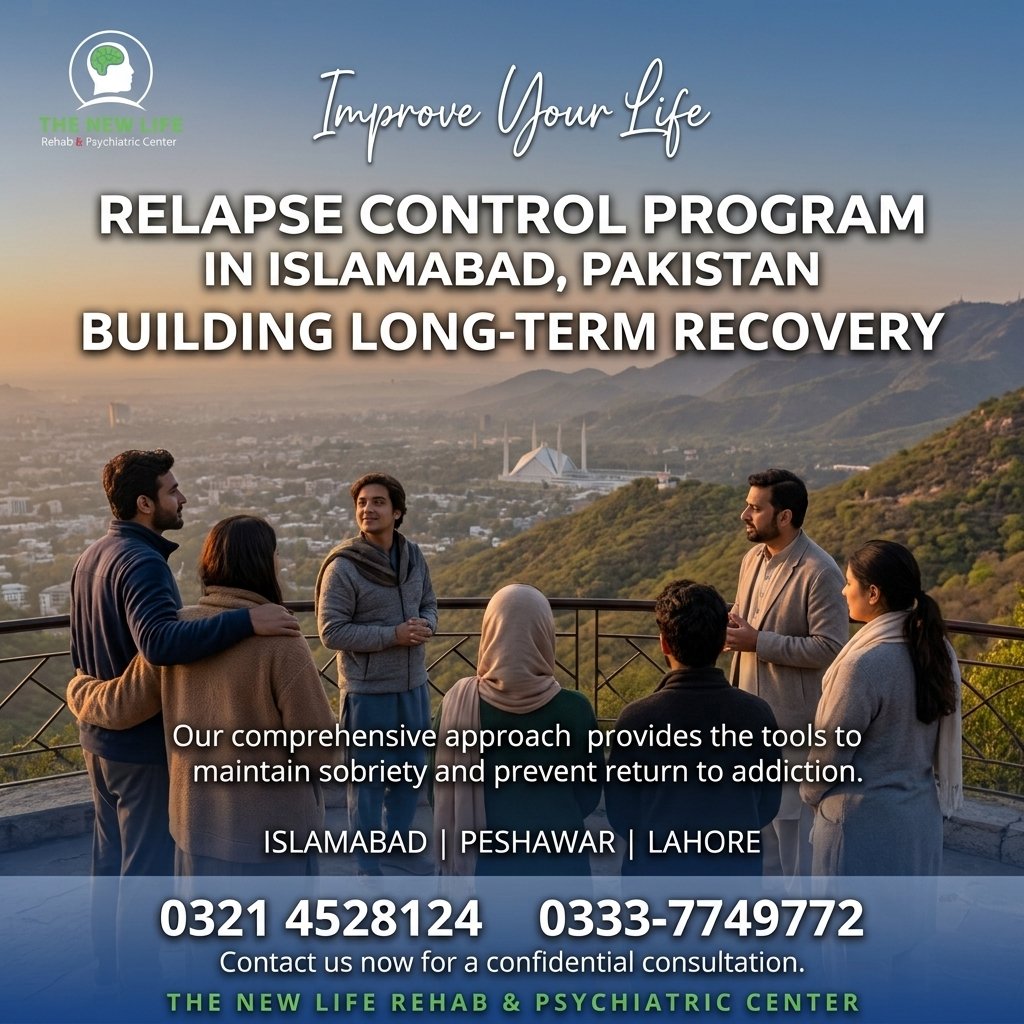
Recovery from addiction is an ongoing process that often requires more than completing an initial treatment program. After detoxification or residential care, individuals may continue to face triggers, cravings, emotional challenges, and situations that can make maintaining sobriety difficult. A structured Relapse Control Program in Islamabad, Pakistan can provide continued guidance and practical strategies to help individuals recognize risks and develop healthier ways of managing them.
Relapse does not mean that recovery has failed. Instead, it can indicate that an individual’s treatment and support plan needs to be reviewed and strengthened. Long-term recovery is supported by preparation, awareness, professional guidance, and consistent follow-up.
What Is a Relapse Control Program?
A relapse control program is a structured approach designed to help people understand and manage circumstances that may increase the risk of returning to substance use. It can form part of continuing addiction treatment after detoxification, residential rehabilitation, or an intensive treatment phase.
The program may address psychological, behavioral, social, and environmental factors associated with substance use. Rather than focusing only on avoiding substances, relapse prevention helps individuals develop skills for responding to difficult situations in healthier ways.
At The New Life Rehab & Psychiatric Center Islamabad, Pakistan, relapse prevention can be considered as part of an individualized recovery plan based on a person’s circumstances and treatment needs.
Identifying Personal Triggers
Recognizing triggers is an important part of relapse prevention. Triggers vary from person to person and may include certain people, places, emotions, memories, conflicts, or stressful situations.
Common examples can include:
- Stress at work or home
- Relationship conflicts
- Social environments associated with substance use
- Feelings of loneliness or frustration
- Anxiety, anger, or sadness
- Exposure to substances or former using peers
- Overconfidence about being able to use again without consequences
Understanding these patterns can help individuals recognize warning signs before they become overwhelming.
Developing Healthy Coping Strategies
A major component of a Relapse Control Program in Islamabad, Pakistan is learning practical ways to manage cravings and difficult emotions.
Depending on individual needs, coping strategies may include exercise, structured daily routines, relaxation techniques, counseling, mindfulness practices, healthy social interaction, and constructive hobbies.
The goal is not to eliminate every stressful situation. Instead, individuals can learn how to respond to stress and emotional discomfort without returning to harmful substance-use behaviors.
Counseling and Behavioral Support
Counseling can play an important role in relapse prevention. Individual sessions provide an opportunity to explore thoughts, emotions, behaviors, and situations associated with previous substance use.
Approaches such as Cognitive Behavioral Therapy (CBT) may help individuals recognize patterns of thinking that contribute to unhealthy behaviors and develop alternative responses.
Counseling can also address confidence, communication, emotional regulation, decision-making, and problem-solving. These skills can become increasingly important when individuals return to family, work, education, and community environments.
Managing Cravings and Warning Signs
Cravings can occur even after a person has stopped using substances. Their intensity and frequency can vary, and certain situations may increase their likelihood.
A relapse prevention plan can help individuals identify early warning signs and determine what steps to take when cravings become difficult to manage. This may include contacting a counselor or trusted support person, leaving a high-risk environment, using learned coping strategies, or following an established continuing-care plan.
Recognizing warning signs early can create an opportunity to seek support before a difficult situation escalates.
The Role of Family in Relapse Prevention
Family support can be valuable during long-term recovery. Relatives may help create a stable and supportive environment while encouraging healthy routines and appropriate professional care.
Family education can also help loved ones understand addiction as a complex health condition rather than simply a matter of willpower. This understanding may improve communication and reduce unnecessary conflict.
However, families also need healthy boundaries. Supporting someone in recovery does not mean taking responsibility for every aspect of their treatment.
Addressing Mental Health and Addiction Together
Some individuals experience mental health concerns alongside substance-use problems. Depression, anxiety, trauma-related difficulties, and other psychological challenges may influence recovery and should be considered during assessment.
When mental health and addiction concerns overlap, treatment planning may need to address both areas. Integrated support can help identify factors that may contribute to substance use and provide appropriate psychological or psychiatric care.
Continuing Care After Rehabilitation
Relapse prevention should not necessarily end when an intensive treatment program finishes. Continuing care can help individuals maintain the skills they developed during treatment and adapt their recovery plan as circumstances change.
Follow-up counseling, support groups, family involvement, healthy routines, and professional monitoring may all form part of continuing recovery, depending on individual needs.
A realistic long-term plan should also account for setbacks. If substance use occurs again, seeking professional help promptly can be important rather than abandoning treatment altogether.
Frequently Asked Questions
1. What is a Relapse Control Program in Islamabad, Pakistan?
It is a structured approach to helping individuals identify relapse risks, understand personal triggers, manage cravings, develop coping skills, and maintain recovery after or alongside addiction treatment.
2. Does relapse mean that addiction treatment has failed?
No. A return to substance use can indicate that additional assessment, treatment, or support may be needed. It is important to discuss the situation with qualified professionals and review the recovery plan.
3. What are common relapse triggers?
Triggers can include stress, emotional distress, relationship problems, certain social environments, exposure to substances, loneliness, and contact with people or places associated with previous substance use.
4. Can family members participate in relapse prevention?
When appropriate and with the individual’s consent, family members can participate in education or supportive aspects of treatment. Their involvement can help create better communication and a more supportive recovery environment.
5. How long should relapse prevention continue?
There is no universal timeline. Recovery needs differ between individuals, and continuing support may be useful for as long as clinically appropriate. Treatment plans can be reviewed as a person’s circumstances and recovery goals change.
Conclusion
A Relapse Control Program in Islamabad, Pakistan can help individuals prepare for the challenges that may arise during long-term addiction recovery. Identifying triggers, developing coping skills, receiving counseling, maintaining supportive relationships, addressing mental health concerns, and continuing professional follow-up can all contribute to a structured recovery plan.
At The New Life Rehab & Psychiatric Center Islamabad, Pakistan, relapse prevention can be incorporated into individualized addiction recovery planning. Professional guidance can help individuals and families better understand relapse risks and identify appropriate forms of continuing support.