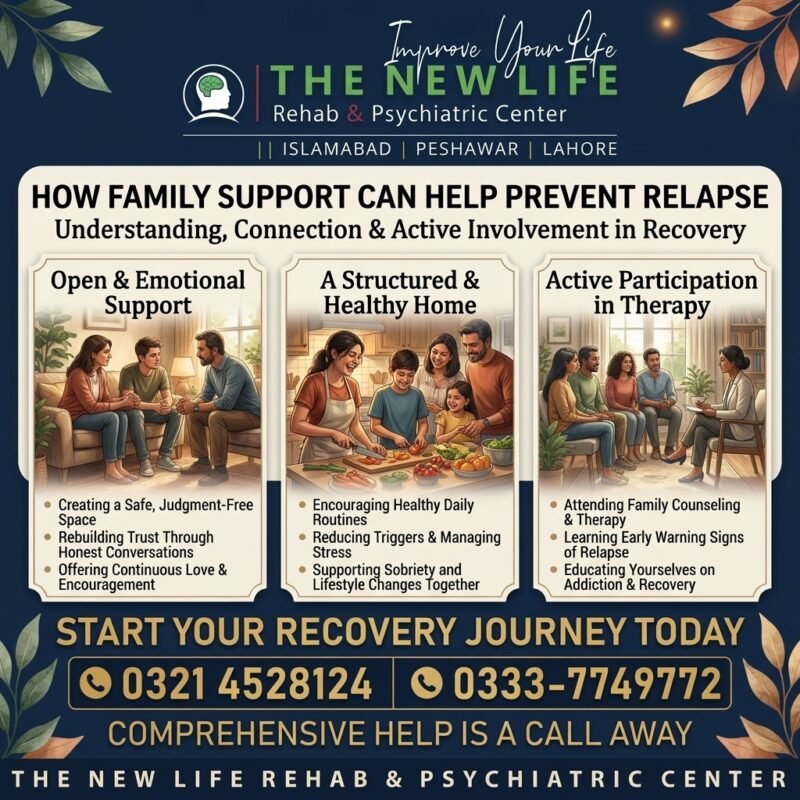
Recovery from addiction is an ongoing process that often requires patience, commitment, and consistent support. Although professional treatment plays an important role, the environment surrounding a person can also influence their recovery journey. Family members may help by providing emotional encouragement, recognising warning signs, supporting healthy routines, and encouraging continued engagement with treatment.
Relapse can be a concern for people recovering from substance use disorders, but it does not mean that recovery has failed. Understanding how family support can help prevent relapse allows loved ones to respond with compassion rather than blame. The New Life Rehab & Psychiatric Center Islamabad, Pakistan, recognises the value of involving supportive family members in recovery when appropriate and with the individual’s consent.
Understanding Relapse in Addiction Recovery
Relapse generally refers to a return to substance use after a period of reduced use or abstinence. Recovery can involve challenges, and some people experience setbacks even when they are committed to treatment.
Relapse risk may increase during periods of stress, emotional distress, social pressure, conflict, or exposure to familiar substance-use triggers. Changes in sleep, isolation, missed treatment appointments, and renewed contact with substance-using environments may also signal that additional support is needed.
However, no single behaviour proves that a person is about to relapse. Family members should avoid making assumptions and instead encourage open, respectful conversations about any difficulties their loved one may be experiencing.
Why Family Support Matters in Recovery
Addiction can affect relationships, trust, communication, and family routines. With time and appropriate support, families can become a valuable source of encouragement throughout recovery.
1. Providing Emotional Support
People recovering from addiction may experience shame, anxiety, frustration, loneliness, or fear of failure. Judgement and criticism can make these feelings more difficult to discuss.
Family members can offer emotional support by listening carefully, acknowledging progress, and reminding their loved one that asking for help is a positive step. Supportive communication helps create an environment in which challenges can be discussed before they become more serious.
2. Recognising Potential Relapse Triggers
Triggers vary between individuals. They may include arguments, financial pressure, particular social settings, loneliness, traumatic memories, or contact with people associated with previous substance use.
Families can help by discussing triggers with the person in recovery and supporting practical plans for managing them. This might involve finding alternative activities, arranging transport away from high-risk settings, or helping the individual contact a counsellor during difficult periods.
The goal is not to control every aspect of a person’s life. It is to help them develop the skills and confidence needed to manage challenging situations.
3. Encouraging Continued Treatment
Recovery may involve counselling, medical appointments, prescribed medication, peer support, and follow-up care. Family members can encourage consistency by asking how they can help with appointments or daily responsibilities.
Treatment should remain guided by qualified professionals and the individual’s needs. Loved ones should not pressure someone to stop prescribed medication, change a treatment plan, or rely on family advice instead of professional guidance.
If a person begins missing appointments or feels discouraged about treatment, a calm conversation may help identify practical barriers and possible solutions.
Building a Healthy and Supportive Home Environment
The home environment can influence stress levels, routines, and access to substances. Families can take practical steps to make recovery easier without creating an atmosphere of surveillance or punishment.
1. Establishing Healthy Daily Routines
Regular sleep, balanced meals, physical activity, and meaningful daily responsibilities can help support overall well-being. Families may encourage shared activities such as walking, cooking, or spending time together.
A predictable routine can provide structure, particularly during the early stages of recovery. However, expectations should be realistic and adjusted to the person’s health, energy, and treatment needs.

2. Reducing Exposure to Substance-Related Triggers
Where possible, family members can help reduce avoidable exposure to alcohol, drugs, or other triggers identified in the person’s recovery plan. They can also encourage participation in healthy social activities and supportive communities.
Practical changes should be discussed openly. A collaborative approach is generally more helpful than imposing rules without explanation or treating the person as incapable of making decisions.
3. Encouraging Open Communication
Trust may take time to rebuild, especially when addiction has contributed to broken promises or conflict. Family members can encourage honest conversations by remaining calm, listening without interrupting, and avoiding threats or humiliating language.
It is also important to establish clear boundaries. Support does not require providing money that may be used to obtain substances, accepting threatening behaviour, or ignoring the safety needs of other family members.
Compassion and accountability can exist together.
Recognising Warning Signs and Responding Early
Families may notice changes that suggest their loved one is struggling. Possible warning signs include increased isolation, heightened stress, changes in sleep, renewed contact with substance-using peers, missed treatment sessions, or expressing strong cravings.
These signs are not proof of relapse. They are reasons to check in and ask whether additional support would be helpful.
A constructive response may include:
- Asking open-ended questions rather than making accusations.
- Listening to the person’s concerns without immediately offering criticism.
- Encouraging contact with a counsellor, doctor, or treatment provider.
- Reviewing the person’s relapse-prevention plan together, if they wish.
- Seeking professional guidance if substance use resumes or risks increase.
If a suspected overdose occurs, seek emergency medical assistance immediately. Do not wait for a routine appointment or attempt to manage a medical emergency alone.
The Importance of Family Education and Counselling
Addiction is a complex health condition influenced by biological, psychological, and social factors. Learning about it can help family members understand cravings, withdrawal, treatment, and the possibility of setbacks.
Family counselling may help address communication difficulties, rebuild trust, and establish healthier boundaries. It can also provide a structured setting for discussing concerns that are difficult to manage at home.
Family members may need support for their own emotional well-being, too. Supporting someone through addiction can be exhausting, and relatives should not feel responsible for controlling every aspect of another person’s recovery. Their own counselling, support groups, rest, and personal boundaries can be valuable.
How The New Life Rehab & Psychiatric Center Islamabad, Pakistan, Can Help
People recovering from addiction may benefit from a treatment plan that considers their personal circumstances, mental health, family relationships, and relapse risks. The New Life Rehab & Psychiatric Center Islamabad, Pakistan, can be a point of contact for discussing addiction-related concerns and exploring suitable support options.
Depending on individual needs, care may involve professional assessment, counselling, relapse-prevention planning, and guidance on appropriate family involvement. The person’s consent, privacy, and safety should remain central to decisions about family participation.
Recovery is not the responsibility of one person alone, but families cannot guarantee that relapse will never happen. Their role is to provide constructive support while encouraging appropriate professional care.
Frequently Asked Questions
1. Can family support prevent addiction relapse?
Family support can help reduce some relapse risks by providing encouragement, supporting treatment participation, and helping identify triggers. However, it cannot guarantee that relapse will not occur.
2. How can families recognise a possible relapse?
Potential warning signs may include increased isolation, strong cravings, changes in routine, missed treatment appointments, or renewed contact with substance-using environments. These signs are not conclusive, so respectful communication and professional guidance are important.
3. What should families do if a loved one relapses?
Respond calmly, prioritise immediate safety, and encourage the person to reconnect with their treatment provider. Avoid humiliation or blame. If overdose or another medical emergency is suspected, seek emergency assistance immediately.
4. Is family counselling helpful during addiction recovery?
Family counselling may improve communication, address conflict, establish healthy boundaries, and help relatives understand addiction. Its suitability depends on the circumstances and the preferences and safety of those involved.
5. How can family members support recovery without enabling substance use?
They can offer emotional support, encourage treatment, and assist with healthy routines while maintaining clear boundaries around money, safety, and harmful behaviour. Support should promote responsibility rather than conceal or facilitate substance-related harm.
Conclusion
Family support can play a meaningful role in addiction recovery by encouraging open communication, supporting treatment, helping manage triggers, and creating a healthier home environment. Patience, understanding, and realistic expectations can help individuals feel less isolated as they work towards long-term stability.
At the same time, family members should remember that they cannot control every outcome. Professional treatment, individual commitment, healthy boundaries, and ongoing support all contribute to a more sustainable recovery journey. When families work collaboratively with qualified professionals, they can help create conditions that support well-being and reduce the risk of relapse.