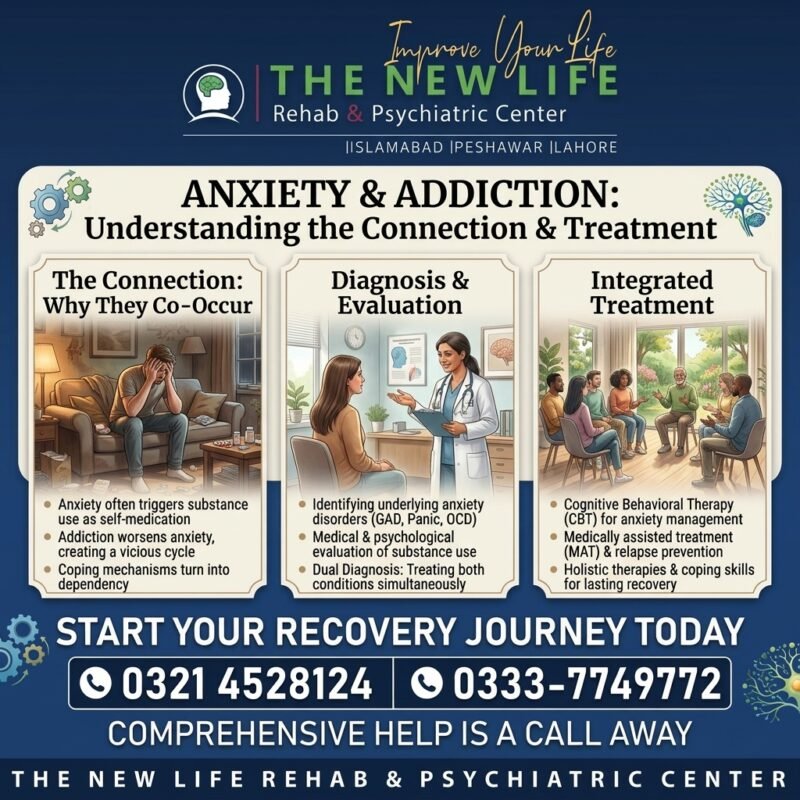
Anxiety and addiction can affect a person’s mental health, physical well-being, relationships, and everyday responsibilities. Some people use alcohol or other substances in an attempt to manage fear, stress, or persistent worry. Although substance use may provide temporary relief, it can sometimes worsen anxiety over time and create a difficult cycle that becomes challenging to break.
Understanding the connection between anxiety and addiction is an important step towards seeking appropriate help. With professional assessment, evidence-based treatment, and ongoing support, individuals can learn healthier ways to manage anxiety and address substance-related concerns. The New Life Rehab & Psychiatric Center Islamabad, Pakistan, recognises the importance of compassionate, individualised support for people experiencing addiction and mental health challenges.
What Is Anxiety?
Anxiety is the body’s natural response to perceived stress or danger. Occasional anxiety is a normal human experience, but persistent or intense anxiety can interfere with daily activities and quality of life.
Anxiety disorders involve excessive fear, worry, or related symptoms that are difficult to control and may affect everyday functioning. Common types include generalised anxiety disorder, panic disorder, social anxiety disorder, and certain phobias.
Common symptoms of anxiety include:
- Persistent worry or fear.
- Restlessness and irritability.
- Rapid heartbeat or sweating.
- Muscle tension and headaches.
- Difficulty concentrating.
- Sleep disturbances.
- Panic attacks or sudden episodes of intense fear.
These symptoms can have different causes. A healthcare professional can assess whether they are related to an anxiety disorder, substance use, medication effects, or another health condition.
Understanding the Connection Between Anxiety and Addiction
Anxiety and addiction can influence one another in several ways. Some individuals experience anxiety before developing substance-related problems, while others experience anxiety symptoms during or after prolonged substance use.
1. Using Substances to Cope With Anxiety
People experiencing persistent worry or emotional distress may turn to alcohol, cannabis, sedatives, or other substances in an attempt to relax or escape uncomfortable feelings.
Although a substance may temporarily change how someone feels, relying on it to manage anxiety can reinforce repeated use. Over time, the person may find it increasingly difficult to cope with stressful situations without the substance.
2. Substance Use Can Worsen Anxiety
Certain substances can increase anxiety, disrupt sleep, affect concentration, or contribute to panic-like symptoms. Alcohol, for example, may initially create a feeling of relaxation, but its effects can be followed by disturbed sleep and increased anxiety.
Stimulants can produce restlessness, rapid heartbeat, and heightened nervousness. Cannabis may also increase anxiety or trigger panic in some people. The effects vary according to the substance, amount used, individual health, and other factors.
3. Withdrawal Can Cause Anxiety Symptoms
Anxiety may occur when a person reduces or stops using a substance to which their body has become accustomed. Withdrawal can involve restlessness, irritability, sleep problems, sweating, and increased nervousness.
Withdrawal symptoms differ depending on the substance and pattern of use. Withdrawal from alcohol or benzodiazepines can be medically dangerous and may cause seizures or other serious complications. People who use these substances regularly should seek medical advice before stopping abruptly.
Risk Factors for Anxiety and Addiction
There is no single cause of co-occurring anxiety and addiction. Several factors may contribute to the development of both conditions, including:
- Chronic stress: Ongoing financial, family, educational, or work-related pressure may increase emotional distress.
- Traumatic experiences: Difficult or traumatic events can affect how a person responds to stress and perceived danger.
- Family history: Genetic and environmental influences may contribute to vulnerability to anxiety or substance-use disorders.
- Sleep difficulties: Persistent sleep disruption can worsen anxiety and affect decision-making.
- Social isolation: Limited emotional support may make it harder to manage distress.
- Existing mental health concerns: Some individuals experience anxiety alongside depression or other mental health conditions.
Having one or more risk factors does not mean someone will develop addiction. Understanding these influences can help professionals create an appropriate treatment plan.
Anxiety and Addiction Treatment Options
When anxiety and addiction occur together, treatment should address both concerns rather than focusing exclusively on one. A qualified healthcare professional can assess symptoms, substance-use history, physical health, and any medications being taken.
1. Professional Assessment and Individualised Care
Assessment helps identify the type and severity of anxiety symptoms, the pattern of substance use, and any immediate safety concerns. It can also help determine whether symptoms are related to an independent anxiety condition, substance effects, withdrawal, or a combination of factors.
Treatment plans should be tailored to each person’s needs and may involve medical care, psychological therapy, substance-use treatment, or coordinated support from different professionals.
2. Cognitive Behavioural Therapy (CBT)
Cognitive behavioural therapy is a structured psychological treatment that can help people recognise unhelpful thought patterns and change behaviours that contribute to anxiety.
For individuals experiencing addiction, therapy may also focus on identifying triggers, managing cravings, developing coping strategies, and responding to stressful situations without relying on substances.
3. Medication and Medical Support
Depending on the diagnosis, medication may be considered to manage anxiety or a substance-use disorder. The choice depends on a person’s health history, symptoms, current medications, and potential risks.
Some medicines used for anxiety can cause dependence or interact dangerously with alcohol and other substances. Medication should therefore be prescribed and monitored by a qualified healthcare professional. People should not start, stop, or change prescribed medication without appropriate guidance.
4. Healthy Coping Strategies
Healthy routines can complement professional treatment. Helpful practices may include regular physical activity, consistent sleep, balanced meals, relaxation exercises, and maintaining supportive relationships.
Breathing exercises, mindfulness, and grounding techniques may help some people manage moments of anxiety. These strategies are useful additions to care but are not substitutes for treatment when symptoms are severe or persistent.
5. Family and Social Support
Family members and trusted friends can support recovery by listening without judgement, encouraging professional help, and helping create a stable environment. Learning about anxiety and addiction can reduce misunderstandings and stigma.
Support should respect the person’s dignity and privacy. Family involvement may be beneficial when appropriate and when the individual agrees.
Preventing Relapse and Supporting Long-Term Recovery
Stress and anxiety can sometimes contribute to renewed substance use, particularly when a person has relied on substances to cope with difficult emotions. Identifying personal triggers and preparing alternative responses can help reduce this risk.
A long-term support plan may include ongoing counselling, follow-up appointments, participation in suitable support groups, healthy daily routines, and continued treatment when recommended.
A lapse does not mean that recovery is impossible. It can provide an opportunity to review what happened, identify unmet needs, and adjust the treatment plan. Consistent support and early intervention can help people respond constructively to setbacks.
Anxiety and Addiction Support at The New Life Rehab & Psychiatric Center Islamabad, Pakistan
People experiencing anxiety alongside substance use may benefit from an assessment that considers both mental health and addiction-related concerns. The New Life Rehab & Psychiatric Center Islamabad, Pakistan, can be a point of contact for discussing these concerns and exploring appropriate support options.
The appropriate level of care depends on the individual’s symptoms, medical needs, substance-use history, and personal circumstances. Some people may benefit from outpatient counselling and medical care, while others may require more structured treatment. Urgent symptoms, including severe withdrawal, an overdose, or an immediate risk of self-harm, require prompt emergency assistance.
Frequently Asked Questions
1. Can anxiety lead to addiction?
Anxiety does not automatically cause addiction. However, some people use substances to cope with worry or distress, which can increase the risk of developing problematic substance use over time.
2. Can addiction cause anxiety?
Yes. Certain substances can trigger or worsen anxiety, while intoxication and withdrawal may cause symptoms such as restlessness, panic, irritability, and sleep disturbances. A professional assessment can help identify the underlying causes.
3. Can anxiety and addiction be treated together?
Yes. Treatment can address both conditions through an individualised combination of psychological therapy, medical care, appropriate medication, and substance-use support.
4. What is the best therapy for anxiety and addiction?
There is no single approach that works for everyone. Cognitive behavioural therapy may help manage anxiety and substance-related triggers, while medication and other interventions may be appropriate depending on individual needs.
5. When should someone seek professional help?
Professional help is advisable when anxiety interferes with daily life, substance use becomes difficult to control, or attempts to stop lead to withdrawal symptoms. Severe withdrawal, suspected overdose, or an immediate risk of self-harm requires emergency assistance.
Conclusion
Anxiety and addiction are interconnected challenges that can affect emotional well-being, physical health, and daily functioning. Although some people initially use substances to cope with distress, substance use may eventually intensify anxiety and make recovery more complicated.
Recognising the connection, seeking professional assessment, and addressing both concerns through an individualised treatment plan are important steps towards improved well-being. With appropriate care, practical coping skills, and continued support, individuals can work towards healthier ways of managing anxiety and building a more stable recovery.