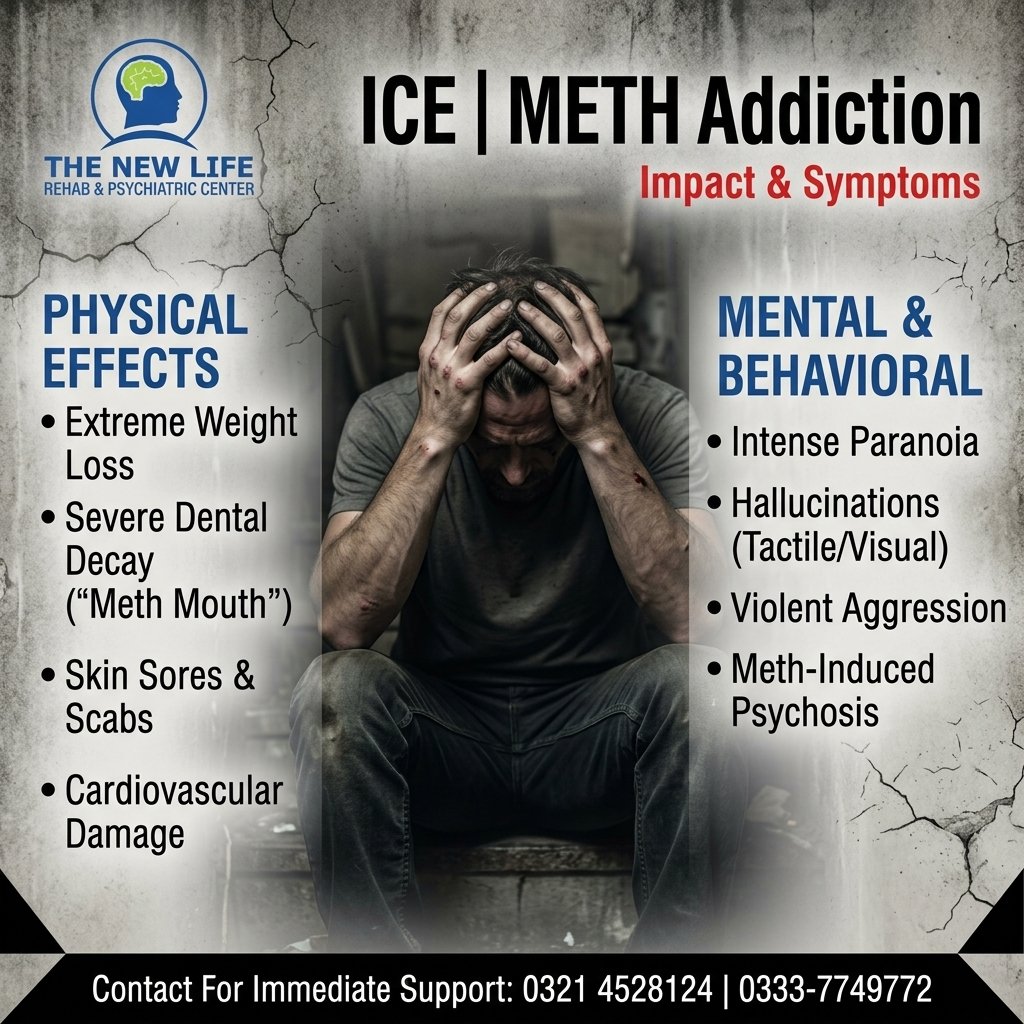
Ice (aka crystal meth or methamphetamine) is a very powerful and highly addictive stimulant that can severely impact the brain, body, social life, as well as aspects of everyday life. ICE | METH Addiction can start off with sporadic use but could lead to a full-blown substance use disorder where professional assistance is required.
With the proper mix of medical intervention, counseling, therapy for behavior modification and other therapy forms coupled with family support and relapse prevention planning recovery is possible. About The New Life Rehab & Psychiatric Center Islamabad, Pakistan are providing patients with a really structured addiction recovery process within a caring atmosphere for individuals or families in need of some help.
Ice or Crystal Meth Addiction?
Ice is a potent central nervous system stimulant being a type of methamphetamine. It can make you full of energy, be alert, feel confident and euphoric. Nevertheless, these effects are accompanied by considerable physical and psychosocial risks.
Chronic Methamphetamine Exposure Alters the Neural Circuitry of Reward At some point; the individual cannot function normally without the drug anymore.
Below are twenty signs that you may be addicted to meth.
- Strong cravings for meth
- Increasing tolerance
- Resting for an abnormally extended amount of time
- Considerable weight loss or appetite changes
- Anxiety, irritability, or aggression
- Poor concentration and memory
- Skipping work, school or family obligations
- Financial or relationship problems
- Using despite negative consequences
ICE | METH Addiction Is So Hard to Overcome: Why?
Meth creates very strong psychological dependencies. Such a person might feel powerful cravings to take the drug no matter how thoroughly they understood how bad it is.
Chronic use can also lead to insomnia, in addition to mood disturbances, anxiety, paranoia, and other mental health symptoms. Others may have debilitating confusion or even develop minor psychosis.
This is why treatment cannot just be about stopping drug use. Lastly, you need a wider recovery plan — one that includes:
- Physical health
- Mental health
- Behavioral patterns
- Family relationships
- Triggers and cravings
- Relapse prevention
- Healthy daily routines
The last meth addiction treatment in Islamabad, Pakistan.
A comprehensive assessment typically kicks off treatment. Treatment providers will assess patterns of substance use, physical health, mental health and the individual status of their current living situation.
Medical Assessment and Detox Support
Once a person stops using methamphetamine, they may experience a “crash” followed by fatigue, increased appetite associated with disturbed sleep, depressed mood and strong drug cravings. Certain individuals may also have serious psychological distress.
Complications can be prevented or identified with the aid of professional supervision, which will assist in determining whether such person requires a greater degree of medical care or psychiatric treatment.
Counseling and Behavioral Therapy
Similarly, Behavioral treatment helps in the recovery from of stimulant addiction. With support from counseling, it becomes easier to identify what triggers substance abuse, how unhealthy ways of thinking can contribute, and what skills are needed to cope in the moment with life’s stressors—a much safer way of deciding how to act when faced with a challenging situation.
Cognitive-behavioral techniques may be particularly useful for understanding how to integrate thoughts, feelings, and behaviors.
Mental Health Support
Combination of meth addiction and mental illness This could be an indication that depression and anxiety or trauma-related symptoms, or simply needs psychiatric assessment and treatment for other causes.
In cases where substance use and mental health problems co-exist, both activities are usually important components of a sustainable recovery strategy.
Family Is Important for Overcoming Meth Addiction
Substance abuse goes beyond what the individual abusing drugs does. Anxiety, stress, rage, or helplessness could be what parents, spouses, children and others near and dear to the heart.
Family members can provide crucial and necessary emotional support, but they can also help instill boundaries.
Families can learn how to:
- Communicate without constant confrontation
- Recognize warning signs of relapse
- Encourage professional treatment
- Avoid unintentionally enabling harmful behavior
- Support healthy routines
- Protect their own emotional well-being
Relapse Prevention After Meth Treatment
Just because someone has completed an initial programmed of treatment does not mean they have recovered. Cravings and triggers can return, especially under stress or if someone is in the presence of people, places, or events linked to a former drug use site.
A relapse-prevention plan may include:
- Continuing counseling
- Identifying personal triggers
- Building a reliable support network
- Maintaining healthy sleep habits
- Avoiding high-risk environments
- Developing stress-management skills
- Attending follow-up appointments
- Getting help early when craving increases
It should be taken as a sign that the recovery plan needs outlining, and not as evidence that it cannot recover.
Opting for Professional Treatment of Meth Dependency
Families looking for ICE | METH Addiction treatment should avoid promises of quick fixes Addiction care of quality should be tailored, evidence based, compassionate and solution focused to the longer term.
These are some of the key questions to ask a treatment provider:
- Is there a preliminary medical and psychiatric evaluation?
- How are withdrawal and mental health symptoms treated?
- What counseling is offered?
- Is family support available?
- How is relapse prevention addressed?
- Is aftercare provided?
- What do you do with emergencies or acute psychiatric symptoms?
Families dealing with substance use and associated mental health issues if you are looking for a plan rehabilitation center then The New Life Rehab & Psychiatric Center Islamabad, Pakistan on will make weighted an consideration.
Frequently Asked Questions
1. What is ice addiction?
Methamphetamine addiction is a type of substance use disorder characterized by the compulsive use of meth-amphetamine, also known as ice. It can escalate to compulsive use, cravings, tolerance and severe impairments in physical/mental health, social obligations and functioning.
2. The answer is yes; a person can recover from meth addiction.
Yes. Recovery is possible. It is advisable to go through a treatment programmed, which can help an individual to overcome dependence on meth and the problems associated with it, learn managing skills to avoid using meth again, as well as preventing the risk of relapse.
3. What occurs during the cessation of ice?
For others, the fatigue turns to exhaustion, they sleep far more than usual and so much that they cannot carry on their lives as normal; changes in appetite with no or less interest in food followed by over-eating and cravings; lower mood, irritability. Psychological symptoms can also occur. If extensive mood, behavioral, and psychiatric signs are present, expert examination is suggested.
4. Does meth addiction require residential treatment?
Not necessarily. The type of care best needed is determined by the individual’s use of substance, health and wellness, mental wellness needs, stability at home5973 and safety. While some get the will need for residential treatment, others are far better fit for outpatient assist.
5. How long does treatment for meth addiction take
There isn’t one fixed timeline. How long your treatment lasts depends on many factors and can range from 28 days to 90 depending on your needs, how you respond to treatment, any existing mental health conditions, and how much support you need. Recovery is rarely, if ever, described as a one-time event.
Conclusion
The consequences of ICE | METH Addiction can be severe, however getting help is often the first step on your path to recovery. Medical evaluation, counseling, behavioral support, mental health care, family involvement and relapse-prevention work in a judicious mix for maximum effectiveness.
If you or someone you know is having problems with meth, this addiction professional can help assess the best and safest way to proceed. The New Life Rehab & Psychiatric Center Islamabad, Pakistan offer specialized addiction recovery services for individuals and families in need of professional assistance.