Nicotine and smoking addiction can affect physical health, emotional well-being, daily routines, and relationships. Many people want to quit smoking but find it difficult because nicotine can create strong cravings and withdrawal symptoms. With the right support, a structured treatment plan, and practical coping strategies, people can work towards a healthier, smoke-free life.
Understanding nicotine dependence is an important first step. Whether someone smokes cigarettes occasionally or has smoked for many years, professional guidance and consistent support can help them manage cravings and develop healthier habits. The New Life Rehab & Psychiatric Center Islamabad, Pakistan, recognises the importance of compassionate, individualised support for people experiencing substance-related challenges.
What Is Nicotine and Smoking Addiction?
Nicotine is an addictive substance found in tobacco products, including cigarettes. It affects the brain’s reward system and can create a cycle of cravings and repeated use. Over time, a person may feel the need to smoke to manage stress, improve concentration, or avoid withdrawal symptoms.
Smoking addiction is not simply a matter of habit or willpower. Nicotine dependence can involve physical, psychological, and behavioural factors. People may associate smoking with drinking tea, taking work breaks, socialising, or coping with difficult emotions.
Although nicotine dependence can be challenging, it is treatable. Recognising the problem and seeking appropriate help can make quitting more manageable.
Common Signs of Nicotine and Smoking Addiction
The signs of nicotine dependence vary from person to person. Common indicators include:
- Feeling strong cravings for cigarettes or other nicotine products.
- Smoking soon after waking up.
- Finding it difficult to reduce or stop smoking.
- Continuing to smoke despite health concerns.
- Experiencing irritability, restlessness, anxiety, or difficulty concentrating when unable to smoke.
- Returning to smoking after previous attempts to quit.
- Using smoking as the primary way to cope with stress or uncomfortable emotions.
These signs do not indicate a personal failure. They may suggest that additional support and a more structured quitting plan would be helpful.
Health Risks Associated With Smoking
Smoking exposes the body to harmful chemicals that can damage organs and blood vessels. It is associated with several serious health conditions, including lung cancer, chronic respiratory diseases, heart disease, and stroke.
Smoking can also worsen existing breathing problems, reduce physical stamina, and affect oral health. Exposure to second-hand smoke can harm other people, including children and family members.
Quitting smoking can improve health at any age. Some benefits begin relatively soon after stopping, while other improvements develop over time. The pace and extent of recovery depend on individual health, smoking history, and other factors.
Nicotine and Smoking Addiction Treatment Options
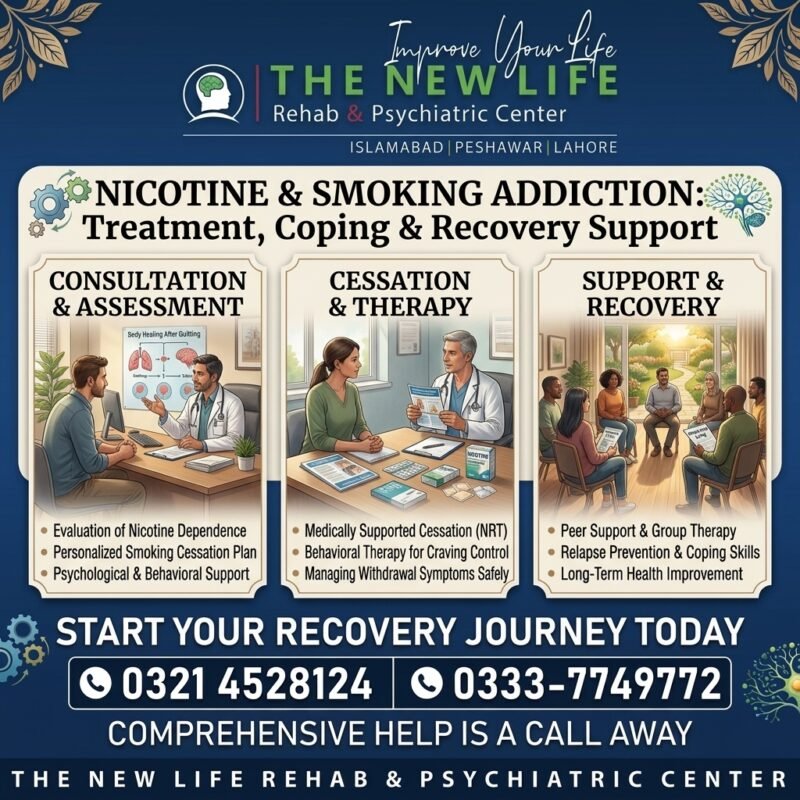
Effective nicotine addiction treatment often combines behavioural support with appropriate medication when suitable. The most helpful approach depends on a person’s smoking pattern, health history, preferences, and previous attempts to quit.
1. Behavioural Counselling
Counselling helps people identify the situations, thoughts, and emotions that trigger smoking. A counsellor can support the development of healthier responses to stress, boredom, social pressure, and cravings.
Cognitive behavioural therapy (CBT), where appropriate, may help people recognise unhelpful thought patterns and practise strategies for managing urges. Individual counselling or structured support sessions can also help people maintain motivation throughout the quitting process.
2. Nicotine Replacement Therapy
Nicotine replacement therapy (NRT) provides nicotine without the harmful smoke produced by burning tobacco. Depending on availability and suitability, options may include patches, gum, lozenges, inhalers, or other approved forms.
These products can reduce withdrawal symptoms and cravings while a person stops smoking. A healthcare professional or pharmacist can explain appropriate use, potential side effects, and whether NRT is suitable for the individual.
3. Prescription Medication
Certain prescription medicines can help some adults stop smoking by reducing cravings or making smoking less rewarding. Their suitability depends on medical history, current medication, and other health considerations.
A qualified healthcare professional should assess the benefits and risks before treatment begins. Medication should only be used as directed, and people should discuss any existing medical conditions or side effects with their clinician.
4. Lifestyle Changes and Support Systems
Healthy routines can complement professional treatment. Regular physical activity, adequate sleep, balanced meals, and relaxation exercises may help people manage stress during the quitting process.
Family members and friends can offer encouragement by avoiding criticism, respecting the person’s efforts, and helping reduce exposure to smoking triggers. A supportive environment can make it easier to maintain progress.
Managing Nicotine Withdrawal Symptoms
When a person stops smoking, the body needs time to adjust to the absence of nicotine. Withdrawal symptoms may include cravings, irritability, anxiety, restlessness, difficulty concentrating, sleep disturbances, and increased appetite.
Symptoms are often strongest during the first few days and gradually ease over the following weeks, although experiences differ.
Practical strategies for managing cravings include:
- Delay the urge: Remind yourself that a craving can pass without smoking.
- Change your routine: Take a short walk or move to a different environment when a familiar trigger appears.
- Keep your hands occupied: Try writing, drinking water, or another activity that does not involve smoking.
- Practise slow breathing: Calm, steady breaths may help you manage moments of tension.
- Seek support: Contact a trusted person or healthcare professional when cravings feel difficult to manage.
If quitting causes significant distress or symptoms are difficult to control, professional guidance can help. People who use other substances or have complex health needs may require additional assessment.
Preventing Relapse and Maintaining Recovery
A return to smoking can happen during a quit attempt, but it does not mean that future attempts will fail. It is an opportunity to identify what triggered the lapse and strengthen the treatment plan.
People can support long-term progress by recognising high-risk situations, preparing alternatives to smoking, attending follow-up sessions, and celebrating meaningful milestones. Removing cigarettes and smoking accessories from personal spaces may also reduce temptation.
It is important to avoid thinking that one cigarette means the entire effort has been wasted. Returning to the quitting plan promptly and seeking support can help prevent a brief lapse from becoming a regular pattern again.
How The New Life Rehab & Psychiatric Center Islamabad, Pakistan, Can Help
Nicotine dependence can sometimes occur alongside other substance-use concerns, anxiety, depression, or ongoing stress. When these challenges overlap, an individualised assessment can help identify suitable support.
The New Life Rehab & Psychiatric Center Islamabad, Pakistan, can be considered as a point of contact for discussing addiction-related concerns and the support options that may be appropriate. Treatment decisions should be based on an individual’s needs and guided by qualified professionals. Smoking cessation may be managed through outpatient healthcare, counselling, medication, or other appropriate services; residential rehabilitation is not necessary for everyone who wants to quit smoking.
Frequently Asked Questions
1. Is nicotine addiction difficult to overcome?
Nicotine addiction can be challenging because it involves cravings, withdrawal symptoms, and established routines. However, counselling, suitable medication, and ongoing support can improve a person’s ability to quit.
2. How long do nicotine withdrawal symptoms last?
Withdrawal symptoms often peak during the first few days after stopping and gradually improve over the next few weeks. Some cravings associated with particular routines or situations may continue for longer.
3. What is the most effective treatment for smoking addiction?
For many people, combining behavioural counselling with medication or nicotine replacement therapy offers a useful approach. The most appropriate treatment depends on personal circumstances and should be discussed with a healthcare professional.
4. Can a person quit smoking after many years?
Yes. Quitting can benefit health even after many years of smoking. A tailored quitting plan, professional guidance, and continued support can help people at different stages of life.
5. What should someone do if they start smoking again after quitting?
They should treat the experience as a setback rather than a complete failure. Identifying the trigger, reviewing the quitting strategy, and seeking additional support can help them resume their efforts.
Conclusion
Nicotine and smoking addiction can affect health, routines, and quality of life, but support and evidence-based treatment can make quitting more achievable. Understanding withdrawal symptoms, identifying triggers, considering suitable treatments, and building a reliable support system are important steps towards recovery.
With patience and a personalised approach, people can learn to manage cravings and work towards lasting change. The New Life Rehab & Psychiatric Center Islamabad, Pakistan, encourages individuals and families to seek informed, compassionate guidance when nicotine dependence or other substance-related concerns become difficult to manage.