Addiction Treatment Programs in Islamabad, Pakistan are essential for individuals seeking professional support to overcome substance use disorders and rebuild healthier lives. Addiction can affect people from all backgrounds, impacting physical health, mental well-being, family relationships, education, careers, and overall quality of life. Whether the addiction involves alcohol, heroin, prescription medications, cannabis, cocaine, methamphetamine, or other substances, timely intervention and evidence-based treatment can significantly improve recovery outcomes.
Addiction is recognized as a chronic medical condition that changes brain function and behavior. Recovery is not simply about stopping substance use—it involves addressing the underlying emotional, psychological, social, and physical factors that contribute to addiction. At The New Life Rehab & Psychiatric Center Islamabad, Pakistan, comprehensive addiction treatment programs are designed to provide individualized care that supports both immediate recovery and long-term wellness.
Understanding Addiction Treatment Programs in Islamabad, Pakistan
Addiction treatment programs are structured care plans that combine medical support, psychological therapies, counseling, and rehabilitation services to help individuals overcome substance dependence. Every person’s experience with addiction is unique, making personalized treatment an important part of successful recovery.
Professional treatment may help individuals experiencing addiction to:
- Alcohol
- Heroin
- Cannabis (Marijuana)
- Cocaine
- Crystal Meth (Ice)
- Prescription opioids
- Sedatives
- Ecstasy (MDMA)
- Nicotine and tobacco products
A comprehensive treatment program focuses not only on substance use but also on improving emotional health, daily functioning, and long-term resilience.
Why Professional Addiction Treatment Is Important
Many individuals attempt to stop using substances on their own but find it difficult due to physical withdrawal symptoms, intense cravings, and psychological dependence.
Professional addiction treatment offers several important benefits:
Safe Medical Care
Medical professionals assess physical health and determine whether supervised detoxification or additional healthcare services are needed.
Personalized Treatment Plans
Treatment programs are developed based on the individual’s substance use history, mental health condition, medical background, and recovery goals.
Emotional and Psychological Support
Therapy helps individuals understand the underlying causes of addiction while developing healthier coping strategies.
Long-Term Recovery Planning
Professional treatment prepares individuals for sustained recovery through relapse prevention and ongoing support.
Components of Addiction Treatment Programs
Comprehensive Addiction Treatment Programs in Islamabad, Pakistan often include several integrated services.
Comprehensive Assessment
Recovery begins with a detailed evaluation of medical history, mental health, addiction severity, and personal circumstances to guide treatment planning.
Medical Detoxification
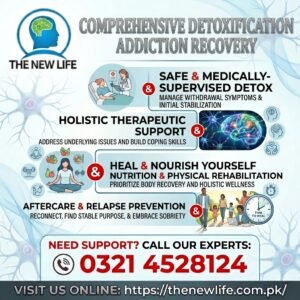
For individuals with physical dependence, medically supervised detoxification helps manage withdrawal symptoms safely before rehabilitation begins.
Individual Counseling
Private counseling sessions allow individuals to explore emotional challenges, identify personal triggers, and develop healthier behaviors.
Cognitive Behavioral Therapy (CBT)
CBT is a widely used evidence-based therapy that helps individuals change negative thinking patterns, manage cravings, and reduce the likelihood of relapse.
Group Therapy
Group counseling encourages peer support, accountability, and shared learning among individuals working toward recovery.
Family Support Programs
Family involvement can strengthen communication, rebuild trust, and provide a supportive home environment that promotes long-term recovery.
At The New Life Rehab & Psychiatatric Center Islamabad, Pakistan, treatment programs are personalized according to each individual’s recovery needs and clinical assessment.
Dual Diagnosis Treatment
Many people living with addiction also experience mental health conditions such as:
- Depression
- Anxiety disorders
- Bipolar disorder
- Trauma and PTSD
- Obsessive-compulsive disorder (OCD)
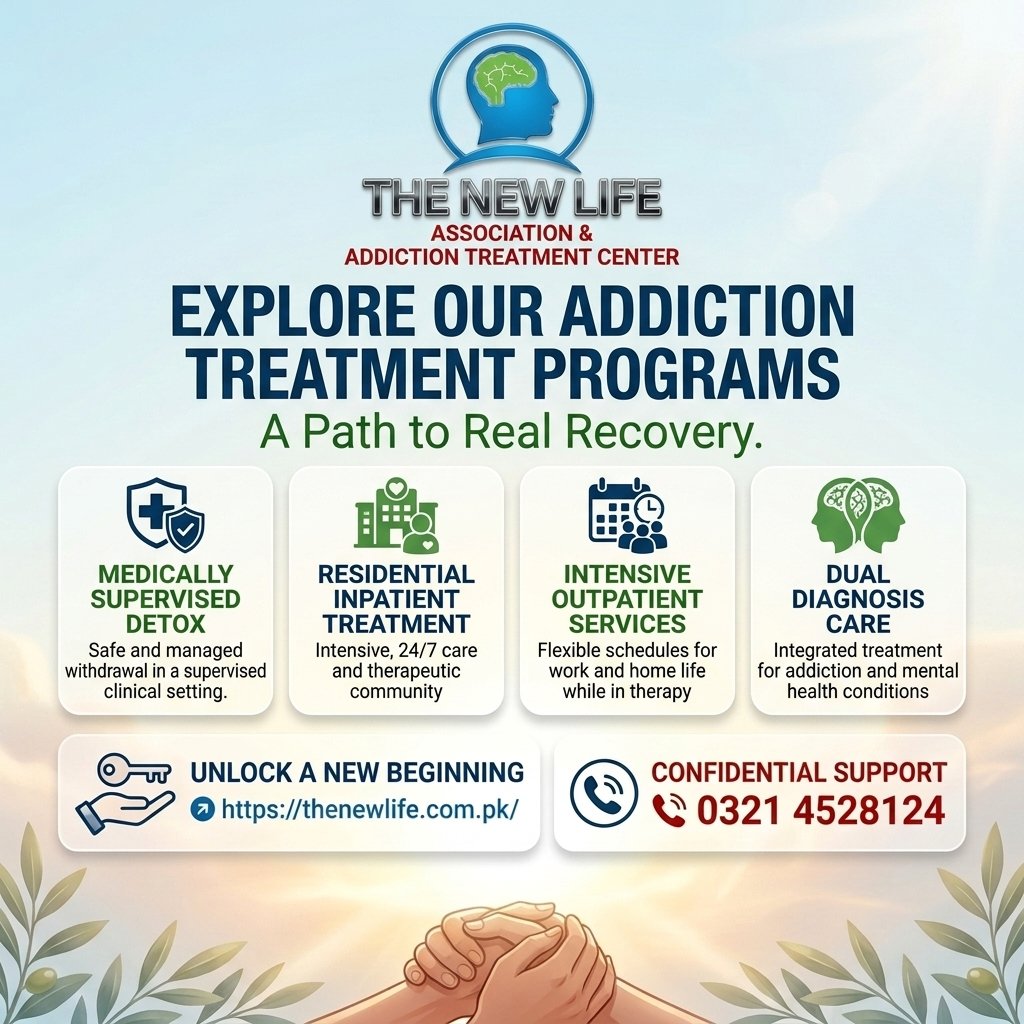
This combination is known as a dual diagnosis. Integrated treatment addresses both addiction and mental health simultaneously, helping individuals achieve more comprehensive and sustainable recovery.
Relapse Prevention and Aftercare
Recovery continues long after completing an initial treatment program. Relapse prevention helps individuals recognize triggers, strengthen coping skills, and maintain healthy routines.
Aftercare services may include:
- Ongoing counseling
- Follow-up psychiatric care
- Support groups
- Family counseling
- Lifestyle planning
- Stress management strategies
Long-term support plays an important role in maintaining recovery and improving overall well-being.
Building a Healthier Future
Successful recovery involves more than abstaining from substances. It includes creating positive lifestyle changes that support lasting wellness.
Healthy recovery habits include:
- Maintaining regular therapy sessions
- Building healthy relationships
- Following balanced daily routines
- Engaging in physical activity
- Practicing stress management
- Seeking support when challenges arise
These lifestyle changes can improve emotional resilience and help individuals navigate recovery more confidently.
Frequently Asked Questions (FAQs)
1. What are addiction treatment programs?
Addiction treatment programs are structured healthcare services that combine medical care, counseling, therapy, and rehabilitation to help individuals recover from substance use disorders.
2. Who can benefit from addiction treatment?
Anyone experiencing dependence on alcohol, drugs, prescription medications, nicotine, or other addictive substances may benefit from professional treatment.
3. Why is individualized treatment important?
Every person’s addiction history, physical health, and mental health needs are different. Personalized treatment helps provide more appropriate and effective care.
4. Can addiction treatment include mental health care?
Yes. Many treatment programs provide integrated care for individuals experiencing both addiction and mental health conditions, commonly referred to as dual diagnosis.
5. Does recovery continue after completing treatment?
Yes. Recovery is an ongoing process that often includes aftercare, counseling, relapse prevention planning, family support, and healthy lifestyle changes.
Conclusion
Addiction Treatment Programs in Islamabad, Pakistan provide individuals with structured, compassionate, and evidence-based care to address substance use disorders and support long-term recovery. Effective treatment combines medical assessment, detoxification when appropriate, counseling, behavioral therapies, family involvement, and relapse prevention to address the many factors that contribute to addiction. Because every recovery journey is unique, personalized treatment plans play an important role in achieving sustainable progress. The New Life Rehab & Psychiatric Center Islamabad, Pakistan is committed to delivering comprehensive addiction treatment programs that promote physical recovery, emotional well-being, and long-term resilience while helping individuals build healthier and more fulfilling lives.