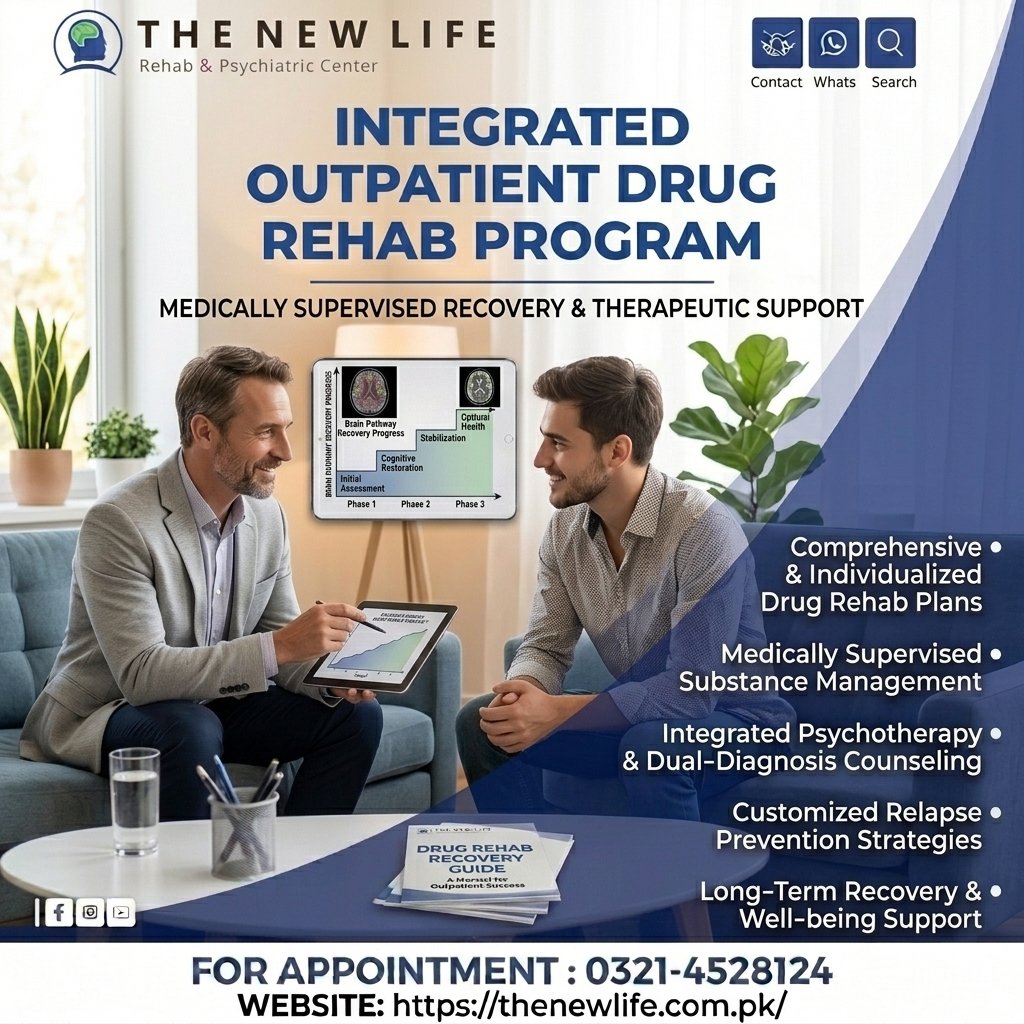
Outpatient Drug Rehab in Islamabad, Pakistan has become an important treatment option for individuals seeking professional support for substance use disorders while continuing to manage their daily responsibilities. Addiction affects people differently, and not everyone requires residential or inpatient rehabilitation. For individuals with appropriate clinical needs, outpatient rehabilitation can provide structured care, counseling, and ongoing support without requiring an overnight stay at a treatment facility.
Outpatient programs are designed to help individuals recover from drug addiction while maintaining commitments to work, education, and family. These programs combine evidence-based therapies, medical monitoring when appropriate, and relapse prevention strategies to support long-term recovery. At The New Life Rehab & Psychiatric Center Islamabad, Pakistan, outpatient rehabilitation is considered as part of an individualized treatment plan based on each person’s condition, recovery goals, and professional clinical assessment.
Understanding Outpatient Drug Rehab in Islamabad, Pakistan
Outpatient drug rehabilitation is a structured treatment program where individuals attend scheduled therapy sessions, counseling appointments, and clinical reviews while living at home. Unlike inpatient rehabilitation, outpatient care allows patients to continue many of their normal daily activities throughout treatment.
Outpatient treatment may be appropriate for individuals who:
- Have mild to moderate substance use disorders
- Have completed an inpatient rehabilitation program
- Have stable housing and supportive family members
- Are motivated to participate in regular treatment
- Can safely manage recovery outside a residential setting
The most appropriate level of care should always be determined through a comprehensive professional assessment.
Conditions Treated Through Outpatient Rehabilitation
Outpatient Drug Rehab in Islamabad, Pakistan may support recovery from various substance use disorders, including:
- Alcohol addiction
- Heroin addiction
- Cannabis (Marijuana) addiction
- Cocaine addiction
- Crystal Meth addiction
- Prescription medication dependence
- Ecstasy (MDMA) addiction
- Nicotine dependence
Some outpatient programs also provide integrated care for individuals with co-occurring mental health conditions such as anxiety, depression, or trauma-related disorders.
Benefits of Outpatient Drug Rehab
Outpatient rehabilitation offers several advantages for suitable individuals.
Flexibility
Patients can continue working, attending school, or fulfilling family responsibilities while receiving treatment.
Ongoing Family Support
Living at home allows individuals to remain connected with supportive family members who can encourage recovery.
Personalized Treatment
Treatment plans are developed according to each person’s substance use history, mental health needs, and recovery goals.
Continuity of Daily Life
Maintaining healthy routines during treatment may help individuals apply newly learned coping skills in real-world situations.
Components of an Outpatient Drug Rehab Program
Effective outpatient treatment combines several evidence-based approaches.
Comprehensive Assessment
Treatment begins with a professional evaluation of physical health, mental health, addiction severity, and personal recovery needs.
Individual Counseling
Private counseling sessions help individuals explore the emotional and behavioral factors contributing to substance use while building healthier coping strategies.
Cognitive Behavioral Therapy (CBT)
CBT is widely used to help individuals identify negative thought patterns, manage cravings, and reduce the risk of relapse.
Group Therapy
Group counseling offers peer support, shared experiences, and opportunities to strengthen communication and recovery skills.
Family Counseling
Family participation can improve communication, strengthen relationships, and create a supportive environment that encourages long-term recovery.
Relapse Prevention Planning
Patients learn practical techniques for identifying triggers, managing stress, avoiding high-risk situations, and maintaining sobriety.
At The New Life Rehab & Psychiatric Center Islamabad, Pakistan, outpatient treatment plans are tailored to the individual’s clinical needs and recovery progress.
Who May Benefit from Outpatient Drug Rehab?
Outpatient rehabilitation may be appropriate for individuals who:
- Do not require intensive medical supervision
- Have a stable home environment
- Demonstrate motivation to engage in treatment
- Can attend scheduled appointments consistently
- Have reliable family or community support
Individuals with severe addiction, significant withdrawal risks, or complex medical conditions may require inpatient care before transitioning to outpatient services.
The Importance of Continuing Care
Recovery does not end when formal treatment concludes. Continuing care helps individuals maintain progress and reduce the likelihood of relapse.
Continuing recovery strategies may include:
- Regular follow-up counseling
- Ongoing psychiatric care
- Participation in support groups
- Healthy lifestyle changes
- Stress management techniques
- Family involvement
Consistent follow-up care supports long-term recovery and emotional well-being.
Frequently Asked Questions (FAQs)
1. What is outpatient drug rehabilitation?
Outpatient drug rehabilitation is a structured treatment program where individuals attend scheduled therapy and counseling sessions while continuing to live at home.
2. Who is a suitable candidate for outpatient rehab?
Outpatient treatment may be suitable for individuals with mild to moderate substance use disorders, stable living conditions, and the ability to participate consistently in treatment.
3. Can outpatient rehab treat mental health conditions?
Yes. Many outpatient programs provide integrated treatment for co-occurring mental health conditions such as anxiety, depression, and trauma-related disorders.
4. Is outpatient rehab as effective as inpatient treatment?
The effectiveness depends on the individual’s clinical needs. Some people benefit from outpatient care, while others may require inpatient treatment before transitioning to outpatient services.
5. Why is relapse prevention important in outpatient treatment?
Relapse prevention helps individuals identify triggers, strengthen coping skills, and maintain recovery after completing structured rehabilitation.
Conclusion
Outpatient Drug Rehab in Islamabad, Pakistan provides a flexible and structured treatment option for individuals seeking recovery while maintaining their daily responsibilities. Through personalized treatment plans, individual counseling, cognitive behavioral therapy, family involvement, and relapse prevention strategies, outpatient rehabilitation can support sustainable recovery for appropriately selected individuals. Because every person’s recovery journey is unique, professional assessment is essential to determine the most suitable level of care. The New Life Rehab & Psychiatric Center Islamabad, Pakistan is committed to providing compassionate, evidence-based outpatient rehabilitation services that promote long-term recovery, emotional well-being, and healthier living through individualized treatment and ongoing professional support.