Depression and drug addiction are two serious health concerns that can affect a person’s emotions, behaviour, relationships, and quality of life. Although depression does not automatically lead to drug addiction, the two conditions can sometimes occur together and influence one another. Some people experiencing depression may turn to drugs or other substances in an attempt to escape emotional pain, improve their mood, or cope with persistent feelings of hopelessness.
Unfortunately, substance use may provide only temporary relief and can sometimes worsen depressive symptoms over time. Understanding the connection between depression and drug addiction is an important step towards recognising warning signs and seeking appropriate treatment. The New Life Rehab & Psychiatric Center Islamabad, Pakistan, emphasises the importance of compassionate, individualised support for people experiencing addiction and mental health challenges.
Understanding Depression and Drug Addiction
What Is Depression?
Depression is a mental health condition that involves persistent sadness, reduced interest in activities, and changes in mood, thinking, or daily functioning. It is more than occasional sadness and can affect how a person sleeps, eats, works, studies, and interacts with others.
Common symptoms of depression include:
- Persistent sadness, emptiness, or hopelessness.
- Loss of interest in previously enjoyable activities.
- Changes in sleep patterns or appetite.
- Fatigue or reduced energy.
- Difficulty concentrating or making decisions.
- Feelings of worthlessness or excessive guilt.
- Withdrawal from family, friends, and social activities.
Not everyone experiences depression in the same way. A qualified mental health professional can assess symptoms and determine whether they indicate depression or another condition.
What Is Drug Addiction?
Drug addiction, clinically described as a substance use disorder, involves a pattern of substance use that becomes difficult to control and continues despite harmful consequences. It can affect physical health, emotional well-being, relationships, finances, and everyday responsibilities.
Substances involved may include opioids, stimulants, cannabis, sedatives, and other drugs. The risks and effects differ depending on the substance, the way it is used, and the person’s health.
Addiction is a treatable health condition, not a moral failing. People experiencing substance-related problems deserve respectful, evidence-based care.
Can Depression Cause Drug Addiction?
Depression does not directly cause addiction in every person, and many people with depression never develop a substance use disorder. However, depression may increase vulnerability to problematic substance use in some circumstances.
1. Using Drugs to Escape Emotional Pain
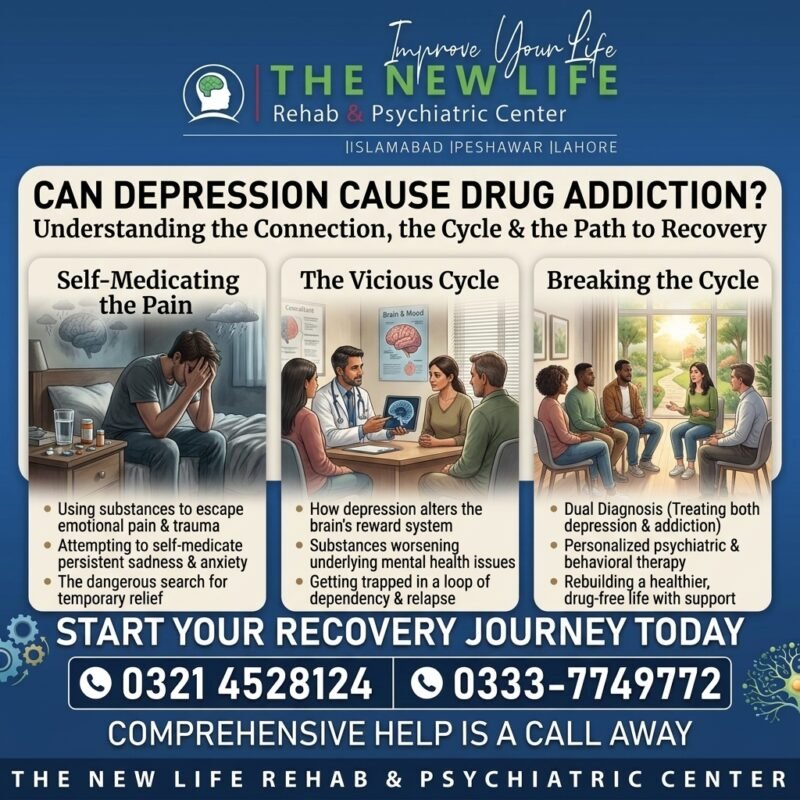
People experiencing depression may struggle with sadness, loneliness, hopelessness, or emotional exhaustion. Some may use drugs in an attempt to feel temporarily better, numb distress, or avoid difficult thoughts.
This pattern is sometimes called self-medication. However, substances do not treat the underlying causes of depression, and repeated use can create additional physical, emotional, and social problems.
2. Temporary Relief Can Become a Repeated Pattern
Some substances can temporarily change mood, energy, or perception. When a person begins relying on these effects to cope with everyday life, substance use may become increasingly difficult to control.
As tolerance, cravings, or dependence develop, the person may use substances more frequently. This can increase the risk of addiction and make it harder to manage depression without professional support.
3. Depression Can Reduce Motivation to Seek Help
Depression may make ordinary tasks feel overwhelming. A person may struggle to attend appointments, maintain routines, communicate with loved ones, or seek mental health treatment.
If substance use becomes an accessible way to cope with distress, the underlying depression may remain untreated. Supportive intervention and accessible professional care can help break this pattern.
How Drug Addiction Can Worsen Depression
The relationship between depression and addiction works in both directions. Although depression may contribute to substance use in some individuals, drug use can also trigger or worsen depressive symptoms.
Several factors may contribute:
- Changes in brain function: Repeated substance use can affect systems involved in mood, motivation, reward, and stress.
- Withdrawal symptoms: Anxiety, low mood, irritability, and sleep disturbances may occur during withdrawal, depending on the substance.
- Physical health problems: Poor sleep, nutritional difficulties, and other health complications can affect emotional well-being.
- Social and financial stress: Substance-related difficulties may contribute to family conflict, employment problems, or financial pressure.
- Reduced healthy coping: Relying on substances may make it harder to develop sustainable ways of managing difficult emotions.
These effects vary by person and substance. A professional assessment can help distinguish depression from symptoms caused or intensified by intoxication, withdrawal, medication effects, or other health conditions.
Dual Diagnosis: When Depression and Addiction Occur Together
When depression and a substance use disorder occur together, clinicians may describe the situation as a co-occurring disorder or dual diagnosis.
Both conditions require attention. Treating only the addiction while overlooking depression may leave important emotional difficulties unaddressed. Similarly, treating depression without considering ongoing substance use may make progress more complicated.
An assessment may consider the person’s mood symptoms, substance-use history, physical health, medications, family circumstances, and immediate safety needs. Clinicians may also need to monitor symptoms over time to understand how they relate to substance use and withdrawal.
Treatment Options for Depression and Drug Addiction
Effective care is personalised and may combine psychological treatment, medical support, substance-use interventions, and ongoing follow-up.
1. Professional Assessment
The first step is to consult a qualified healthcare or mental health professional. Assessment can help identify the severity of depression, the substances involved, potential withdrawal risks, and any additional conditions requiring care.
If the person uses alcohol or sedatives regularly, medical guidance is particularly important because withdrawal can sometimes be dangerous. They should not stop these substances abruptly without appropriate advice.
2. Psychological Therapy
Psychological therapies can help individuals understand emotional triggers, develop healthier coping skills, and address thought patterns that contribute to distress.
Cognitive behavioural therapy (CBT), for example, may help people recognise unhelpful thinking patterns and practise alternative responses. Motivational approaches and other evidence-based therapies may also support changes in substance use.
3. Medication and Medical Care
Depending on the assessment, a clinician may recommend medication for depression or an evidence-based treatment for a substance use disorder. Treatment choices depend on the person’s symptoms, medical history, current medications, and individual needs.
Medication should be prescribed and monitored by a qualified professional. Some drugs can interact dangerously with alcohol or other substances, so clinicians need accurate information about what the person is using.
4. Healthy Routines and Ongoing Support
Regular sleep, balanced nutrition, appropriate physical activity, and supportive social contact can complement treatment. Small, achievable goals may be more manageable for someone experiencing depression than demanding major changes immediately.
Family members can help by listening without judgement, encouraging professional care, and avoiding blame. Recovery may take time, and setbacks should be approached as reasons to review support rather than as proof of failure.
How The New Life Rehab & Psychiatric Center Islamabad, Pakistan, Can Help
People experiencing depression alongside drug addiction may benefit from an assessment that considers both mental health and substance-use concerns. The New Life Rehab & Psychiatric Center Islamabad, Pakistan, can be a point of contact for discussing addiction-related difficulties and exploring suitable support options.
The appropriate level of care depends on individual circumstances and may involve medical assessment, counselling, treatment for substance use, or coordinated mental health support. Treatment should be based on professional evaluation rather than assumptions about what every person needs.
If someone is at immediate risk of suicide or self-harm, has overdosed, or is experiencing severe withdrawal symptoms, seek emergency medical assistance rather than waiting for a routine appointment.
Frequently Asked Questions
1. Can depression lead to drug addiction?
Depression can increase the risk of problematic substance use for some people, particularly when substances are used to cope with emotional distress. However, depression does not automatically cause addiction, and many people experience depression without developing a substance use disorder.
2. Can drug addiction cause depression?
Yes. Some substances can worsen mood, disrupt sleep, and contribute to depressive symptoms. Depression can also occur during withdrawal or alongside the stress associated with substance-related problems.
3. What is dual diagnosis in addiction treatment?
Dual diagnosis generally refers to the presence of a substance use disorder alongside another mental health condition, such as depression. Treatment may need to address both conditions in a coordinated way.
4. Can depression and drug addiction be treated together?
Yes. Treatment may combine psychological therapy, appropriate medication, substance-use treatment, and ongoing support. The plan should be tailored to the person’s health, symptoms, and circumstances.
5. When should someone seek professional help?
Professional help is advisable when persistent low mood affects daily life, substance use becomes difficult to control, or attempts to stop lead to withdrawal symptoms. Thoughts of suicide or self-harm require immediate support from local emergency services or the nearest emergency department.
Conclusion
Depression can contribute to drug addiction in some people, particularly when substances are used to cope with emotional pain. At the same time, drug addiction can worsen depression, creating a cycle that may be difficult to break without appropriate support.
Understanding this connection can help individuals and families recognise warning signs and seek timely care. With a personalised treatment plan, evidence-based psychological and medical support, and compassionate encouragement, people experiencing depression and addiction can work towards improved well-being and long-term recovery. The New Life Rehab & Psychiatric Center Islamabad, Pakistan, encourages individuals and families to seek professional guidance when mental health concerns and substance use begin to affect everyday life.