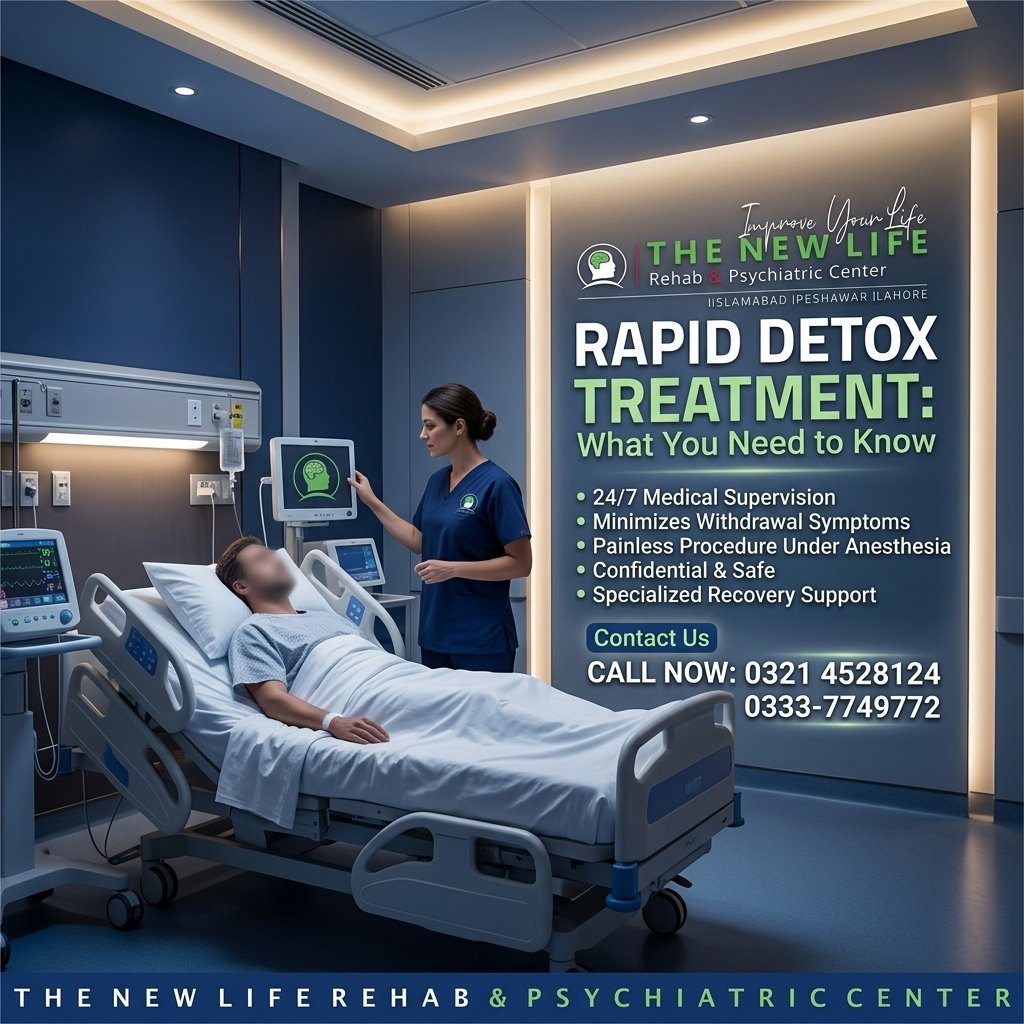
For people struggling with substance dependence, the idea of stopping drug or alcohol use quickly can seem appealing. However, detoxification is a medical process that can involve significant physical and psychological changes. Rapid Detox Treatment in Islamabad, Pakistan should therefore be understood as a clinically supervised approach to withdrawal management rather than simply a faster way to stop using a substance.
The appropriate detox process depends on the substance involved, the person’s pattern of use, medical history, withdrawal risks, and overall health. Professional assessment is essential before deciding whether an accelerated detox approach is appropriate.
What Is Rapid Detox Treatment?
Rapid detox generally refers to approaches intended to shorten or accelerate the withdrawal phase associated with stopping certain substances. The exact meaning of “rapid detox” can vary between treatment providers and may refer to different clinical methods.
It is important to distinguish medically supervised withdrawal management from procedures that attempt to force withdrawal to occur extremely quickly. For example, the American Society of Addiction Medicine has stated that ultra-rapid opioid detoxification using anesthesia is not recommended because of the risk of serious adverse events or death.
For this reason, individuals should ask healthcare professionals exactly what a facility means by rapid detox, what level of medical supervision is provided, and what happens after detoxification.
Assessment Before Rapid Detox
A careful assessment is an important first step. Healthcare professionals may evaluate the person’s substance-use history, previous withdrawal experiences, physical health, mental health, medications, and other relevant factors.
The assessment may help determine:
- Which substance or substances are involved
- The severity and duration of dependence
- Potential withdrawal complications
- Existing physical or psychological conditions
- Whether medical supervision is required
- What level of continuing addiction treatment may be appropriate
Not everyone is suitable for the same detox approach. Individual circumstances should guide treatment decisions.
Understanding Withdrawal Risks
Withdrawal symptoms vary considerably depending on the substance. Some people may experience anxiety, irritability, sweating, nausea, sleep difficulties, tremors, cravings, or other physical and emotional symptoms.
Certain types of withdrawal can become medically serious. In particular, abruptly stopping heavy or prolonged alcohol use can result in potentially life-threatening withdrawal, including seizures and severe confusion. Medical support may be required in such situations.
Opioid withdrawal can also cause significant symptoms and intense cravings. Although opioid withdrawal is generally not considered as medically dangerous as severe alcohol withdrawal, appropriate treatment and continuing care remain important because reduced tolerance after withdrawal can increase overdose risk if opioid use resumes.
Medical Supervision During Detox
A responsible Rapid Detox Treatment in Islamabad, Pakistan program should prioritize safety rather than simply speed. Depending on the substance and individual circumstances, professional monitoring may be necessary throughout the withdrawal process.
Medical professionals can observe symptoms, assess changes in the individual’s condition, and determine whether additional care is required. Supportive measures may also help individuals manage discomfort and anxiety during withdrawal.
People should not attempt to replicate rapid detox procedures at home or abruptly stop substances associated with serious withdrawal risks without appropriate medical guidance.
Detox Is Not the Same as Addiction Treatment

One of the most important points to understand is that detoxification is only one stage of recovery. Removing a substance from the body does not automatically address the psychological, behavioral, social, and environmental factors associated with addiction.
The National Institute on Alcohol Abuse and Alcoholism notes that detox can be an important first step but does not itself constitute complete addiction treatment. Continuing care may be required to support longer-term recovery.
At The New Life Rehab & Psychiatric Center Islamabad, Pakistan, detoxification can be considered alongside broader recovery services such as counseling, behavioral support, relapse prevention, and individualized treatment planning.
Counseling After Detox
After withdrawal has been managed, counseling can help individuals explore the reasons and circumstances connected with substance use. Treatment may address emotional difficulties, unhealthy behavioral patterns, stress, relationships, cravings, and relapse triggers.
Cognitive Behavioral Therapy (CBT), for example, can help individuals recognize connections between thoughts, emotions, and behaviors while developing healthier coping strategies.
Continuing psychological support can be particularly important for people who experience anxiety, depression, trauma-related difficulties, or other mental health concerns alongside addiction.
Relapse Prevention and Continuing Care
Completing detox does not remove the possibility of relapse. Returning to substance use after a period of abstinence can also carry increased risks, particularly when tolerance has decreased.
A continuing-care plan may include individual counseling, family support, relapse prevention, healthy routines, follow-up appointments, and community or peer support where appropriate.
The objective is to help individuals develop practical strategies for managing cravings and challenging situations after the acute withdrawal period has ended.
Choosing Rapid Detox Treatment in Islamabad
When considering Rapid Detox Treatment in Islamabad, Pakistan, individuals and families should look beyond claims about speed. Important questions include:
- Who conducts the medical assessment?
- What withdrawal risks are considered?
- Is qualified medical supervision available?
- What happens if complications develop?
- What treatment follows detox?
- Are counseling and relapse prevention available?
- How are co-occurring mental health concerns addressed?
- Is there a continuing-care plan?
These questions can help families evaluate whether a treatment program focuses on safe, comprehensive care rather than detoxification alone.
Frequently Asked Questions
1. What is Rapid Detox Treatment in Islamabad, Pakistan?
Rapid detox generally describes approaches intended to shorten or accelerate the withdrawal process. Because methods vary, individuals should discuss the exact procedure, potential risks, and level of medical supervision with qualified healthcare professionals.
2. Is rapid detox safe for everyone?
No. Suitability depends on the substance involved, severity of dependence, medical history, mental health, and other individual factors. Some accelerated or ultra-rapid approaches can carry significant risks and should not be assumed to be appropriate simply because they are faster.
3. Can alcohol withdrawal be dangerous?
Yes. Heavy or prolonged alcohol use followed by sudden cessation can cause potentially life-threatening withdrawal. Medical assessment is important when significant alcohol dependence is suspected.
4. Is detox enough to treat addiction?
No. Detox primarily addresses withdrawal and stabilization. Long-term addiction treatment may require counseling, behavioral therapy, relapse prevention, family support, and continuing care.
5. What happens after rapid detox?
After detoxification, individuals may transition into a broader recovery program. Depending on their needs, this may include counseling, behavioral support, mental health care, relapse prevention, family involvement, and continuing follow-up.
Conclusion
Rapid Detox Treatment in Islamabad, Pakistan should be approached as a medical and clinical issue rather than simply a way to achieve faster withdrawal. The appropriate approach depends on the substance, level of dependence, withdrawal risks, and individual health circumstances.
At The New Life Rehab & Psychiatric Center Islamabad, Pakistan, detoxification can form part of a broader individualized recovery plan. Combining appropriate withdrawal management with counseling, relapse prevention, psychological support, and continuing care can help address the wider challenges associated with addiction.