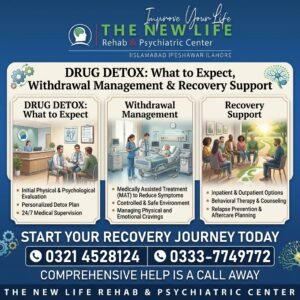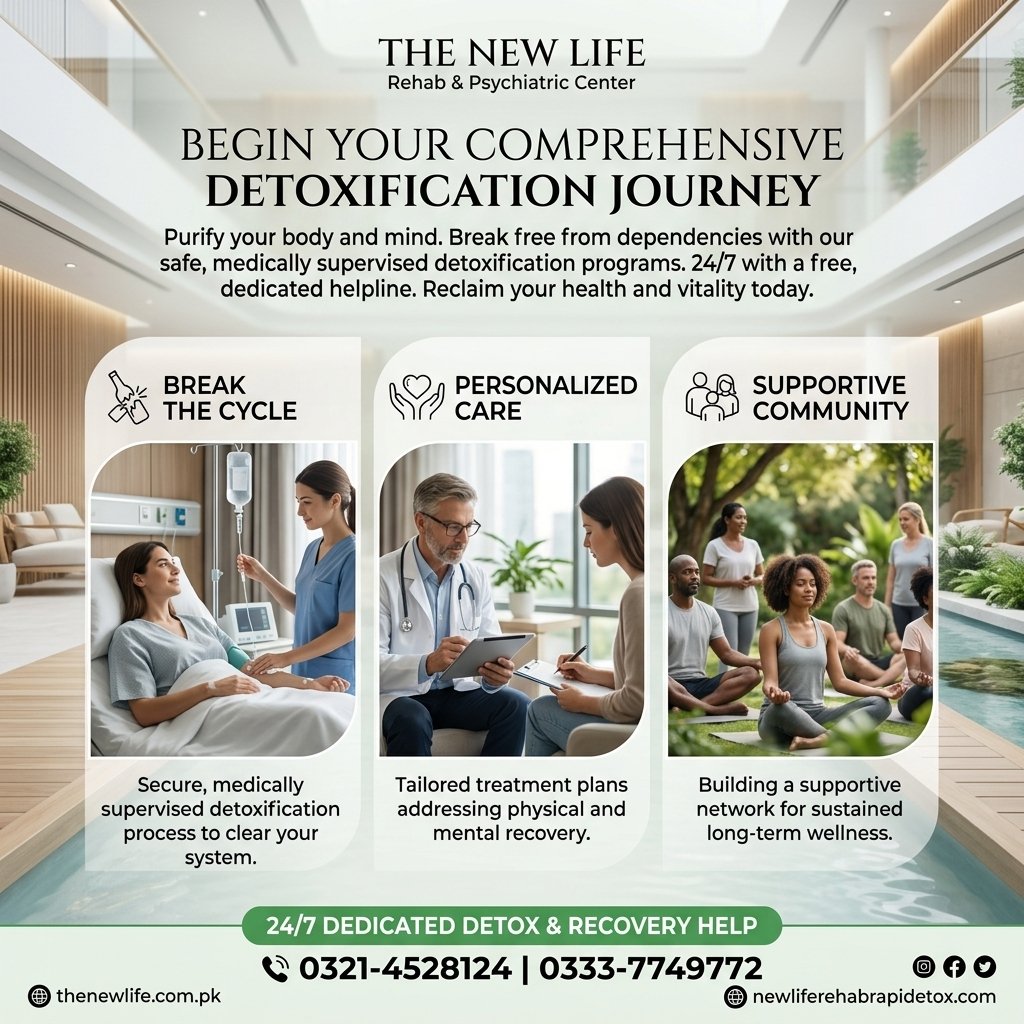
Detoxification in Islamabad, Pakistan is an important first step for some individuals beginning recovery from drug or alcohol dependence. Detoxification, commonly called detox, refers to the process of allowing the body to clear a substance while managing withdrawal symptoms and associated health concerns. Depending on the substance involved and the severity of dependence, detoxification may require medical supervision.
Detox is not the same as complete addiction treatment. While detox can address the immediate physical effects of stopping substance use, long-term recovery often requires counseling, behavioral therapy, psychiatric care, family support, relapse prevention, and continuing treatment.
At The New Life Rehab & Psychiatric Center Islamabad, Pakistan, detoxification can be considered as part of an individualized treatment plan. The appropriate level of care depends on the person’s substance-use history, physical condition, mental health, withdrawal risks, and other clinical factors.
Understanding Detoxification in Islamabad, Pakistan
Detoxification is the initial process of managing the physical effects that may occur when someone who has developed dependence stops or significantly reduces substance use.
Depending on the substance, withdrawal can involve physical, emotional, and psychological symptoms. These symptoms may range from mild discomfort to potentially serious medical complications.
Detoxification may be relevant for individuals experiencing dependence on:
- Alcohol
- Heroin and other opioids
- Prescription opioids
- Benzodiazepines
- Stimulants such as methamphetamine
- Certain sedative medications
- Other substances capable of producing physical dependence
Because withdrawal differs between substances, detox should be planned according to individual clinical needs.
Why Professional Detoxification Is Important
Some people attempt to stop using drugs or alcohol without medical guidance. While this may be possible for certain substances and situations, unsupervised withdrawal can be risky when significant physical dependence is present.
Professional detoxification can provide:
Medical Assessment
A healthcare professional can review substance-use patterns, medical history, current medications, mental health concerns, and potential withdrawal risks.
Withdrawal Monitoring
Monitoring helps identify changes in physical and psychological symptoms and allows appropriate care when symptoms become more severe.
Supportive Care
Depending on the individual’s condition, treatment may involve hydration, nutritional support, symptom management, observation, or other clinically appropriate interventions.
Safety Planning
Professionals can determine whether an individual requires outpatient monitoring, residential care, or a higher level of medical support.
Common Detoxification Symptoms

Withdrawal symptoms vary significantly depending on the substance and level of dependence.
Possible symptoms include:
- Anxiety
- Irritability
- Sweating
- Tremors
- Nausea
- Headaches
- Muscle aches
- Restlessness
- Sleep difficulties
- Changes in appetite
- Mood changes
- Strong cravings
Some withdrawal syndromes can become medically serious. Alcohol and benzodiazepine withdrawal, for example, may involve severe complications in some dependent individuals. Medical assessment is therefore particularly important before stopping these substances.
Detoxification for Alcohol Dependence
Alcohol withdrawal deserves special attention because severe withdrawal can be dangerous.
Early symptoms may include tremors, sweating, anxiety, nausea, restlessness, and difficulty sleeping. In severe cases, withdrawal can involve seizures or delirium.
Individuals with significant alcohol dependence should seek medical advice before attempting to stop drinking abruptly. A healthcare professional can determine whether medically supervised detoxification is necessary.
Opioid Detoxification
Heroin and other opioids can produce physical dependence. Withdrawal may involve:
- Muscle aches
- Sweating
- Restlessness
- Runny nose
- Abdominal discomfort
- Nausea
- Diarrhea
- Sleep disturbances
- Strong cravings
Although opioid withdrawal is generally not considered as medically dangerous as severe alcohol or benzodiazepine withdrawal, it can be extremely uncomfortable and may increase the risk of returning to opioid use.
Professional treatment can help individuals move from detoxification toward appropriate ongoing addiction care.
Detoxification and Mental Health
Substance use and mental health conditions can occur together. Depression, anxiety, trauma-related conditions, and other psychiatric concerns may influence withdrawal and recovery.
For this reason, a comprehensive assessment should consider both substance use and mental health. Individuals experiencing significant psychological symptoms may require integrated or dual-diagnosis treatment.
At The New Life Rehab & Psychiatric Center Islamabad, Pakistan, mental health considerations can be incorporated into treatment planning when clinically appropriate.
What Happens After Detox?
Detoxification is only the beginning of recovery. Removing a substance from the body does not automatically resolve the psychological and behavioral factors associated with addiction.
After detox, individuals may benefit from:
- Individual counseling
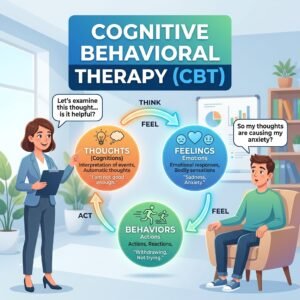
- Cognitive Behavioral Therapy
- Group therapy
- Family support
- Psychiatric care when appropriate
- Relapse prevention
- Aftercare planning
- Healthy lifestyle support
Continuing treatment can help individuals understand their triggers, develop coping skills, and reduce the risk of returning to substance use.
Family Support During Detox and Recovery
Families often experience significant concern when a loved one enters detoxification. Education can help family members understand withdrawal, treatment expectations, and the importance of professional care.
Family members can provide support by:
- Encouraging treatment participation
- Avoiding judgment and criticism
- Maintaining appropriate boundaries
- Supporting healthy routines
- Communicating calmly
- Seeking professional guidance when concerns arise
Family support should complement professional treatment rather than replace it.
Frequently Asked Questions (FAQs)
1. What is detoxification?
Detoxification is the process of managing the physical effects of stopping or reducing a substance after dependence has developed. It may involve medical monitoring and supportive care.
2. Is detoxification necessary for everyone with addiction?
No. The need for detox depends on the substance, level of dependence, withdrawal risk, medical condition, and individual circumstances. A healthcare professional should determine the appropriate approach.
3. Can detoxification be done at home?
Some forms of withdrawal may be managed outside a facility under appropriate professional guidance, while others require medical supervision. Alcohol and benzodiazepine withdrawal can be particularly risky when dependence is significant.
4. Does detox cure addiction?
No. Detox primarily addresses withdrawal and physical dependence. Ongoing counseling, behavioral treatment, relapse prevention, and aftercare are often needed to address addiction more comprehensively.
5. What happens after detoxification?
Following detox, an individual may transition into rehabilitation, counseling, psychiatric care, family support, relapse prevention, or another appropriate level of continuing treatment.
Conclusion
Detoxification in Islamabad, Pakistan can provide an important foundation for individuals beginning recovery from drug or alcohol dependence. Because withdrawal symptoms and risks vary significantly between substances and individuals, professional assessment is essential when determining the safest and most appropriate level of care.
Detoxification should be viewed as the beginning rather than the end of addiction treatment. Continued counseling, behavioral therapy, family involvement, mental health support, relapse prevention, and aftercare can help address the underlying factors associated with substance use. The New Life Rehab & Psychiatric Center Islamabad, Pakistan supports an individualized approach to addiction and mental health care, with treatment plans designed around each person’s clinical needs and recovery goals.