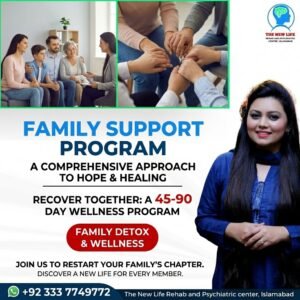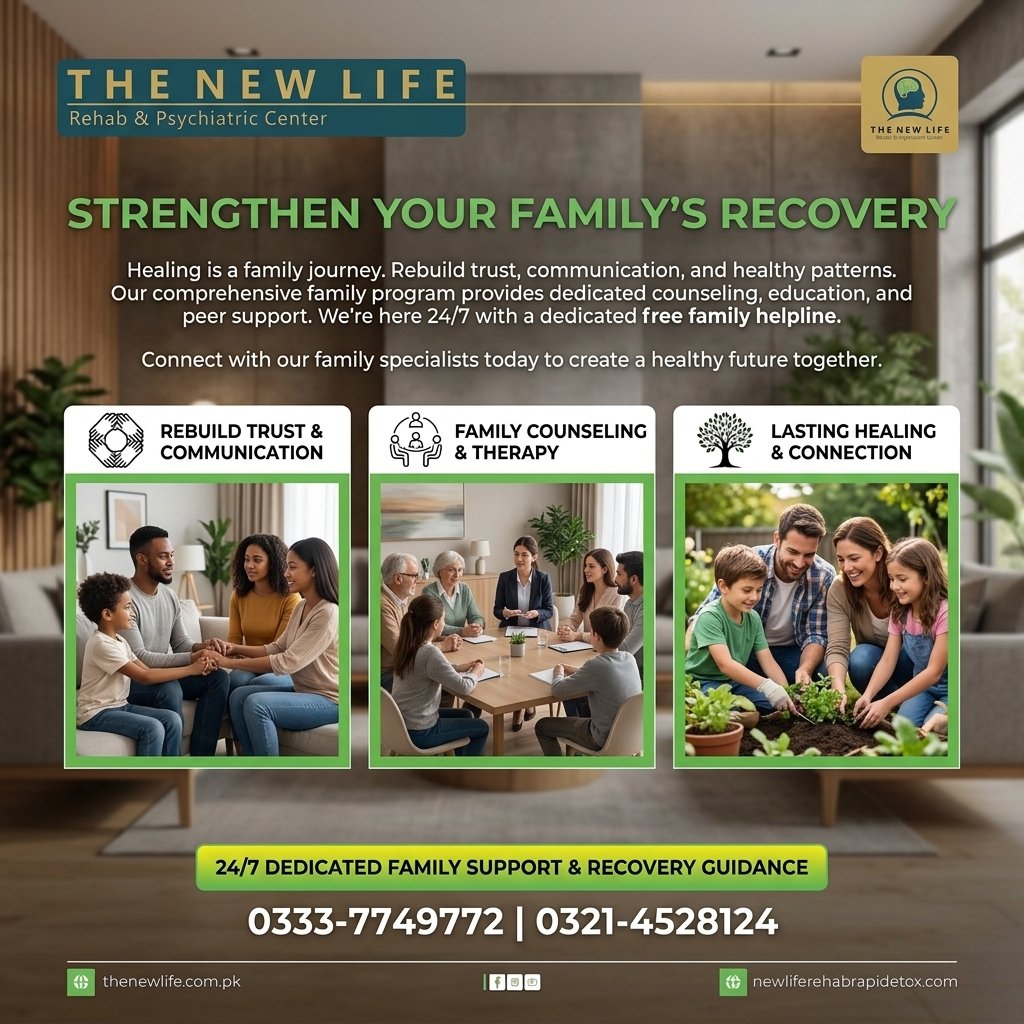
A Family Support Program in Islamabad, Pakistan can be an important part of addiction treatment and mental health care. When a person experiences drug addiction, alcohol dependence, or a psychiatric condition, the impact often extends beyond the individual. Parents, spouses, children, siblings, and other loved ones may experience stress, confusion, relationship difficulties, and uncertainty about how to provide appropriate support.
Family involvement can contribute positively to recovery when it is guided by education, professional counseling, healthy communication, and realistic expectations. At the same time, families need support of their own. Understanding addiction as a health condition rather than simply a behavioral or moral problem can help reduce stigma and encourage constructive responses.
The New Life Rehab & Psychiatric Center Islamabad, Pakistan recognizes the importance of involving families when clinically appropriate. Its family-centered approach can help loved ones better understand treatment, establish healthy boundaries, and support recovery without neglecting their own emotional well-being.
Understanding Family Support Program in Islamabad, Pakistan
A Family Support Program provides education, counseling, guidance, and emotional support to relatives of individuals experiencing addiction or mental health difficulties. The purpose is not to place responsibility for recovery on the family, but to help family members understand how they can contribute appropriately.
Family support may be relevant when a loved one is dealing with:
- Drug addiction
- Alcohol addiction
- Heroin or opioid dependence
- Cannabis or marijuana addiction
- Methamphetamine addiction
- Smoking or nicotine dependence
- Depression
- Anxiety disorders
- Mood disorders
- Dual diagnosis
The specific type of family involvement should depend on the patient’s treatment needs, family circumstances, privacy, and professional recommendations.
How Addiction Affects Families
Addiction can create challenges throughout a household. Family members may struggle to understand changes in a loved one’s behavior, particularly when substance use leads to broken promises, financial difficulties, secrecy, or relationship conflict.
Common effects can include:
- Loss of trust
- Communication problems
- Emotional exhaustion
- Family conflict
- Financial stress
- Anxiety about relapse
- Social withdrawal
- Feelings of guilt or frustration
Professional family support can provide a safe environment for addressing these concerns and learning healthier ways to respond.
Why Family Support Matters in Recovery
Recovery involves more than stopping substance use. Individuals often need to rebuild relationships, establish healthy routines, manage emotional triggers, and develop new coping skills.
Education Reduces Stigma
Learning about substance use disorders can help families understand that addiction involves biological, psychological, and behavioral factors. Education may reduce blame and encourage appropriate professional care.
Communication Can Improve
Family counseling can help relatives discuss difficult subjects respectfully and listen to one another more effectively.
Support Can Strengthen Treatment Engagement
Encouragement from informed family members may help an individual remain connected with treatment and recovery activities.
Healthy Relationships Can Be Rebuilt
With time, appropriate boundaries, and professional guidance, families may work toward restoring trust and developing healthier relationships.
Components of a Family Support Program

A comprehensive Family Support Program in Islamabad, Pakistan may involve several services.
Family Counseling
Counseling provides a structured setting where family members can discuss concerns, misunderstandings, expectations, and relationship difficulties.
Addiction Education
Families can learn about substance dependence, cravings, withdrawal, relapse, treatment, and recovery. This knowledge can help relatives respond more appropriately to difficult situations.
Mental Health Education
When a person has a psychiatric condition alongside addiction, family members may benefit from learning about symptoms, treatment, warning signs, and appropriate support.
Communication Guidance
Families can learn strategies for expressing concerns without unnecessary confrontation and for maintaining respectful conversations during challenging periods.
Relapse Prevention Education
Family members may be taught to recognize potential warning signs and understand when encouraging professional support may be appropriate.
At The New Life Rehab & Psychiatric Center Islamabad, Pakistan, family involvement can be incorporated into an individual’s overall treatment plan according to clinical circumstances and appropriate consent.
Establishing Healthy Boundaries
Family support does not mean tolerating unsafe or harmful behavior. Healthy boundaries can protect family relationships while encouraging the individual to take responsibility for recovery.
Examples of healthy boundaries include:
- Encouraging treatment participation
- Avoiding actions that enable substance use
- Communicating expectations clearly
- Maintaining personal well-being
- Respecting professional treatment recommendations
- Avoiding unnecessary arguments during periods of emotional distress
Boundaries should be practical, respectful, and appropriate to each family’s circumstances.
Family Support and Relapse Prevention
Relapse can be difficult for both individuals and their families. A supportive response should focus on safety, professional assistance, and reassessment rather than shame or blame.
Families can contribute by encouraging continued counseling, supporting healthy routines, reducing unnecessary conflict, and seeking professional guidance when significant warning signs appear.
A return to substance use may indicate that additional treatment or changes to the recovery plan are needed. It should be approached as a situation requiring appropriate support rather than simply as a personal failure.
Supporting Family Well-Being
Family members should also look after their own emotional health. Supporting someone with addiction can be exhausting, particularly when difficulties continue over an extended period.
Families may benefit from:
- Individual or family counseling
- Education about addiction
- Supportive social relationships
- Healthy boundaries
- Regular rest and personal time
- Stress-management activities
- Professional guidance during difficult situations
Taking care of family well-being can make it easier to provide constructive support without becoming overwhelmed.
Frequently Asked Questions (FAQs)
1. What is a Family Support Program?
A Family Support Program provides counseling, education, and practical guidance to help families understand addiction or mental health conditions and support their loved one’s recovery appropriately.
2. Can family counseling help during addiction treatment?
Yes. Family counseling can address communication problems, relationship difficulties, misunderstandings, and expectations while providing a structured environment for constructive discussion.
3. How can families support someone recovering from addiction?
Families can encourage treatment participation, maintain healthy boundaries, communicate respectfully, support healthy routines, and seek professional guidance when difficulties arise.
4. Should families be involved in every treatment decision?
Not necessarily. Family involvement depends on the individual’s circumstances, treatment needs, privacy, consent, and professional recommendations.
5. Can family members receive support for themselves?
Yes. Family members can also experience significant emotional stress and may benefit from counseling, education, support networks, and professional guidance.
Conclusion
A Family Support Program in Islamabad, Pakistan can provide valuable assistance to families affected by addiction and mental health challenges. By combining education, counseling, communication guidance, healthy boundaries, and relapse prevention awareness, family members can become better equipped to provide constructive support while protecting their own well-being.
Recovery is an individual process, and families cannot be expected to manage addiction or psychiatric conditions on their own. Professional treatment remains essential, while appropriate family involvement can complement that care. The New Life Rehab & Psychiatric Center Islamabad, Pakistan promotes a compassionate and individualized approach that recognizes the important role families can play in creating a supportive environment for recovery and long-term well-being.