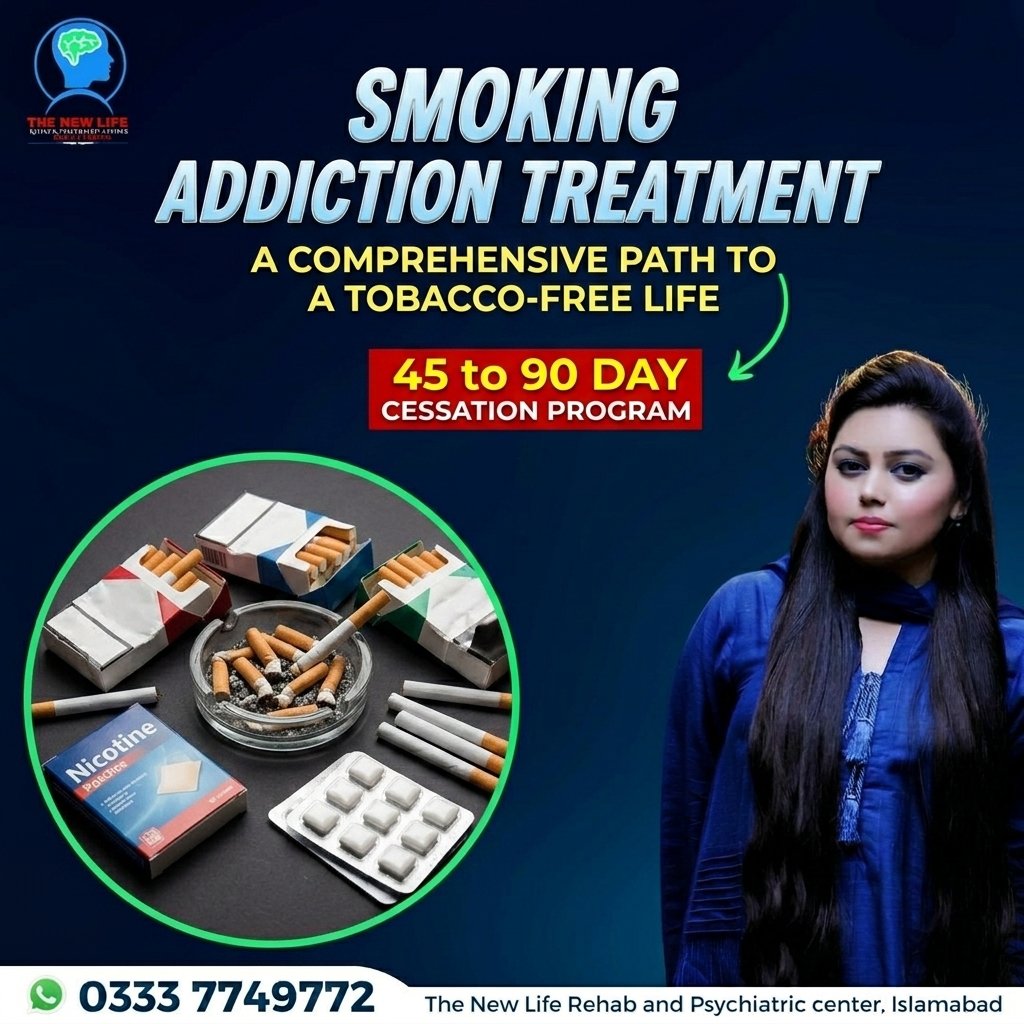
Smoking Addiction Treatment in Islamabad, Pakistan has become an increasingly important health concern as nicotine dependence continues to affect individuals across all age groups. Smoking remains one of the most common forms of substance dependence, often beginning as a habit and gradually developing into a serious addiction. Whether it involves cigarettes, vaping, shisha, or tobacco products, long-term nicotine use can have significant effects on physical health, mental well-being, and daily life.
Nicotine addiction can be difficult to overcome without proper support, as it affects both the body and the brain. Many individuals who attempt to quit smoking experience strong cravings, withdrawal symptoms, and emotional discomfort. At The New Life Rehab & Psychiatric Center Islamabad, Pakistan, understanding the nature of smoking addiction and exploring professional treatment options can be an important step toward healthier living.
Understanding Smoking Addiction Treatment in Islamabad, Pakistan
Smoking addiction is primarily caused by nicotine, a highly addictive substance found in tobacco products. Nicotine affects the brain’s reward system by releasing dopamine, creating temporary feelings of pleasure and relaxation. Over time, the brain begins to rely on nicotine to function normally, leading to physical and psychological dependence.
Common forms of nicotine consumption include:
- Cigarettes
- E-cigarettes (vaping)
- Shisha (hookah)
- Cigars
- Chewing tobacco
- Nicotine pouches
Although some individuals believe certain forms of tobacco use are safer than others, all nicotine-based products can contribute to dependency and health risks.
Signs and Symptoms of Smoking Addiction
Recognizing nicotine dependence early can help individuals seek support before serious health complications develop.
Physical Signs
- Frequent cravings for cigarettes or nicotine
- Increased tolerance over time
- Withdrawal symptoms when trying to quit
- Shortness of breath
- Persistent cough
- Reduced stamina and physical endurance
Behavioral Signs
- Smoking immediately after waking up
- Difficulty going a few hours without smoking
- Smoking during stress or emotional discomfort
- Repeated failed attempts to quit
- Prioritizing smoking despite health concerns
Psychological Symptoms
- Anxiety when unable to smoke
- Irritability
- Restlessness
- Difficulty concentrating
- Mood swings
These symptoms can vary depending on the duration and frequency of smoking.
Health Risks Associated with Smoking Addiction
Long-term smoking can lead to serious health complications that affect nearly every organ in the body.
Respiratory Problems
Smoking increases the risk of:
- Chronic bronchitis
- Lung infections
- Reduced lung capacity
- Chronic obstructive pulmonary disease (COPD)
Heart Disease
Nicotine and tobacco use can contribute to:
- High blood pressure
- Heart attacks
- Stroke
- Poor blood circulation
Cancer Risks
Smoking is strongly associated with several forms of cancer, including:
- Lung cancer
- Mouth cancer
- Throat cancer
- Esophageal cancer
Mental Health Effects
Smoking addiction can also affect emotional health. While nicotine may create short-term relief, it can worsen anxiety, stress, and mood instability over time.
Why Quitting Smoking Can Be Challenging
Many individuals underestimate the strength of nicotine dependence. Quitting smoking often involves both physical withdrawal and emotional adjustment.
Common withdrawal symptoms include:
- Strong nicotine cravings
- Irritability
- Anxiety
- Sleep disturbances
- Increased appetite
- Difficulty concentrating
- Mood changes
These symptoms can make quitting difficult without structured support and guidance.
Professional Smoking Addiction Treatment Options
Smoking Addiction Treatment in Islamabad, Pakistan often involves a combination of therapeutic, behavioral, and supportive interventions.
Comprehensive Assessment
A professional evaluation helps identify the level of nicotine dependence, smoking patterns, and any co-occurring mental health concerns.
Behavioral Therapy
Behavioral counseling can help individuals understand smoking triggers and develop healthier coping mechanisms.
Cognitive Behavioral Therapy (CBT)
CBT helps individuals identify negative thought patterns linked to smoking and replace them with healthier behaviors.
Relapse Prevention Planning
Developing a personalized quit-smoking plan can improve long-term success by preparing individuals for cravings and high-risk situations.
Mental Health Support
For individuals who use smoking as a coping mechanism for stress, depression, or anxiety, addressing mental health concerns can be an important part of recovery.
At The New Life Rehab & Psychiatric Center Islamabad, Pakistan, smoking addiction treatment may involve a personalized approach based on the individual’s psychological and behavioral needs.
Benefits of Quitting Smoking
Stopping smoking can lead to both immediate and long-term improvements in health and quality of life.
Benefits may include:
- Improved breathing and lung function
- Better heart health
- Increased energy levels
- Reduced coughing
- Improved sleep quality
- Better concentration
- Lower risk of serious illnesses
- Financial savings
Recovery from nicotine addiction can also improve emotional well-being and self-confidence.
Frequently Asked Questions (FAQs)
1. Is smoking addiction considered a serious health issue?
Yes. Nicotine addiction can lead to serious physical and mental health problems and often requires structured treatment for successful recovery.
2. How long do nicotine withdrawal symptoms last?
Withdrawal symptoms vary but are often strongest during the first few days and may gradually improve over several weeks.
3. Can therapy help people quit smoking?
Yes. Behavioral therapy and CBT can help individuals manage triggers, cravings, and emotional challenges associated with quitting.
4. Is vaping less addictive than smoking?
Vaping may still contain nicotine and can lead to dependence. It is not risk-free.
5. Can stress increase smoking habits?
Yes. Many individuals smoke more during periods of stress, which can strengthen nicotine dependence.
Conclusion
Smoking Addiction Treatment in Islamabad, Pakistan is an important part of addressing nicotine dependence and promoting long-term health. Smoking addiction can affect physical well-being, emotional stability, and overall quality of life, but recovery is possible with proper support and treatment. Understanding the causes, risks, and available treatment options can help individuals make informed decisions about quitting. The New Life Rehab & Psychiatric Center Islamabad, Pakistan recognizes the importance of personalized care, behavioral therapy, and mental health support in helping individuals overcome smoking addiction and move toward a healthier future.