Heroin Addiction in Islamabad, Pakistan is a serious substance use disorder that can have significant effects on a person’s physical health, mental well-being, relationships, and daily life. Heroin is an opioid drug that can produce intense feelings of euphoria and relaxation, but repeated use can quickly lead to tolerance, dependence, and addiction.
Heroin addiction is a medical and psychological condition rather than simply a lack of willpower. Factors such as repeated opioid exposure, genetics, trauma, stress, mental health concerns, and environmental influences may contribute to its development. Professional treatment can help individuals address both the physical dependence and the underlying factors associated with addiction.
At The New Life Rehab & Psychiatric Center Islamabad, Pakistan, treatment can be tailored to an individual’s circumstances and clinical needs. Depending on the assessment, care may include detoxification, counseling, behavioral therapy, family support, relapse prevention, and continuing recovery services.
Understanding Heroin Addiction in Islamabad, Pakistan
Heroin addiction involves compulsive heroin use despite harmful consequences. Over time, the brain and body can become accustomed to the drug, making it increasingly difficult for a person to stop without professional support.
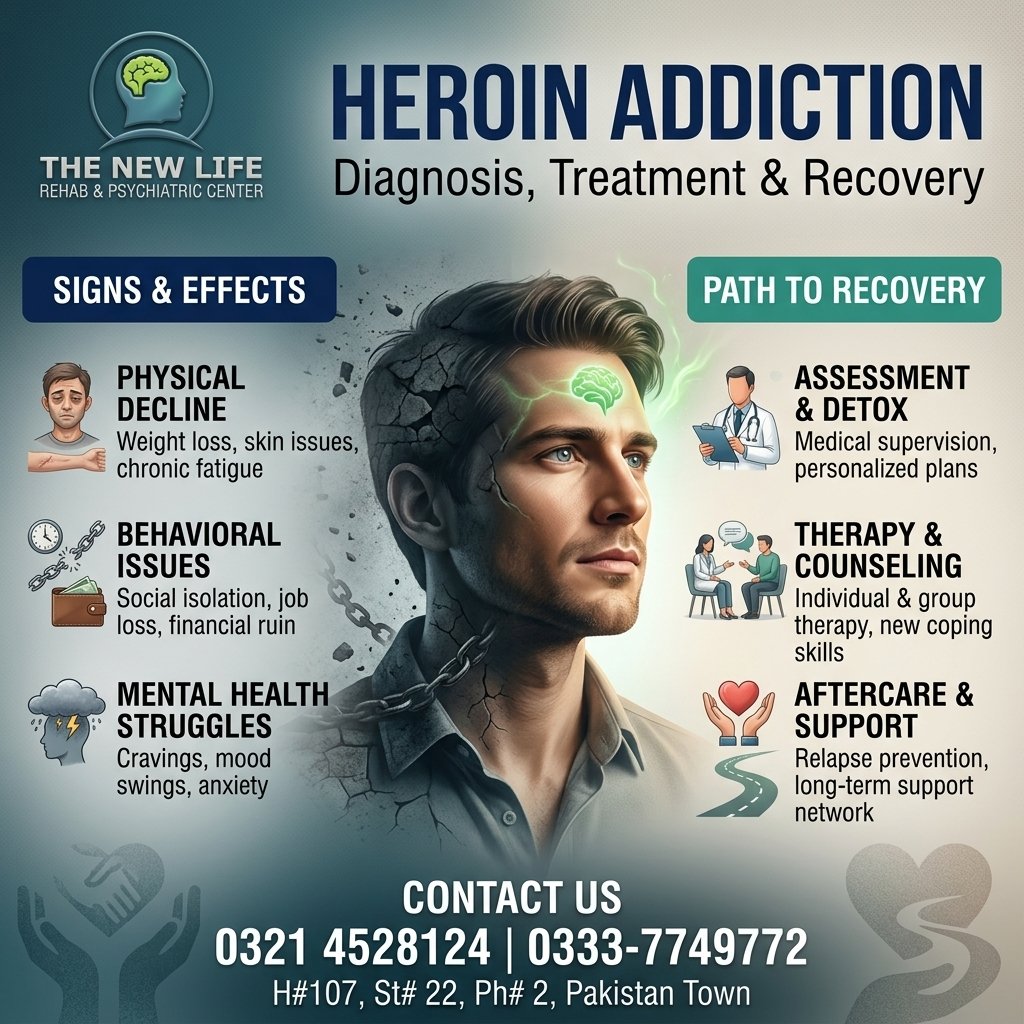
Common warning signs of heroin addiction may include:
- Strong cravings for heroin
- Increasing the amount or frequency of use
- Difficulty stopping or controlling drug use
- Spending significant time obtaining or using heroin
- Neglecting work, education, family, or other responsibilities
- Continuing to use despite physical or emotional problems
- Withdrawal symptoms when heroin use is reduced or stopped
- Losing interest in previously enjoyed activities
- Experiencing financial or relationship difficulties related to drug use
Recognizing these signs early can encourage individuals and families to seek appropriate professional assistance.
Causes and Risk Factors of Heroin Addiction
Heroin addiction can develop through a combination of biological, psychological, and social factors.
Physical Dependence and Repeated Opioid Use
Repeated opioid exposure can result in tolerance and physical dependence. As tolerance increases, an individual may feel the need to use more of the drug to experience similar effects, increasing the risks associated with heroin use.
Mental Health and Emotional Factors
Depression, anxiety, trauma, chronic stress, and other psychological difficulties may increase vulnerability to substance misuse. Some individuals may initially use drugs as an attempt to cope with emotional distress.
Social and Environmental Influences
Peer pressure, exposure to drug-using environments, family difficulties, social isolation, and other environmental factors can contribute to problematic substance use.
Previous Substance Use
Some individuals develop opioid dependence after exposure to prescription opioid medications or other substances. The pathway to heroin addiction differs from person to person.
Effects of Heroin Addiction on Health
Heroin can affect almost every aspect of a person’s life. Short-term effects may include drowsiness, slowed breathing, confusion, nausea, and impaired judgment.
Long-term heroin use may contribute to:
- Severe physical dependence
- Increased tolerance
- Respiratory problems
- Constipation and digestive difficulties
- Nutritional problems
- Mental health difficulties
- Social and financial problems
- Increased risk of infectious diseases when drugs are injected
- Increased risk of overdose
Because heroin can significantly slow breathing, overdose is a major medical concern. Prompt emergency medical assistance is essential when an overdose is suspected.
Heroin Withdrawal and Detoxification
When a person who is physically dependent on heroin suddenly stops using it, withdrawal symptoms can occur. These may include muscle aches, sweating, restlessness, anxiety, runny nose, abdominal discomfort, nausea, diarrhea, insomnia, and intense cravings.
Although opioid withdrawal is often extremely uncomfortable, individual risks and circumstances vary. Professional assessment can help determine the safest and most appropriate approach to withdrawal management.
Detoxification is an important initial step for some individuals, but detox alone does not address the psychological, behavioral, and social factors associated with addiction. Continuing treatment is often necessary to support long-term recovery.
Professional Treatment for Heroin Addiction
Effective heroin addiction treatment should be individualized according to the person’s health, substance use history, mental health, and recovery needs.
Initial Assessment
A comprehensive assessment can help identify the severity of opioid dependence, previous treatment experiences, physical health concerns, mental health conditions, and potential withdrawal risks.
Detoxification and Medical Support
When clinically appropriate, detoxification may help individuals manage the physical effects of withdrawal. Medical professionals can determine whether additional medical interventions or specialized opioid-use-disorder treatment are appropriate.
Individual Counseling
Individual counseling provides a confidential environment where people can explore the causes and triggers associated with heroin use. Counseling may also help develop healthier coping mechanisms and practical recovery strategies.
Behavioral Therapy
Behavioral approaches can help individuals recognize unhealthy thought patterns, manage cravings, develop problem-solving skills, and make healthier decisions.
Family Support
Heroin addiction can affect spouses, parents, children, and other relatives. Family support and education can help loved ones understand addiction, improve communication, establish appropriate boundaries, and provide constructive encouragement.
Relapse Prevention
Because addiction can involve recurring cravings and high-risk situations, relapse prevention is an important part of continuing care. Individuals can learn to identify triggers, create coping strategies, and develop a support network for difficult periods.
At The New Life Rehab & Psychiatric Center Islamabad, Pakistan, treatment planning can take an individualized approach that considers the person’s physical, emotional, psychological, and social needs.
Heroin Addiction and Dual Diagnosis
Some individuals struggling with heroin addiction also experience mental health conditions such as depression, anxiety, trauma-related disorders, or other psychological concerns. When substance use and mental health conditions occur together, they may require an integrated treatment approach.
Addressing both areas can help professionals better understand the factors contributing to substance use and develop a more comprehensive recovery plan.
Supporting Long-Term Recovery From Heroin Addiction
Recovery does not end when detoxification is completed. Continuing support can help individuals adjust to life without heroin and reduce the risk of returning to problematic substance use.
Long-term recovery may involve:
- Continued individual counseling
- Behavioral therapy
- Family involvement
- Relapse prevention planning
- Mental health support when required
- Healthy daily routines
- Stress-management strategies
- Supportive relationships
- Regular professional follow-up
Recovery is different for every individual, and treatment plans may need to change as circumstances and needs evolve.
Frequently Asked Questions (FAQs)
1. What is heroin addiction?
Heroin addiction is a substance use disorder involving compulsive heroin use despite harmful consequences. It can cause tolerance, physical dependence, cravings, and significant disruption to daily life.
2. What are common signs of heroin addiction?
Common signs include strong cravings, difficulty controlling use, increasing tolerance, withdrawal symptoms, neglect of responsibilities, changes in behavior, and continued heroin use despite health or relationship problems.
3. What happens during heroin withdrawal?
Heroin withdrawal may cause muscle aches, sweating, restlessness, anxiety, nausea, abdominal discomfort, sleep problems, and strong cravings. Professional assessment can help determine appropriate withdrawal management.
4. Is detoxification enough to overcome heroin addiction?
Detoxification addresses the initial physical aspects of withdrawal but does not usually address all the psychological and behavioral factors associated with addiction. Counseling, behavioral therapy, relapse prevention, and continuing care may also be needed.
5. Can heroin addiction occur with mental health problems?
Yes. Heroin addiction can occur alongside conditions such as depression, anxiety, and trauma-related disorders. Identifying and addressing co-occurring concerns can be an important part of comprehensive treatment.
Conclusion
Heroin Addiction in Islamabad, Pakistan is a complex health condition that can affect physical health, psychological well-being, family relationships, and everyday responsibilities. Because heroin can cause dependence and carries a serious risk of overdose, seeking professional assistance can be an important step toward safer and more structured recovery.
Treatment may involve assessment, appropriate withdrawal management, counseling, behavioral therapy, family support, dual-diagnosis care, and relapse prevention. Long-term recovery often requires continued support beyond the initial detoxification stage.
The New Life Rehab & Psychiatric Center Islamabad, Pakistan focuses on individualized care that considers the different physical, psychological, and social factors involved in addiction. With appropriate professional guidance and ongoing support, individuals struggling with heroin addiction can work toward healthier routines and sustained recovery.