ICE | METH Addiction in Islamabad, Pakistan is a serious substance-use concern that can affect physical health, mental well-being, relationships, employment, and everyday functioning. Ice, commonly referring to crystal methamphetamine, is a powerful stimulant that can produce intense changes in mood, energy, sleep, appetite, and behavior. Repeated use can lead to dependence and make stopping difficult without appropriate professional support.
Methamphetamine addiction is not simply a matter of willpower. Substance dependence can involve changes in brain function, psychological factors, social circumstances, and behavioral patterns. Professional assessment can help determine the severity of the problem and identify an appropriate treatment approach.
At The New Life Rehab & Psychiatric Center Islamabad, Pakistan, addiction treatment can be tailored to an individual’s substance-use history, physical health, psychological needs, family circumstances, and recovery goals.
Understanding ICE | METH Addiction in Islamabad, Pakistan
Ice is a form of methamphetamine that is typically associated with a high concentration of the drug. It is a central nervous system stimulant that can temporarily increase alertness, energy, and confidence.
With repeated use, individuals may develop tolerance and dependence. They may begin using meth more frequently or in larger amounts while experiencing increasing difficulty controlling their consumption.
Methamphetamine addiction may involve:
- Strong cravings
- Difficulty stopping or reducing use
- Increasing tolerance
- Sleep disruption
- Changes in appetite
- Neglect of responsibilities
- Social withdrawal
- Continued use despite harmful consequences
- Financial or relationship difficulties
A professional evaluation is important because symptoms and treatment needs can differ considerably between individuals.
Signs and Effects of Methamphetamine Addiction
Methamphetamine can affect both the body and mind. Some effects may appear during intoxication, while others can develop with repeated or prolonged use.
Potential signs include:
- Increased energy or agitation
- Rapid speech
- Irritability
- Anxiety
- Difficulty sleeping
- Reduced appetite
- Suspiciousness or paranoia
- Mood changes
- Poor concentration
- Social or behavioral changes
Long-term problematic use can contribute to significant physical and psychological difficulties. The severity of these effects can vary according to dosage, frequency of use, individual health, and whether other substances are also being used.
Mental Health and Methamphetamine Use
Methamphetamine use can be closely connected with mental health concerns. Some individuals may already experience depression, anxiety, trauma, or other psychiatric conditions, while substance use may contribute to or worsen psychological symptoms.
Possible concerns can include:
- Anxiety
- Depression
- Severe mood changes
- Paranoia
- Confusion
- Sleep-related problems
- Psychotic symptoms in some cases
When addiction and mental health problems occur together, an integrated or dual-diagnosis treatment approach may be appropriate. Addressing both areas can provide a more complete understanding of the individual’s needs.
Professional Treatment for ICE | METH Addiction
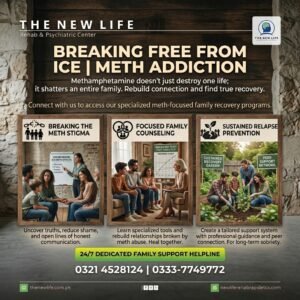
Treatment for methamphetamine addiction generally involves behavioral and psychological interventions, ongoing support, and treatment of co-occurring health conditions when present.
Comprehensive Assessment
Treatment begins with an evaluation of substance use, physical health, mental health, previous treatment experiences, family circumstances, and recovery goals.
Individual Counseling
One-on-one counseling can help individuals identify triggers, understand patterns of methamphetamine use, address emotional difficulties, and develop healthier coping strategies.
Cognitive Behavioral Therapy
Cognitive Behavioral Therapy (CBT) can help individuals recognize thoughts and behaviors associated with substance use, manage cravings, and develop alternative responses to stress and high-risk situations.
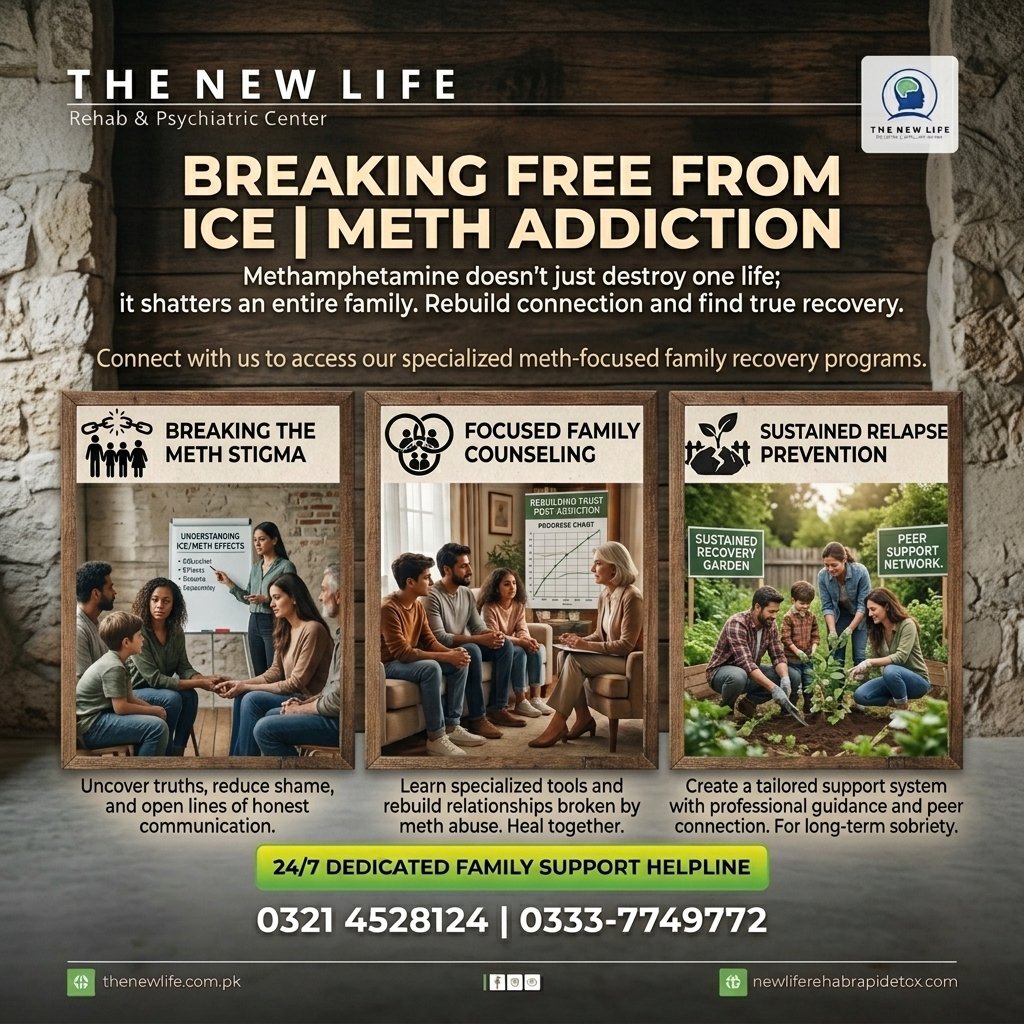
Family Support
Addiction can affect the entire family. Family education and counseling can improve communication, reduce misunderstanding, and help relatives provide constructive support.
Relapse Prevention
A personalized relapse prevention plan can help individuals identify situations that increase the risk of returning to methamphetamine use and develop practical strategies for managing cravings.
At The New Life Rehab & Psychiatric Center Islamabad, Pakistan, treatment planning should be individualized according to each person’s clinical condition and recovery needs.
Methamphetamine Withdrawal and Early Recovery
Stopping methamphetamine after regular use can result in withdrawal symptoms. These may vary in intensity and duration.
Possible symptoms include:
- Fatigue
- Increased sleep
- Low mood
- Irritability
- Anxiety
- Increased appetite
- Difficulty concentrating
- Strong cravings
- Reduced motivation
Although methamphetamine withdrawal is not typically associated with the same medical emergencies as withdrawal from substances such as alcohol or certain sedatives, significant depression or other psychiatric symptoms can occur. Professional monitoring is therefore important, particularly when there are concerns about mental health or personal safety.
Supporting Long-Term Recovery
Detoxification or the initial withdrawal period is only one stage of recovery. Long-term treatment focuses on changing behaviors, improving emotional health, rebuilding relationships, and reducing the risk of relapse.
Recovery may involve:
- Regular counseling
- Psychiatric follow-up when appropriate
- Family involvement
- Relapse prevention
- Healthy sleep routines
- Physical activity
- Stress-management techniques
- Supportive social relationships
- Continuing care
Developing a structured daily routine can also help individuals adjust to life without relying on stimulants.
Frequently Asked Questions (FAQs)
1. What is ICE | METH addiction?
ICE | METH addiction generally refers to a problematic pattern of methamphetamine use in which an individual experiences difficulty controlling consumption despite harmful physical, psychological, or social consequences.
2. What are common signs of meth addiction?
Strong cravings, repeated unsuccessful attempts to stop, sleep disruption, mood changes, increasing tolerance, neglect of responsibilities, and continued use despite negative consequences can indicate problematic methamphetamine use.
3. Can methamphetamine affect mental health?
Yes. Methamphetamine use can be associated with anxiety, depression, paranoia, severe mood changes, and psychotic symptoms in some individuals.
4. What treatment is available for methamphetamine addiction?
Treatment may include professional assessment, individual counseling, behavioral therapies such as CBT, family support, treatment for co-occurring mental health conditions, and relapse prevention planning.
5. Can someone recover from methamphetamine addiction?
Recovery is possible, although the process differs for every individual. Continued professional treatment, behavioral support, family involvement, and long-term relapse prevention can provide important support throughout recovery.
Conclusion
ICE | METH Addiction in Islamabad, Pakistan is a complex health concern that can have significant effects on physical health, mental well-being, relationships, and daily life. Recognizing warning signs and seeking professional assessment can be an important step toward recovery. Treatment may include counseling, behavioral therapy, family support, dual-diagnosis care, psychiatric support when appropriate, and relapse prevention.
The New Life Rehab & Psychiatric Center Islamabad, Pakistan takes an individualized approach to addiction and mental health care, recognizing that each person’s circumstances and treatment needs are different. With appropriate professional guidance, consistent support, and a structured recovery plan, individuals affected by methamphetamine addiction can work toward healthier routines and sustainable long-term recovery.