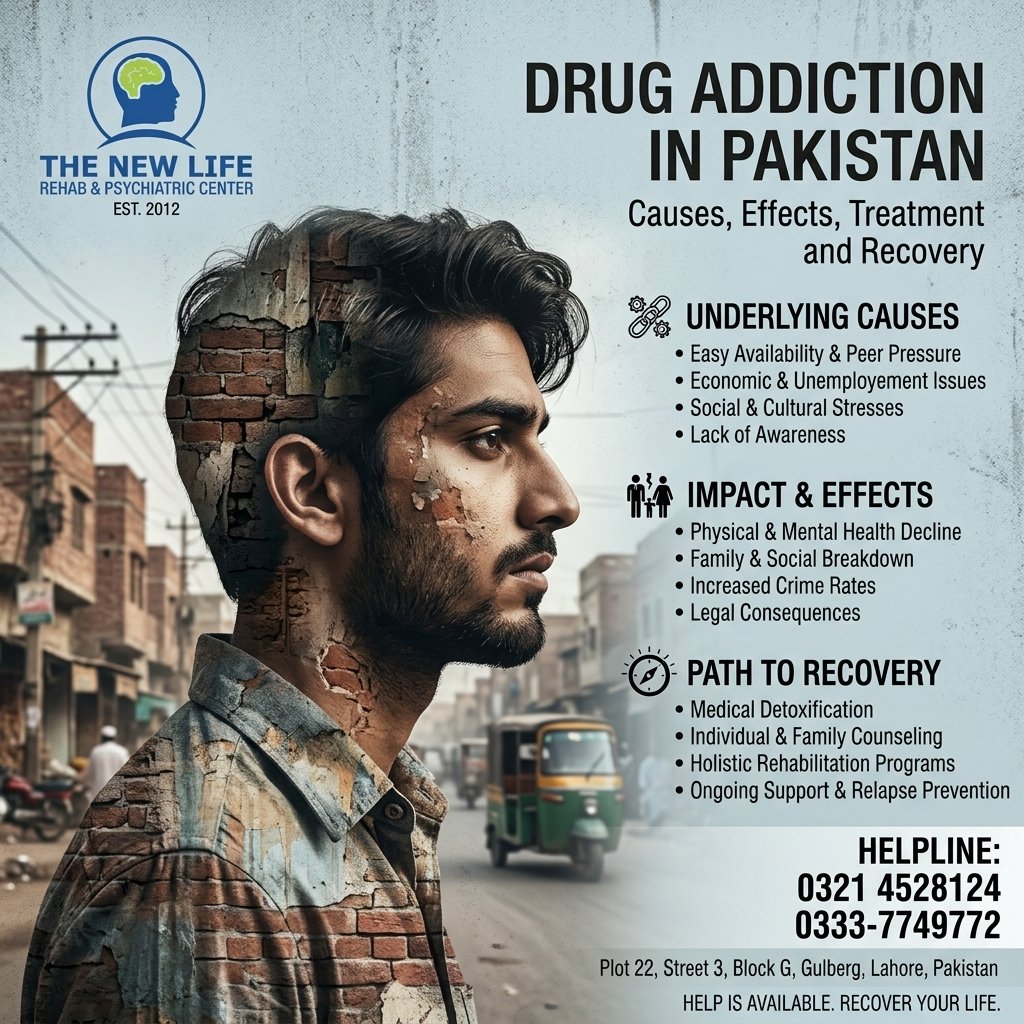
Drug Addiction in Pakistan is a serious health and social concern that can affect individuals, families, workplaces, educational institutions, and communities. Drug dependence may develop when repeated substance use changes patterns of behavior and makes it difficult for a person to stop despite harmful consequences.
Drug addiction is not simply a matter of weak willpower or poor choices. According to the World Health Organization, drug use disorders have biological, psychological, social, and environmental factors and should be addressed through comprehensive health-based treatment.
At The New Life Rehab & Psychiatric Center Islamabad, Pakistan, individualized treatment can help people address substance use alongside psychological, behavioral, and social factors that may contribute to continued drug use.
Understanding Drug Addiction in Pakistan
Drug addiction, also known as a substance use disorder, can involve compulsive or problematic use of psychoactive substances despite negative consequences. Different drugs can produce different patterns of dependence, withdrawal, and health risks.
Substances associated with addiction may include:
- Heroin and other opioids
- Cannabis or marijuana
- Methamphetamine or ICE
- Cocaine
- Ecstasy or MDMA
- Benzodiazepines
- Prescription medications when misused
- Other psychoactive substances
The severity of addiction varies from one person to another. Early assessment can help identify the type of substance being used, frequency of use, physical dependence, mental health concerns, and appropriate treatment needs.
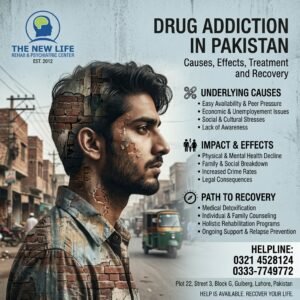
Causes and Risk Factors of Drug Addiction
There is rarely a single reason why someone develops drug addiction. Several factors can interact and increase the risk.
Biological and Genetic Factors
Genetics, brain chemistry, and individual responses to psychoactive substances can influence vulnerability to substance use disorders. Repeated exposure to addictive substances can also contribute to changes that make continued use more difficult to control.
Stress, Trauma, and Mental Health
Depression, anxiety, trauma, chronic stress, and other psychological difficulties may contribute to substance misuse. Some people may initially use drugs as an attempt to escape emotional distress or cope with difficult experiences.
Peer Pressure and Social Environment
Friends, social groups, family circumstances, and exposure to drug-using environments can influence substance use. Young people may be particularly vulnerable to experimentation when drugs are normalized within their social surroundings.
Curiosity and Experimentation
Curiosity and recreational experimentation can sometimes develop into repeated use, particularly when a substance produces strong rewarding effects or psychological dependence.
Research and reporting on Pakistan have also highlighted the importance of prevention, early intervention, family involvement, and accessible treatment services.
Effects of Drug Addiction on Physical and Mental Health
Drug addiction can affect almost every area of a person’s life. The specific consequences depend on the substance, method of use, frequency, duration, and individual health.
Potential physical effects may include:
- Sleep disturbances
- Changes in appetite and weight
- Cardiovascular problems
- Respiratory difficulties
- Weakened physical health
- Increased risk of infectious diseases in some forms of drug use
- Overdose
- Physical dependence and withdrawal
Drug addiction can also affect mental and emotional well-being. Individuals may experience anxiety, depression, irritability, mood changes, poor concentration, impaired judgment, or social withdrawal.
Long-term substance use can also contribute to family conflict, financial difficulties, academic problems, workplace issues, and social isolation.
Drug Addiction and Co-Occurring Mental Health Conditions
Some people experiencing drug addiction also have mental health conditions. Depression, anxiety, trauma-related disorders, and other psychological difficulties may occur alongside substance use.
This is sometimes described as dual diagnosis or co-occurring disorders. Treating substance use while also considering underlying mental health concerns can provide a more comprehensive approach to recovery.
Professional assessment can help determine whether psychological or psychiatric support should be included in an individual’s treatment plan.
Drug Addiction Treatment in Pakistan
Effective drug addiction treatment should be individualized rather than based on a single approach. WHO and UNODC international standards recommend evidence-based and ethical treatment systems that can address different levels of substance use disorder and individual needs.
Assessment and Treatment Planning
Treatment generally begins with an assessment of substance use, physical health, psychological well-being, previous treatment experiences, family circumstances, and recovery goals.
This information can help professionals develop an appropriate treatment plan.
Detoxification
Some individuals may require detoxification as an initial stage of treatment. Detoxification focuses primarily on managing the physical effects that may occur when substance use is reduced or stopped.
Withdrawal can vary considerably depending on the drug involved. Certain substances, including alcohol and some sedative medications, can produce potentially dangerous withdrawal and should not be stopped abruptly without appropriate medical guidance.
Counseling and Behavioral Therapy
Counseling can help individuals understand their addiction, identify triggers, address unhealthy thought patterns, and develop healthier coping mechanisms.
Behavioral therapies may also help individuals manage cravings, improve decision-making, and reduce behaviors associated with continued substance use.
Family Support
Drug addiction can affect the entire family. Family counseling and education can help relatives understand addiction, communicate more effectively, establish healthy boundaries, and support recovery without unintentionally enabling harmful behavior.
Relapse Prevention
Recovery requires more than stopping drug use for a short period. Relapse prevention can help individuals recognize triggers, develop coping strategies, strengthen support networks, and prepare for challenging situations.
At The New Life Rehab & Psychiatric Center Islamabad, Pakistan, an individualized approach can incorporate counseling, behavioral support, family involvement, and continuing recovery planning according to a person’s needs.
Importance of Rehabilitation and Continuing Care
Rehabilitation provides an opportunity to work on the behavioral and psychological aspects of addiction after the initial stages of treatment. Depending on individual circumstances, rehabilitation may include structured routines, counseling, therapy, physical activities, family support, and recovery education.
Continuing care is also important because recovery is an ongoing process. Follow-up counseling, mental health support, family involvement, and relapse prevention strategies may help individuals maintain positive changes over time.
Preventing Drug Addiction in Pakistan
Prevention can begin with education, healthy family relationships, emotional support, life skills, and early identification of problematic substance use.
Parents and caregivers can encourage open communication so that young people feel comfortable discussing peer pressure, stress, emotional problems, and exposure to drugs.
Schools, communities, healthcare professionals, and families can also contribute to prevention by promoting evidence-based awareness and providing appropriate support when substance use problems emerge. UNODC research has emphasized the importance of family and life-skills approaches within effective prevention strategies.
Frequently Asked Questions (FAQs)
1. What is drug addiction?
Drug addiction is a health condition involving problematic or compulsive use of psychoactive substances despite harmful consequences. It can involve cravings, impaired control, dependence, and difficulties fulfilling everyday responsibilities.
2. What are the common causes of drug addiction in Pakistan?
Drug addiction can develop through a combination of factors, including genetics, repeated drug exposure, stress, trauma, mental health difficulties, peer influence, social environment, and experimentation.
3. What are the effects of drug addiction?
Drug addiction can affect physical health, mental well-being, relationships, education, employment, finances, and social functioning. Some substances can also create a serious risk of overdose.
4. Is detoxification enough to treat drug addiction?
No. Detoxification mainly addresses the physical aspects of withdrawal. Long-term recovery may require counseling, behavioral therapy, family support, relapse prevention, and continuing care.
5. Can drug addiction be treated?
Yes. Drug use disorders are considered treatable health conditions. Treatment should be individualized and may combine medical care, psychological interventions, behavioral therapies, family support, and continuing recovery services.
Conclusion
Drug Addiction in Pakistan is a complex health issue that can affect individuals, families, and communities. Understanding the causes, recognizing warning signs, and seeking professional support can help individuals access appropriate treatment before substance use causes further harm.
Effective recovery may involve assessment, medically appropriate detoxification, counseling, behavioral therapy, family support, dual-diagnosis care, rehabilitation, and relapse prevention. The appropriate combination of services depends on the individual’s substance use, health, psychological needs, and personal circumstances.
The New Life Rehab & Psychiatric Center Islamabad, Pakistan supports an individualized approach to addiction treatment that considers the physical, psychological, behavioral, and social dimensions of recovery. With appropriate professional guidance and continuing support, individuals affected by drug addiction can work toward healthier routines and sustainable long-term recovery.