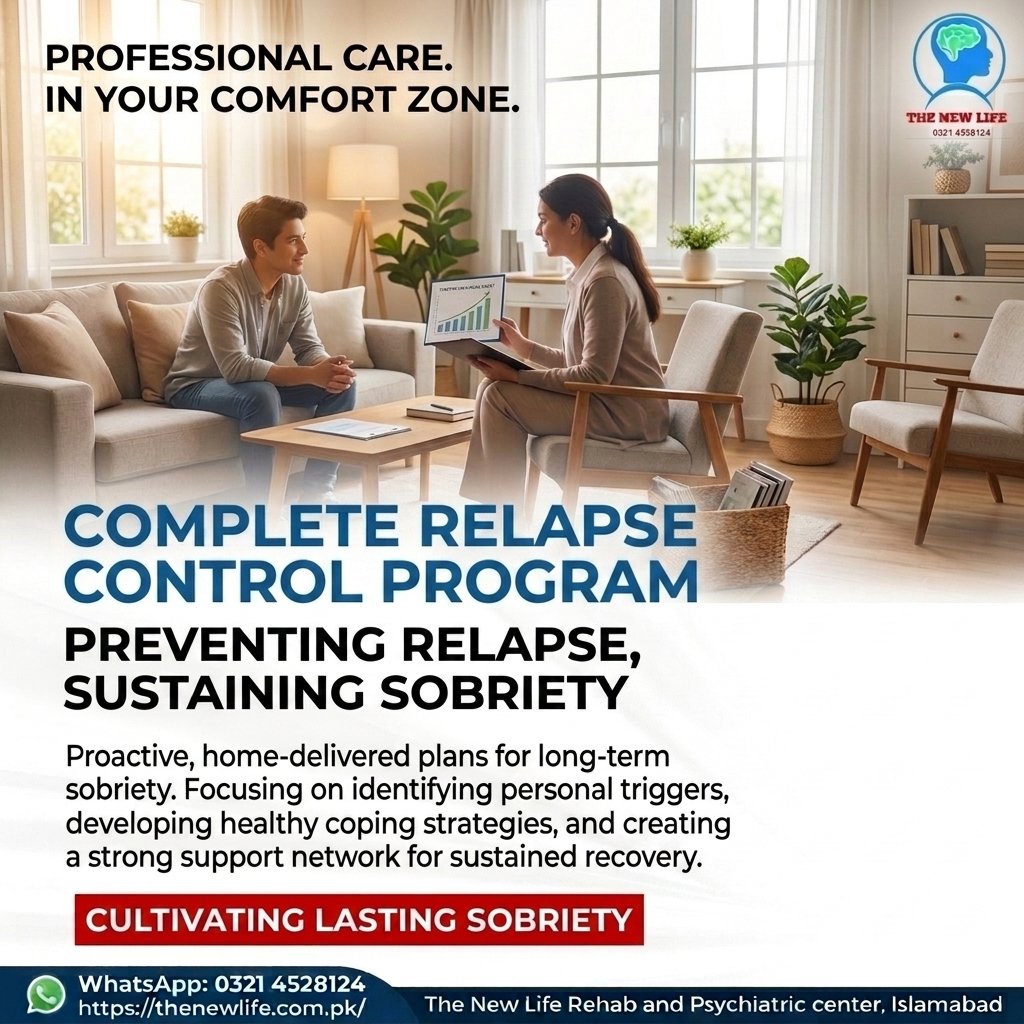
A Relapse Control Program in Islamabad, Pakistan can provide structured support for individuals recovering from drug addiction, alcohol dependence, and co-occurring mental health conditions. Recovery does not necessarily end when detoxification or residential rehabilitation is completed. Returning to everyday responsibilities can introduce stress, cravings, social pressures, and emotional challenges that may increase the risk of returning to substance use.
Relapse is not necessarily a sign that treatment has failed. It can indicate that additional support or changes to a person’s recovery plan may be needed. A comprehensive relapse control approach helps individuals recognize warning signs, understand personal triggers, develop healthier coping strategies, and remain connected with appropriate professional care.
At The New Life Rehab & Psychiatric Center Islamabad, Pakistan, relapse prevention can be incorporated into an individualized recovery plan based on the person’s substance-use history, mental health, family environment, and ongoing treatment needs.
Understanding Relapse Control Program in Islamabad, Pakistan
A relapse control program is a structured approach designed to help individuals maintain recovery after or during addiction treatment. It focuses on the factors that can contribute to renewed substance use and teaches practical ways to respond to difficult situations.
Relapse prevention may be relevant for people recovering from:
- Alcohol addiction
- Heroin and opioid addiction
- Cannabis or marijuana addiction
- Cocaine addiction
- ICE or methamphetamine addiction
- Prescription drug dependence
- Smoking and nicotine dependence
- Co-occurring mental health and substance-use disorders
The appropriate level of continuing support varies from person to person.
Understanding the Stages of Relapse
Relapse can develop gradually rather than occurring as a single event. Recognizing changes early may provide an opportunity to seek additional professional support.
Emotional Relapse
During emotional relapse, an individual may not be actively thinking about using substances but may begin neglecting healthy recovery habits. Isolation, poor sleep, stress, irritability, or avoiding support can be warning signs.
Mental Relapse
Mental relapse may involve thinking about previous substance use, remembering perceived positive experiences, experiencing cravings, or considering situations in which substance use could occur.
Physical Relapse
Physical relapse occurs when an individual returns to using a substance after a period of abstinence or reduced use.
Understanding these stages can help individuals and families respond to warning signs earlier.
Common Triggers for Relapse
Triggers differ between individuals. Identifying personal triggers is therefore an important part of relapse prevention.
Common triggers may include:
- Stress
- Anxiety or depression
- Family conflict
- Relationship problems
- Loneliness
- Financial difficulties
- Social pressure
- Certain people or environments
- Exposure to substances
- Poor sleep
- Unmanaged emotional distress
A personalized treatment plan can help individuals identify which situations present the greatest risk.
Components of a Relapse Control Program

A comprehensive Relapse Control Program in Islamabad, Pakistan may combine counseling, behavioral strategies, family involvement, and continuing professional care.
Individual Counseling
One-on-one counseling provides a confidential setting for exploring cravings, emotional challenges, personal triggers, and recovery goals.
Cognitive Behavioral Therapy
CBT can help individuals recognize unhelpful thought patterns and develop healthier responses to cravings, stress, and high-risk situations.
Relapse Prevention Planning
A personalized plan can identify warning signs, coping strategies, supportive contacts, and steps to take when cravings become difficult to manage.
Family Support
Family education and counseling can help relatives understand relapse, improve communication, establish healthy boundaries, and encourage continued treatment.
Ongoing Follow-Up
Regular follow-up allows professionals to monitor progress, identify emerging difficulties, and modify treatment recommendations when appropriate.
At The New Life Rehab & Psychiatric Center Islamabad, Pakistan, relapse prevention strategies can be adapted according to each individual’s circumstances and clinical needs.
Managing Cravings and High-Risk Situations
Cravings can occur during different stages of recovery. Learning how to respond to them is an important part of maintaining progress.
Individuals may benefit from strategies such as:
- Delaying action when a craving occurs
- Leaving environments associated with substance use
- Contacting a trusted support person
- Practicing relaxation or breathing techniques
- Engaging in physical activity
- Maintaining a structured routine
- Attending scheduled counseling
- Avoiding people or situations that increase risk
The most appropriate strategies depend on the individual’s treatment plan and circumstances.
Family Support in Relapse Prevention
Family members can play a valuable role by recognizing significant behavioral changes and encouraging professional help when necessary. However, families should avoid attempting to manage serious addiction or psychiatric symptoms without appropriate professional guidance.
A supportive family environment can include:
- Respectful communication
- Encouragement rather than criticism
- Healthy boundaries
- Support for treatment participation
- Reduced exposure to unnecessary conflict
- Awareness of warning signs
Family members may also need their own emotional support while helping a loved one through recovery.
Relapse and Dual Diagnosis
Individuals with addiction may also experience depression, anxiety, trauma-related conditions, bipolar disorder, or other mental health concerns. When these conditions occur together, they can influence recovery and relapse risk.
An integrated approach can address both substance use and mental health concerns. Appropriate psychiatric assessment, counseling, behavioral therapy, and continuing care may be included according to individual needs.
Building Long-Term Recovery
Relapse prevention is strengthened by maintaining healthy routines beyond formal treatment.
Long-term recovery may involve:
- Regular counseling
- Psychiatric follow-up when appropriate
- Healthy sleep habits
- Physical activity
- Stress management
- Supportive relationships
- Meaningful hobbies
- Continued family involvement
- Ongoing recovery planning
Recovery is an ongoing process, and the duration of continuing support may vary depending on each person’s circumstances.
Frequently Asked Questions (FAQs)
1. What is a Relapse Control Program?
A Relapse Control Program is a structured approach that helps individuals identify triggers, manage cravings, recognize warning signs, and develop strategies for maintaining recovery from addiction.
2. Does relapse mean addiction treatment has failed?
No. Relapse can occur during recovery and may indicate that additional treatment, support, or adjustments to the recovery plan are needed.
3. What are common relapse triggers?
Stress, emotional distress, relationship conflict, social pressure, exposure to substances, loneliness, and certain environments can increase relapse risk.
4. Can family members help prevent relapse?
Yes. Supportive communication, healthy boundaries, treatment encouragement, and awareness of warning signs can help families contribute positively to recovery.
5. How long should relapse prevention continue?
There is no single timeframe that applies to everyone. Some individuals benefit from continuing counseling and recovery support for an extended period, depending on their needs and circumstances.
Conclusion
A Relapse Control Program in Islamabad, Pakistan can be an important component of long-term addiction recovery. By identifying personal triggers, recognizing early warning signs, managing cravings, strengthening coping skills, and maintaining professional support, individuals can develop a stronger foundation for continued recovery.
Relapse should be approached with compassion and without unnecessary judgment. It may signal a need for reassessment and additional support rather than representing personal failure. The New Life Rehab & Psychiatric Center Islamabad, Pakistan focuses on individualized and ethical addiction and mental health care, incorporating counseling, family support, relapse prevention, and continuing treatment according to each person’s needs.