Finding the Best Rehab Center in Islamabad, Pakistan is an important decision for individuals and families dealing with addiction or related mental health concerns. Rehabilitation is not simply about stopping alcohol or drug use. Effective care may also involve understanding the reasons behind substance use, managing withdrawal safely, developing healthier coping skills, repairing relationships, and preparing for long-term recovery.
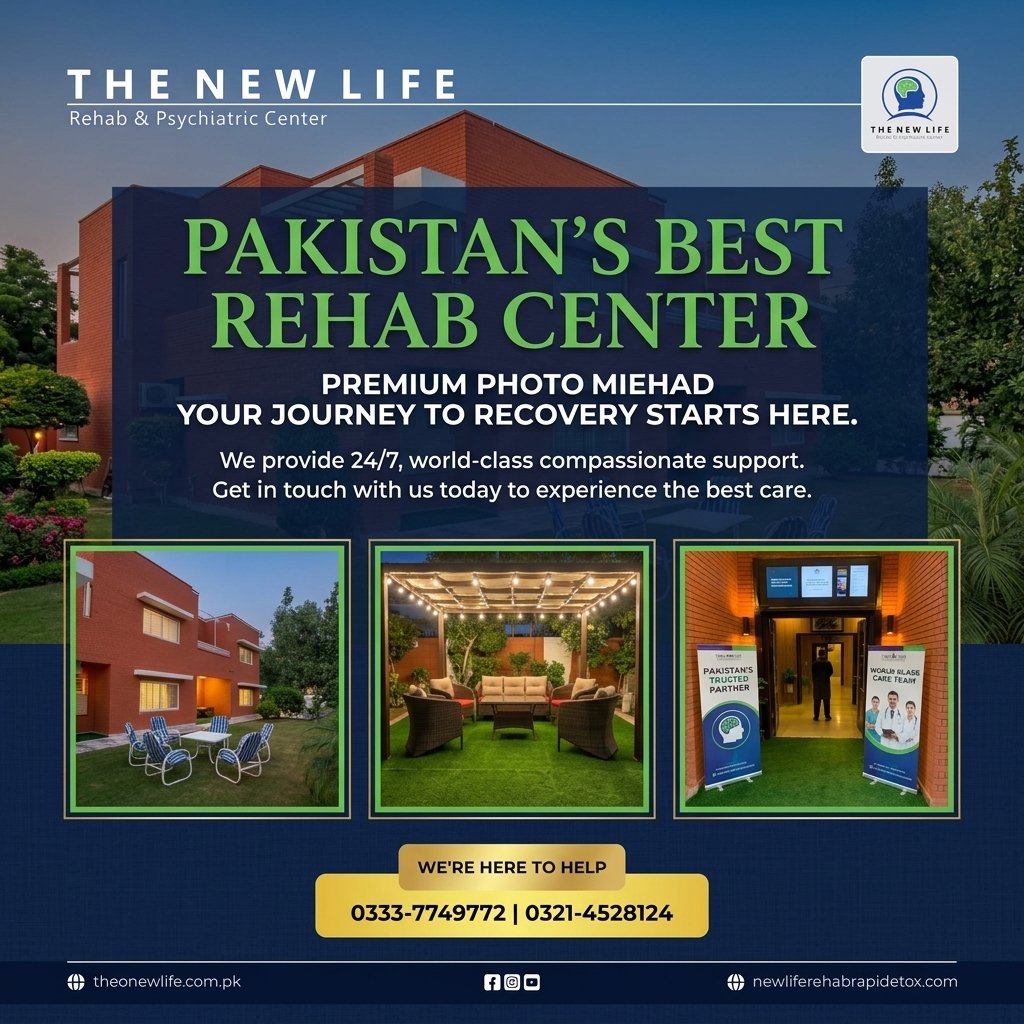
In The New Life Rehab & Psychiatric Center Islamabad, Pakistan –patients receive evidence-informed person-centered care, in a respectful environment. Explanation: Treatment is best started with a professional assessment, as everyone’s situation is unique and there are no universal procedures.
How to Treat Someone in a Rehab Center
Families determine what “best” means to them. An appropriate rehab center would take into consideration a lot patient safety, skilled healthcare employees to manage them, ethical therapy for patients who struggle with addiction and maintain confidentiality when treating patients and focus on personalized remedy choices.
Important factors to consider include:
- Competent normal therapy clusters furthermore emotional wellness executives
- Appropriate assessment and treatment planning
- Safe withdrawal management when required
- Individual and group counseling
- Mental health support
- Family involvement
- Relapse-prevention planning
- Continuing care and aftercare
- Respectful and non-stigmatizing treatment
These questions include what types of substances are treated and whether the facility can treat medical or psychiatric needs that may require more intensive treatment.
Rehabilitation Center for The Treatment of Addiction
Addiction can relate to alcohol, opioids, stimulants, cannabis, prescription medications or other substances. That treatment should be informed by the drug in question and the condition of individuals.
Alcohol Addiction
Cravings, loss of control over drinking, tolerance and withdrawal are aspects of alcohol use disorder. Substantial or continued liquor use may well be hazardous and bring about withdrawal ailments; as a result, clinical evaluation must always precede cessation of hasty weight loss plans.
Opioid Addiction
Physical dependence and powerful cravings occur from heroin and other opioids. Therapy may consist of withdrawal management, behavioral therapy, and when clinically appropriate evidence-based medications including buprenorphine or methadone.
ICE and Crystal Meth Addiction
It cited methamphetamine, which is know to be a potent stimulant impact sleep patterns, mood or behavior, cardiovascular health and wellbeing, as well as psychological effects. Management often focuses on behavioral and psychological therapies, supportive care, and relapse prevention.
Cannabis Addiction

Cannabis is sometimes thought to be less harmful than other substances, but cannabis can submit some people to developing cannabis use disorder (CUD). Rather, counseling and behavioral methods can assist with managing the problematic use and its triggers.
The Importance of Detoxification
Detox is typically the first step of addiction treatment, but it does not equal rehab.
Detox is when the body has to adapt to lower or no use of drugs. Withdrawal symptoms depend upon the type of substance and level of dependence.
This is especially true for withdrawal from alcohol, benzodiazepines and other substances linked to potentially severe complications requiring medical supervision.
An appropriate rehab center must consider the risk of withdrawal before prescribing a plan for detox.
Mental Health and Simultaneous Interactive Diagnostic Care
Dual diagnosis refers to an addiction and a mental health concern. Severe Psychological Issues You should contact a substance abuse specialist because most people with addictions also suffer from severe psychological problems such as depression, anxiety, trauma-related conditions and bipolar disorder that influence their use of substances and recovery.
This is also known as a dual diagnosis or co-occurring disorder.
When both issues are involved, treatment should address both, rather than treating Substance abuse only. Psychological counselling, behavior therapy, psychiatric evaluation, and proper medication may be prescribed as needed based on the clinical conditions.
Counseling and Behavioral Therapy
Most rehabilitation programs include some form of counseling.
Individual therapy allows people to dig deeper into exploring:
- Substance-use triggers
- Emotional difficulties
- Family relationships
- Unhealthy behavioral patterns
- Recovery goals
- Cravings and high-risk situations
One of the evidence-based approaches is Cognitive Behavioral Therapy (CBT), which can support someone to identify maladaptive thoughts and create healthy coping mechanisms.
Group therapy encourages peer support and chances to learn by observation of others with similar challenges.
Family Support in Rehabilitation
Addiction does not only impact the individual but the family as well. Others might be tense, anxious or angry, and some may not even know how to respond.
The family support programme may include education concerning addiction, counselling, communication training and help in setting up healthy boundaries.
Dates Very few family involvement can be involved at the facility like The New Life Rehab & Psychiatric Center Islamabad, Pakistan When appropriate, and when part of an individual’s overall treatment plan made by a health professional in-charge, ensuring privacy is NOT infringed.
Relapse Prevention and Aftercare
Just because rehabilitation is over doesn’t mean that recovery has ended. Triggers Specific To Opposite Sieve returning to prior environments, unmanaged stress, problems with mental health or exposure sub[planning to substance Good textual triggers put the user at risk for trousers(relapse reserves).
A continuing-care plan may include:
- Follow-up counseling
- Trigger identification
- Craving-management strategies
- Family support
- Healthy routines
- Mental health care
- Peer support
- Relapse-prevention planning
On the off chance that you have a relapse; it tends to be an opportunity for proficient re-evaluation. And because their needs change, the treatment plan might have to be changed too.
How to Choose the Right Rehab Center for You
Instead of labelling facilities, families comparing rehab options need to ask if the facility is ethical and providing proper care.
Useful questions include:
- Are treatment plans individualized?
- Are qualified healthcare professionals involved?
- How are withdrawal risks assessed?
- Is mental health evaluated?
- Is family participation available?
- What aftercare do you have?
- If a patient requires more extensive medical care?
These questions give families additional information to make a more educated choice.
Frequently Asked Questions (FAQs)
1. FINDING THE BEST REHAB CENTER IN ISLAMABAD, PAKISTAN
Considerations include trained staff, personalized treatment programs, the attentive and reasonable medical setting, psychological support and family therapy — expert relapse prevention strategies, privacy preservation even after treatment has ceased — continuity of care.
2. Is a detox enough to treat addiction?
Detox is often only one phase of treatment. Other possibilities include counseling, behavioral therapy, mental health care, relapse prevention and continuing support.
3. Does a rehab treat addiction and mental health issues?
Some facilities offer dual-diagnosis treatment for individuals with both substance use and mental health disorders. An evaluation can provide information as to the appropriate treatment.
4. How long does rehabilitation take?
The course of treatment is not fixed. It varies according to the type of substance, severity of the disorder, physical and mental health conditions, treatment response, and continuing-care requirements.
5. Can families participate in rehabilitation?
Family involvement can be helpful when appropriate clinically. Family counseling and education can facilitate communication and encourage relatives to give informative support.
Conclusion
Choosing the Best Rehab Center in Islamabad, Pakistan should be based on safety, professional expertise, individualized treatment, ethical standards, and continuing support rather than promises of guaranteed outcomes. Addiction is a complex health condition, and recovery may require different forms of care over time.
The New Life Rehab & Psychiatric Center Islamabad, Pakistan provide another level of care that may consist of physical, exercise, or supplement intervention; specific assessment/diagnosis such for fundamental disorders; education interventions (individual cognitive behavioral therapy to manage stress/coping); behavioral components in a controlled setting; mental health support; family involvement; relapse prevention strategies after-hours weekend’s ability. The goal is to offer dignified care that helps the person in their journey for better health, stability, and recovery.