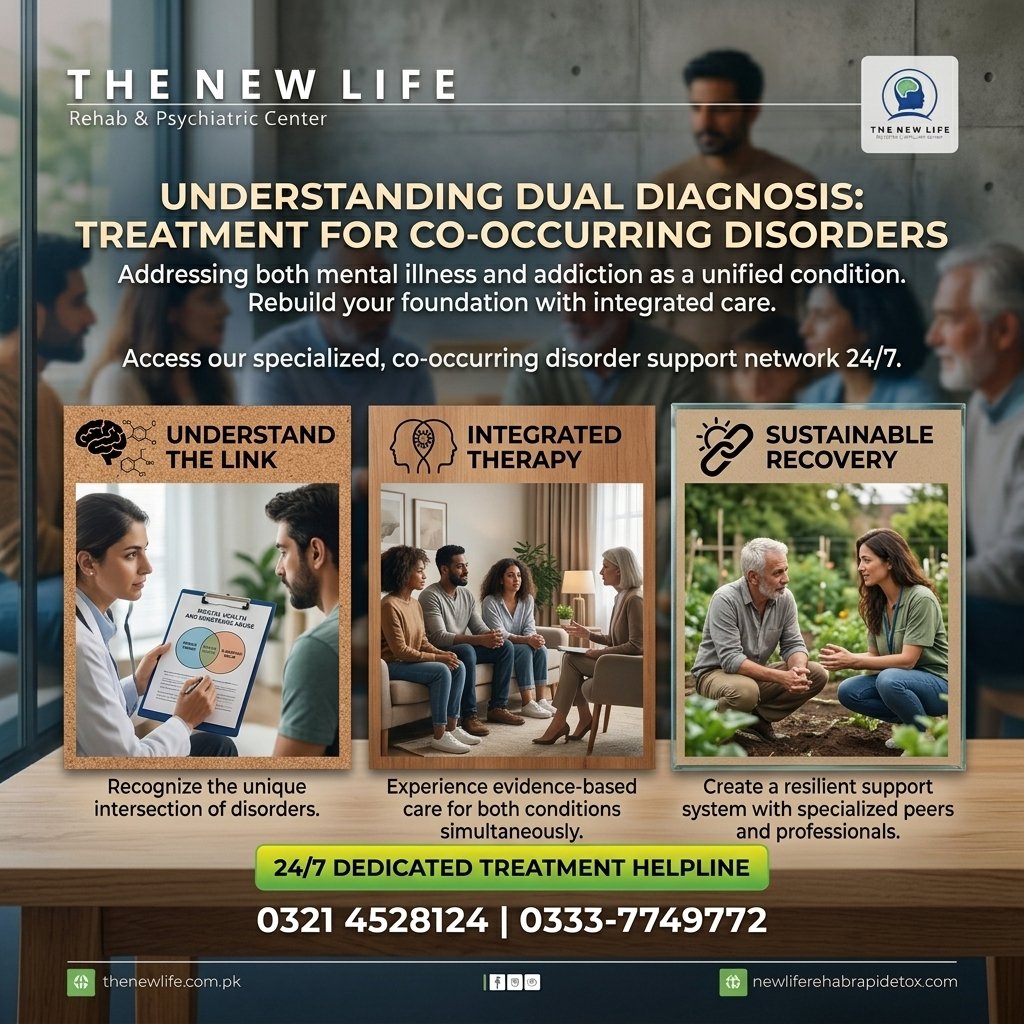
Dual diagnosis means someone has both a substance uses disorder and some kind of mental health disorder. If the problem is addressed on its own, it means that other co-occurring concerns could affect one another and complicate recovery. This integrated, person-centered approach helps someone to get the help they need for their addiction as well as with their mental health.
Both individuals and families applying for Dual Diagnosis Treatment Pakistan, first assessment by expert Care at The New Life Rehab & Psychiatric Center Islamabad, Pakistan can be tailored to the person, their use of alcohol or drugs, mental health, health conditions, family situation and goals for recovery.
What Is Dual Diagnosis Treatment?
Dual diagnosis treatment is an integrated approach for people experiencing both addiction and a mental health condition. Instead of viewing these issues as completely independent problems, healthcare providers assess how they interact and come up with a coordinated plan.
Substance use disorders may involve:
- Alcohol
- Heroin and other opioids
- Cocaine
- Crystal methamphetamine or ICE
- Cannabis or marijuana
- Prescription medications
- Benzodiazepines
Common co-occurring mental health disorders include: Affective disorders, such as depression and bipolar disorder Anxiety disorders PTSD, or post-traumatic stress disorder Other mental health conditions
Interpretation of an online assessment for mental health or substance use disorder can only be done by a qualified professional.
Why Can Addiction & Mental Health Problems Happen Together?
There is not one because you can point to that explains co-occurring conditions. Several factors can contribute.
Self-Medication
Alcohol or drugs are often used by some people as an escape from feeling stressed, depressed, traumatized, unable to sleep or without other problems negatively affecting their mental health. While using substances can give the illusion of relief in the short term, over time it creates a cycle of dependency, often exacerbating symptoms.
Effects of Substance Use
Chronic substance use can impact sleep, mood, cognition and brain function. For some individuals, it may activate or worsen psychological symptoms.
Trauma and Stress
Exposure to trauma and chronic stress are risk factors for mental health problems in both adults and youth, as well as problematic substance use.
Shared Risk Factors
Both conditions may have a genetic component, and family history, social circumstances and environmental pressures all play a role as well.
Red flags that indicate you may want to consider a dual diagnosis assessment
Potential warning signs include:
- Persistent sadness or anxiety
- Significant mood changes
- Intense desire for drugs or alcohol
- Difficulty controlling substance use
- Social withdrawal
- Sleep disturbances
- Problems at work or school
- Difficulty managing emotions
- A substance use disorder characterized by ongoing use notwithstanding transitory challenges
- Repeated unsuccessful attempts to stop
These symptoms do not make a diagnosis You will need a full professional assessment.
How Dual Diagnosis Treatment Works
Comprehensive Assessment
Typically, treatment starts with an evaluation and review of substance use, mental health symptoms, medical history, medications, family situation and prior treatment.
The complete view enables clinicians to prioritize and select a suitable care level.
Medical Detoxification
Others need to participate in withdrawal management under supervision before starting rehabilitation. The necessity for detoxification is contingent on the substance which was abused as well as physical dependence, withdrawal dangers and health condition.
Many substances (e.g. Alcohol, Benzodiazepines) can cause potentially life-threatening withdrawal syndromes making it crucial that such a process be formally assessed.
Individual Therapy
Personalized treatment provides a confidential space to talk about substance-use triggers, emotional well-being and trauma, behavioral issues, and personal recovery goals.
Cognitive Behavioral Therapy
Cognitive Behavioral Therapy (CBT)-good for spotting negative thought patterns and instead develop better responses to issues such as cravings, anxiety, stress, etc.
Group Therapy
Group sessions may offer peer support and the chance to gain insights from others dealing with similar recovery issues.
Medication Management
When clinically indicated, medical professionals may treat certain mental health diagnoses or substance use disorders with pharmacologic agents. Drugs should be chosen and monitored on the basis of a person’s medical necessities.
Dual Diagnosis Treatment Among Family
Co-occurring disorders treatment is a family affair. Relatives may find it difficult to determine if certain behaviors are addiction-related, as part of mental health symptoms or both.
Relatives: Family counseling and education might be helpful for you.
- Understand co-occurring disorders
- Communicate more effectively
- Establish healthy boundaries
- Encourage appropriate treatment
- Recognize warning signs
- Support relapse prevention
The New Life Rehab & Psychiatric Center Islamabad, Pakistan views family involvement on a case-by-case basis, as appropriate and aligned with the treatment plan of the individual recipient and their privacy.
Relapse Prevention and Aftercare
While withdrawal symptoms may ease often, recovery does not end there. Mental health symptoms and substance-use cues may still need treatment as well.
An aftercare plan may include:
- Ongoing counseling
- Mental health follow-up
- Medication monitoring when prescribed
- Family support
- Healthy daily routines
- Stress-management techniques
- Support groups
- Relapse-prevention planning
In the event of resumption of using substances, a professional reassessment can identify any problems that may have contributed to this choice and whether treatment needs to be modified.
Why Integrated Care Matters
It is not uncommon to leave major challenges to recovery unaddressed when addiction is treated without considering the presence of an underlying mental health condition. Likewise, managing psychological symptoms without properly addressing problem substance use can complicate sustained improvement.
Unfortunately, integrated care enables professionals to look at both conditions and how they interact. Since conditions vary in combination and severity, treatment continues to be individualized.
Frequently Asked Questions (FAQs)
1. What is dual diagnosis?
Dual diagnosis describes the existence of a substance use disorder and mental health condition within an individual person.
2. What mental illnesses can accompany addiction?
Anxiety disorders, depression, bipolar disease, posttraumatic stress disorder (PTSD), and other mental health issues are frequently co-occurring with substance use disorders. Diagnosis requires an objective assessment.
3. Can dual diagnosis be treated?
Yes. Withdrawal management, psychotherapy and CBT, medication as needed, family support, recovery planning for long-term prevention of relapse (relapse is common in this disorder), follow-up mental health care.
4. Is detoxification always required?
Is it true that detoxification is possible for everyone? No, detoxification really depends on the substance but also on the level of physical dependence, withdrawal risk and health of individual. A qualified professional would need to make the best recommendation for level of care.
5. What can Families do for a Person with Dual Diagnosis?
Families will learn about co-occurring conditions, develop respectful communication skills, establish and maintain healthy boundaries, support their loved ones in professional treatment where necessary, and engage in family therapy when appropriate.
Conclusion
Dual diagnosis can complicate challenges because mental health conditions and substance use disorders may interact. Tackling these two issues together with an integrated treatment model guides you towards a sustainable recovery.
The New Life Rehab & Psychiatric Center Islamabad, Pakistan focused individually suitable Dual Diagnosis Treatment in Islamabad, Pakistan based on assessment, clinical care, addiction treatment and evidence-based therapy with long-term family support, relapse prevention and continuing care. With professional support, individuals can clarify the nature of their situations and take decisive steps to achieve better health, greater stability and improved overall quality of life.